
Stanford Seminar - PyWren - Pushing Microservices to Teraflops
Explore PyWren, a distributed execution engine simplifying cloud computing for scientists and engineers. Learn about its applications in data science and computational imaging.
Living in Information Everywhere
Explore the unification of cloud computing, IoT, AI, and Big Data, and their potential to reshape civilization. Insights on technological advancements and historical parallels from a tech industry expert.
Stanford Seminar - Autonomous Driving, Are We There Yet? - Technology, Business, Legal Considerations
Exploring autonomous driving's technological, business, and legal challenges. Discusses paradigm shifts in personal mobility, industry transformation, and steps needed to realize this revolutionary vision for transportation.

Stanford Seminar - Beyond Floating Point - Next Generation Computer Arithmetic
Exploring posits as a superior alternative to IEEE 754 floats, offering larger dynamic range, higher accuracy, and simpler implementation for next-generation computer arithmetic.
Deep Learning in the Age of Zen, Vega, and Beyond
Explore deep learning challenges and solutions using AMD's Zen and Vega platforms, focusing on high-performance computing for training and inference in various applications.
How to Use ChatGPT to Increase Your Creative Output - Part Two
Discover advanced ChatGPT prompting techniques to enhance creativity, boost productivity, and generate high-quality outputs. Learn to optimize results and streamline your workflow.
Stanford Seminar - Zhang Lin on Mobile Urban Sensing in Beijing
Explore mobile urban sensing in Beijing, covering air pollution monitoring, data collection challenges, and innovative solutions for understanding and improving city environments.
GPS for Humanity - Stanford Engineering Hero Lecture
Explore GPS origins, applications, and future with Dr. Bradford Parkinson, chief architect of GPS. Learn about its impact on timing, positioning, and various fields from earth movement to search and rescue.
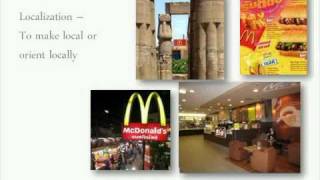
Global Product Design
Explore models and challenges in designing products for a global landscape, focusing on cultural considerations and strategies for international success.
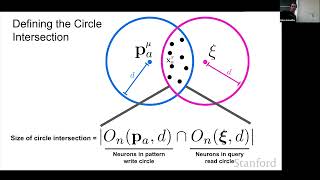
Stanford Seminar - Transformers United: Neuroscience-Inspired Artificial Intelligence
Explore neuroscience-inspired AI with insights on attention mechanisms and sparse distributed memory, bridging the gap between transformers and brain function in this Stanford seminar.
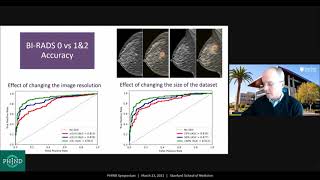
Imaging for Early Detection in the Era of Artificial Intelligence
Explore AI's impact on early disease detection through medical imaging, focusing on chest radiographs, coronary disease, and breast cancer, with insights from Stanford's Dr. Langlotz.
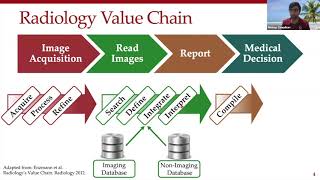
MRI as a Low-Cost High-Value Imaging Modality - Spring 2020
Explore advancements in MRI technology, focusing on improving cost-effectiveness, efficiency, and diagnostic capabilities for various medical conditions, particularly in orthopedics and cancer screening.

Wearable Sensing for Neonates and Machine Learning in Prenatal Care - PHIND Seminar 2020
Explore wearable sensing for neonates and machine learning in prenatal care with experts from Stanford and Bloomlife, discussing innovative approaches to improve infant and maternal health outcomes.

Finding Familial High Cholesterol Before You Know You Have It
Explore genetic predisposition to high LDL cholesterol, its underdiagnosis, and new research for early detection and treatment of familial hypercholesterolemia (FH) to prevent premature heart attacks.
Dancing Cells - Efficient Data Structures for Combinatorial Problem Solving
Explore efficient data structures for combinatorial problem-solving with Dr. Don Knuth's lecture on "Dancing Cells," an evolution of the "Dancing Links" concept, offering improved performance in algorithmic exploration.
Harnessing Data for Social Impact - Empowering Communities through Visualization and Social Computing
Explore innovative tools combining visualization, HCI, and AI to empower communities in addressing complex societal issues like urban planning and climate change, fostering inclusive decision-making.
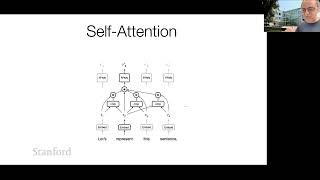
How I Learned to Stop Worrying and Love the Transformer - Stanford CS25 Lecture
Explore the Transformer's evolution and future directions with Ashish Vaswani, co-author of "Attention is All You Need". Gain insights into motivations, developments, and promising research areas in AI and NLP.
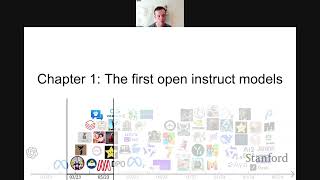
Aligning Open Language Models - Stanford CS25 Lecture
Explore the evolution of open language models, covering key techniques, datasets, and models like Alpaca and QLoRA. Gain insights into the future of aligning these models for easier use.
From Flat to Phantasmal: Enhancing User Experiences Through Spatial Computing Advancements
Exploring spatial computing advancements to enhance user experiences, focusing on streamlined creation tools, personalized accessibility, and integration of adjacent technologies for immersive mixed-reality applications.
Transformers that Transform Well Enough to Support Near-Shallow Architectures - Stanford CS25 Lecture
Explore precision language models for efficient training and hardware-based control systems. Learn about non-random parameter initializations and applications in resource-limited environments.
Shaping the Future of AI from the History of Transformer Architectures - Stanford CS25
Explore the evolution of Transformer architectures and AI development with OpenAI researcher Hyung Won Chung, focusing on historical motivations and future projections in the field.