Observational Supervision for Medical Image Classification
Exploring gaze data as a novel supervision source for training deep learning models in medical image classification, focusing on chest X-rays and brain MRI scans for improved efficiency and accuracy.
Multimodal Medical Research of Vision and Language - Jean-Benoit Delbrouck
Explore multimodal medical research combining vision and language, focusing on innovative tasks like Medical Visual Question Answering and Radiology Report Generation using advanced AI architectures and pre-training techniques.
Self-Training - Weak Supervision Using Untrained Neural Nets for MR Reconstruction - Beliz Gunel
Exploring untrained neural networks for MR reconstruction, comparing self-training and weak supervision methods to improve performance with limited data while addressing slow inference times.
Multimodal Opportunistic Risk Assessment for Ischemic Heart Disease - Juan Manuel
Innovative approach integrating body composition biomarkers from CT scans with electronic medical records to enhance ischemic heart disease risk assessment, outperforming current clinical risk scores.
Mandoline - Model Evaluation under Distribution Shift
Explores a novel framework for evaluating machine learning models under distribution shifts, using slice-based reweighting to improve performance estimation on target distributions.

Against Ethical Robots with Ron Chrisley
Explore AI ethics challenges, avoiding complacency and inflation while balancing reactive systems and robotic obligations in this thought-provoking seminar by Ron Chrisley.

Governing an Algorithm in the Wild - Seminar with David Robinson
Explore the governance and redesign of the US kidney allocation algorithm, examining its impact on equity, justice, and stakeholder engagement in algorithmic decision-making.

Vision, Touch & Sound for Robustness & Generalizability in Robotic Manipulation
Exploración de representaciones de datos perceptuales para mejorar el aprendizaje y desempeño de robots en manipulación, combinando visión, tacto y sonido para mayor robustez y generalización.

How Can You Trust Machine Learning?
Explore the pillars of trust in machine learning: clarity, competence, and alignment. Learn about processes and techniques to develop more effective and trustworthy AI systems.

Amy Zegart - Spies, Lies, and Algorithms
Explore the evolving landscape of intelligence in the digital age, examining challenges, emerging technologies, and the democratization of espionage in our interconnected world.
The Artful Design of Interactive AI Systems
Explore the intersection of AI, design, and human interaction in technology, focusing on creating meaningful experiences and balancing automation with human engagement.
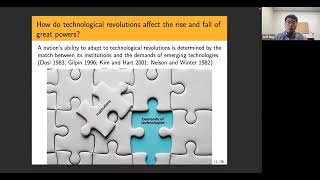
HAI Weekly Seminar with Jeff Ding - The Rise and Fall of Great Technologies and Powers
Explore the impact of technological revolutions on global power dynamics, focusing on the US-China AI race and drawing insights from historical technological shifts.
Data-Efficient AI for Accelerating MRI Acquisition
Explore physics-guided AI techniques for accelerating MRI acquisition, including unsupervised and semi-supervised approaches. Learn about a new 1.5TB dataset for evaluating MRI reconstructions with clinically-relevant metrics.
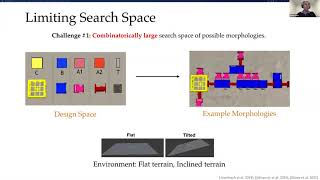
Towards Understanding and Building Embodied Intelligence
Exploring embodied intelligence: evolution, morphology, and learning in complex environments. Insights into AI agents' adaptability and performance using the DERL framework.
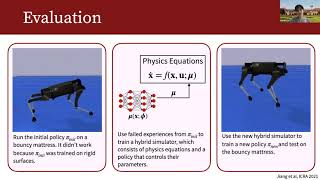
The New Role of Physics Simulation in AI
Explore advancements in physics simulation for AI, focusing on overcoming sim-to-real gaps and improving human-robot interactions through learnable physics engines and efficient training techniques.
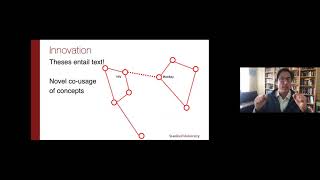
Daniel McFarland: The Diversity-Innovation Paradox in Science
Explore how diversity impacts scientific innovation and career outcomes, revealing a paradox where underrepresented groups contribute novel ideas but face devaluation and discounting in academia.

Joint Learning Over Visual and Geometric Data
Explore joint learning approaches in visual and geometric domains to reduce supervision load, leveraging data correlations and self-supervision for improved performance and efficiency.

Kathleen Creel- Arbitrariness, Fairness, and Opportunity in Algorithmic Decision-Making Systems
Explore the ethical implications of algorithmic decision-making, focusing on arbitrariness at scale, its moral and legal issues, and potential technical solutions to mitigate harm.
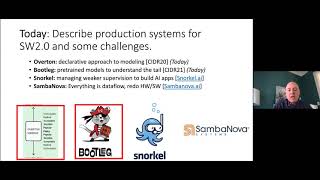
How Machine Learning is Changing Software
Explore how machine learning is revolutionizing software development, from weak supervision to self-supervised systems, with insights from Stanford's Chris Re on emerging challenges and industry applications.
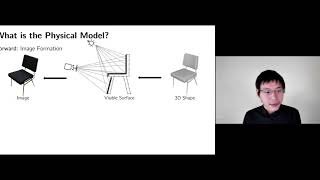
Learning to See the Physical World
Explore physical scene understanding through AI, combining computer graphics, physics, and language with deep learning to create versatile machines that see, reason, and interact with the world.
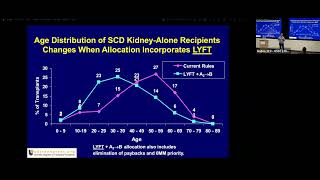
Voices in the Code - A Story About People, Their Values, and the Algorithm They Made
Explore the development of a kidney transplant algorithm, examining ethical considerations, public participation, and the challenges of creating fair and transparent high-stakes software systems.