Few-Shot Chest X-Ray Diagnosis Using Clinical and Literature Images
Explore innovative few-shot learning methods for chest X-ray diagnosis using clinical and literature images, enhancing radiology image analysis with advanced machine learning techniques.
Opioid Use Disorder Prediction Using AI and Existing Risk Models
Comparative study on AI models for predicting opioid use disorder, showcasing superior performance of transformer-based AI over existing clinical tools and other machine learning approaches.

Denoising Diffusion Models for Denoising Diffusion MRI - Tiange Xiang
Explore innovative self-supervised denoising techniques for diffusion MRI using denoising diffusion models. Learn about a three-stage framework integrating statistic-based theory for improved medical imaging quality.
Explaining Model Decisions and Fixing Them Through Human Feedback
Explore algorithms for explaining deep network decisions, building user trust, incorporating domain knowledge, learning grounded representations, and correcting unwanted biases in AI models.
Fairness in Representation Learning - Natalie Dullerud
Explore fairness in deep metric learning, evaluating bias in representations and its impact on minority subgroups. Learn about a novel approach to mitigate bias and improve fairness in machine learning models.
Real-Time Seizure Detection Using EEG - Hyewon Jeong
Comprehensive comparison of state-of-art models for real-time seizure detection using EEG, evaluating performance metrics and exploring optimal feature extractors for practical clinical applications.
Actionable Machine Learning for Tackling Distribution Shift - Huaxiu Yao
Explore techniques for building robust machine learning models that can handle distribution shifts, including subpopulation and domain shifts, and adapt to new test distributions with minimal labeled data.
Generative Models With Domain Knowledge for Weakly Supervised Clustering
Explore deep generative models for weakly supervised clustering, incorporating domain knowledge and survival data to guide algorithms towards medically meaningful findings in biomedical datasets.
Curation and Analysis of Annotated Medical Images Across Institutions - Xiaoyuan Guo
Explore techniques for curating and analyzing annotated medical images across institutions, focusing on data sharing challenges, anomaly detection, and OOD-aware image retrieval for improved dataset quality and future analysis.
Beyond Testset Performance - Strategies for Clinical Deployment
Strategies for deploying AI in clinical settings, addressing challenges beyond test performance. Explores model reliability, distribution shifts, and human-AI collaboration for real-world medical applications.
Domain Adaptation with Invariant Representation Learning - What Transformations to Learn?
Explore domain adaptation in machine learning, focusing on invariant representation learning and its challenges. Learn about novel techniques for optimal feature mapping across domains.
Efficiently Modeling Long Sequences with Structured State Spaces - Albert Gu
Explore structured state space models for efficient long sequence modeling across modalities, featuring S4's innovative approach to handling extended dependencies in various data types.
Weakly-Supervised, Large-Scale Computational Pathology for Diagnosis and Prognosis - Max Lu
Explore machine learning models for histopathology analysis, enabling large-scale cancer diagnosis and prognosis without manual annotations. Learn about innovative approaches in computational pathology.

Federated Hyperparameter Tuning - Challenges, Baselines, and Connections
Explores challenges and solutions for hyperparameter tuning in federated learning, introducing FedEx method to accelerate the process. Connects to weight-sharing in neural architecture search and demonstrates improved accuracy on benchmarks.
Optimizing for Interpretability in Deep Neural Networks - Mike Wu
Explore techniques for making deep neural networks more interpretable through regularization, focusing on medical applications in critical care and HIV treatment. Insights on balancing model performance with human-understandable decision processes.
Deep Learning Methods for Electrocardiograms and Echocardiograms
Explore cutting-edge deep learning methods for ECG and echocardiogram analysis, outperforming traditional algorithms and offering insights into cardiovascular imaging interpretation.
GANs in Medical Image Synthesis, Translation, and Augmentation - Jason Jeong
Explore GANs in medical imaging for synthetic data generation, addressing scarcity and imbalance issues. Learn about applications in CT, MRI, and disease detection, with insights on challenges and future directions.
Adversarial Debiasing With Partial Learning - Medical Image Studies
Explore adversarial debiasing techniques to reduce racial disparities in medical AI models for chest X-rays and mammograms while maintaining overall performance and trustworthiness.

Assignment Control Plots for Causal Inference Study Design - Rocky Aikens
Explore visual tools for causal inference study design, focusing on assignment-control plots to analyze covariate distribution and improve observational and experimental studies.
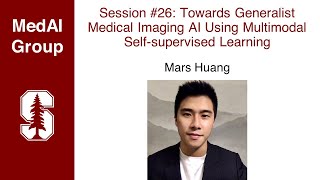
Towards Generalist Imaging Using Multimodal Self-Supervised Learning - Mars Huang
Exploring multimodal self-supervised learning for generalist medical imaging AI, addressing limitations of supervised learning and clinical context integration in automated image analysis.
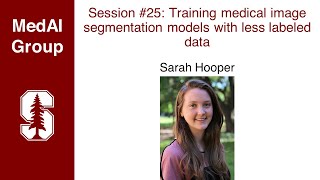
MedAI - Training Medical Image Segmentation Models with Less Labeled Data - Sarah Hooper
Innovative semi-supervised method for training medical image segmentation models using minimal labeled data, achieving comparable accuracy to fully supervised approaches while significantly reducing labeling requirements.