Make Your Own Programming Language in Python
In this series you will be learning how to create your very own simple interpreted programming language in Python. (Edit: It does get complicated by the end.)

XGBoost
Learn to implement XGBoost for regression and classification, explore its mathematical foundations, and master advanced optimizations in Python.
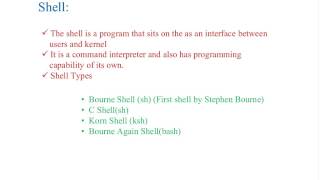
Linux Programming & Scripting
The goal of the course is the study of scripting languages such as PERL, TCL/TK, Python and BASH; creation of programs in the Linux environment; the study of the principles of scripting languages; the study of usage of scripting languages in IC design fl…

Natural Language Processing
This course provides an understanding of natural language processing, its tools, techniques, philosophy and principle. Topics covered include sound, words and word forms, structures, meaning, and web 2.0 applications
Learn Coding From Scratch
Master coding fundamentals with hands-on practice in HTML, CSS, and JavaScript. Learn essential web development skills including semantic markup, responsive design, and interactive scripting.
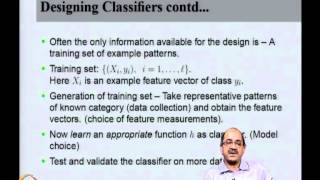
Pattern Recognition
Comprehensive exploration of statistical pattern recognition, covering Bayes classifiers, density estimation, linear discriminants, neural networks, SVMs, and advanced learning techniques.
Deep Learning
Comprehensive exploration of deep learning concepts, from feature descriptors to advanced neural networks, covering theory and practical applications in computer vision and generative models.
Reinforcement Learning Course
Comprehensive exploration of reinforcement learning concepts, from basics to advanced topics, including deep RL, policy gradients, and practical applications in classic games.

Self-Driving Cars With Carla and Python
In this course, you will learn about Carla, an open source autonomous driving simulator. Carla creates a sort of open world with streets, other cars, pedestrians, weather, sensors, and more to help you to write logic to drive self-driving cars, coming wi…
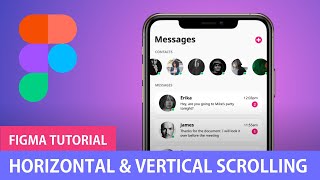
Figma Tutorials
Learn essential Figma techniques: scrolling, components, overlays, menus, web design, prototyping, animations, and more. Master UI/UX design and bring your creations to life with HTML/CSS.
Real-Time Systems
Comprehensive exploration of real-time systems, covering scheduling, operating systems, communication protocols, and databases. Ideal for those seeking in-depth understanding of time-critical computing.
Learn Webpack
Master Webpack: from basics to advanced concepts, including modules, loaders, plugins, optimization, and multi-entry point setups for efficient web development.

Priority Queues with an Interlude on Heaps
Learn about priority queues, including min/max heaps, insertion, removal, and implementation, to enhance your data structure knowledge and coding skills.

Engineering Mechanics
In this course, we would be studying mechanical interaction between different bodies when they interact through the forces applied on each other. This would consist of 2 parts: statics and dynamics.
PSD to Responsive Website Tutorial
Learn to transform PSD designs into fully responsive websites, covering Photoshop slicing, HTML structure, CSS styling, and mobile optimization techniques.

Django Tutorials for Beginners
Learn Django from scratch: build portfolio, todo list, and blog apps while mastering core concepts like MVT, admin interface, templates, and deployment.
Laws of Thermodynamics
Explore fundamental thermodynamic principles, including system properties, heat, work, and the laws governing energy transfer and transformation in closed and open systems.
ARM Based Development
Explore ARM-based development, covering architecture, instruction sets, embedded systems, pipelining, memory management, and programming for ARM processors.
Docker for Beginners
Learn Docker basics: installation, containers, images, commands, and multi-container setups. Hands-on practice with MongoDB, Node.js, and Docker Compose for real-world applications.

Mobile-First Responsive Build with CSS Grid
In this mini-series, we'll build a responsive website using a mobile-first approach (developing the site for mobiles first and then extending the design to larger screens).

Manufacturing Systems Management
Comprehensive exploration of manufacturing systems, covering cellular manufacturing, JIT, synchronous manufacturing, and flexible systems, with focus on optimization and efficiency.