The Soul of a New Machine - Rethinking the Computer
Explore the vision for a new rack-scale server-side machine, discussing open firmware, RISC-V, and Rust's role in revolutionizing computer architecture beyond traditional PC design.
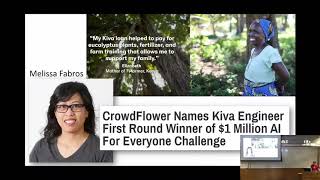
Stanford Seminar - Fastai: A Layered API for Deep Learning
Explore fastai, a deep learning library offering high-level components for quick results and low-level components for research flexibility, built on a layered architecture with Python and PyTorch.
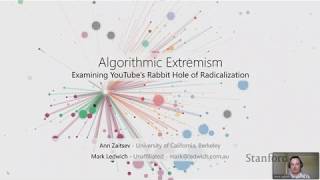
Stanford Seminar - Algorithmic Extremism- Examining YouTube's Rabbit Hole of Radicalization
Examination of YouTube's recommendation algorithm, challenging claims of far-right radicalization. Data analysis reveals a preference for mainstream media over fringe content, with implications for online political discourse.
Solving Cybersecurity as an Economic Problem
Explore innovative approaches to cybersecurity, focusing on economic perspectives and moving target defense strategies to combat prevalent cyberattacks and vulnerabilities.
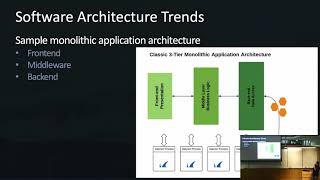
Stanford Seminar - The Current State of Cybersecurity
Explore the current state of cybersecurity, including protection strategies, real-world cases, and defense mechanisms against advanced threats, phishing, and data breaches.
Current Status of TinyML and the Enormous Opportunities Ahead - Panel Discussion
Panel discussion exploring tinyML's current state and future potential, featuring experts from Qualcomm and Google. Covers applications, challenges, privacy concerns, and emerging opportunities in ultra-low power embedded AI computing.
Federated Learning in Medicine - Breaking Down Silos to Advance Medical Research
Explore federated learning's potential to revolutionize medical research by breaking data silos, enhancing privacy, and fostering collaboration across healthcare institutions.
Edge Computing in Autonomous Vehicles - Panel Discussion
Experts discuss edge computing in autonomous vehicles, exploring technological advancements, challenges, and future implications for the automotive industry and society.

Stanford Seminar - Finding the Great Problems
Barbara Liskov discusses her pioneering career in computer science, from early influences to groundbreaking research in programming languages and distributed systems, while reflecting on challenges and ethical considerations in technology.
Tales from the Risks Forum
Explore memorable computer system risks and their mitigations with Peter Neumann, moderator of ACM Risks Forum since 1985, covering hardware, software, human errors, and policy issues.
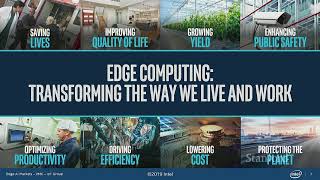
Stanford Seminar - New Chip Technologies for AI and for Asia - The Edge is Where the Action Is
Explore edge computing and AI chip technologies, their applications in IoT and smart devices, and the future of the semiconductor industry with Intel's AI marketing director.
Stanford Seminar - Promise of 5G Wireless – The Journey Begins
Explore the future of wireless technology with a Stanford expert, covering 5G's potential, challenges, and impact on various industries like AI, transportation, and computing.

Stanford Seminar - The Future of Edge Computing from an International Perspective
Explore international perspectives on edge computing, covering 5G integration, federated learning, AI processing, and IoT systems for smart applications across Asia and the U.S.
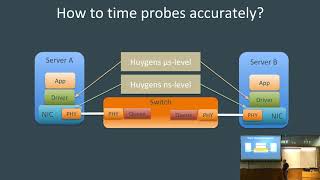
Nanosecond-Level Clock Synchronization in a Data Center
Explore nanosecond-level clock synchronization in data centers using Huygens algorithm, which achieves precision without special hardware through advanced networking and machine learning techniques.
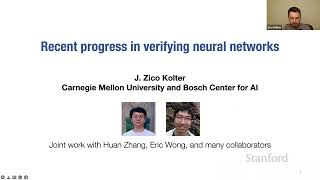
Stanford Seminar - Recent Progress in Verifying Neural Networks, Zico Kolter
Explore recent advancements in neural network verification, focusing on robustness and safety validation. Learn about innovative approaches that significantly speed up the verification process for medium-sized networks.

Safety and Liveness of Robot Behaviors
Explore formal methods for designing robots, guaranteeing behavior, and identifying potential issues. Learn about safety and liveness properties in robotic systems, including multi-robot and human-robot interactions.

Stanford Seminar - Forecasting and Predicting the Future
Explore forecasting challenges, including misinformation, scientific issues, and geopolitical events. Learn to navigate complex information landscapes and identify reliable sources for accurate predictions.
Stanford Seminar - Emerging Risks and Opportunities From Large Language Models
Explore privacy concerns, disinformation risks, and discriminatory shortcuts in large language models. Gain insights on potential harms and brittleness through case studies presented by Stanford's CS professor.
Stanford Seminar - Deploying Autonomous Service Mobile Robots, and Keeping Them Autonomous
Explore challenges and solutions in deploying autonomous mobile robots in dynamic environments, covering robustness, failure anticipation, and efficient adaptation to user needs through advanced perception and learning techniques.
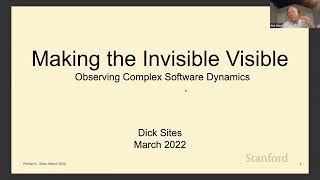
Making the Invisible Visible - Observing Complex Software Dynamics
Explore software performance optimization with Dick Sites, covering seven reasons for slow execution and techniques to observe complex software dynamics.
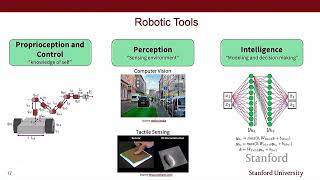
Considerations for Human-Robot Collaboration
Explore the future of human-robot collaboration, focusing on effective teamwork, contextual understanding, and the unique challenges of integrating robots into human-configured environments.