
Domain Adaptation and Related Areas in Machine Learning
Dive into domain adaptation concepts and related machine learning areas with Carnegie Mellon expert Zachary Lipton, exploring theoretical frameworks and practical applications.
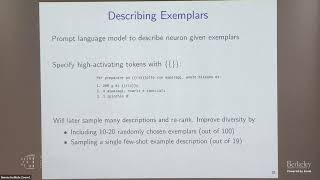
Scalably Understanding AI with AI - Using AI Systems for Model Behavior Analysis
Explore advanced techniques for analyzing AI systems, from behavior elicitation to neuron description, focusing on using AI tools to understand and improve AI model behaviors and representations.
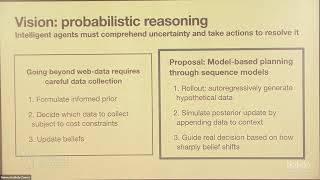
Adaptive Data Collection via Autoregressive Generation in News Recommendation Systems
Discover how autoregressive models can enhance adaptive data collection and decision-making through Thompson sampling, with applications in news recommendation systems and cold-start problems.
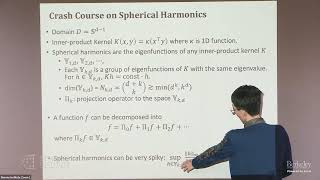
Toward Understanding the Extrapolation of Nonlinear Models to Unseen Domains
Explore advanced concepts in domain adaptation and model extrapolation, focusing on nonlinear models' behavior in unseen domains through theoretical and practical analysis.
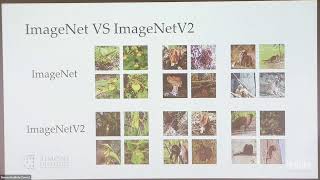
Language-Guided Domain Adaptation
Explore cutting-edge techniques in domain adaptation and language-guided methods with UC Berkeley expert Trevor Darrrell, focusing on advanced machine learning applications and methodologies.
Open-Source and Science in the Era of Foundation Models
Explore the critical role of open-source models in AI development, focusing on API access, open weights, and community-driven innovation for advancing foundation model research.

Causally Motivated Robustness to Shortcut Learning in Machine Learning
Delve into techniques for building robust machine learning models that maintain performance under distribution shifts, with a focus on preventing shortcut learning through causal regularization methods.
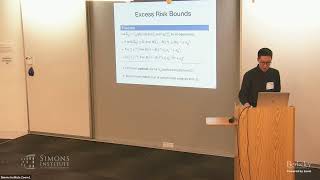
Pseudo-Labeling for Covariate Shift Adaptation in Machine Learning
Explore advanced covariate shift adaptation techniques using pseudo-labeling methods for regression tasks, focusing on kernel ridge regression and bias-variance optimization for target distributions.
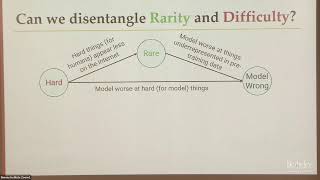
The Evolution of Domain Transfer in the Era of Pre-trained Language Models
Explore the complex relationship between pre-trained language models and domain transfer, examining how pre-training affects model understanding and pattern recognition across different contexts.
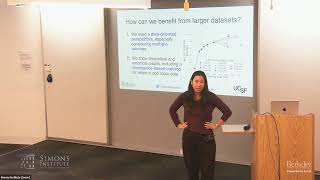
The Data Addition Dilemma: Navigating Distribution Shifts in Machine Learning
Explore the complexities of combining data sources in machine learning, examining when adding more data helps or hurts model performance and fairness across different distributions.
Distribution Shift in Ecological Data - Generalization vs. Specialization
Explore the balance between general and specific computer vision approaches for ecological challenges, focusing on data shifts, adaptation methods, and real-world applications.
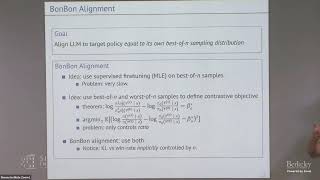
On Spurious Associations and Large Language Model Alignment
Delve into the complex relationship between LLM alignment goals and their unintended effects, exploring how targeted improvements may create unexpected output changes.
Transfer Learning via Local Convergence Rates of the Nonparametric Least Squares Estimator
Explore nonparametric least squares estimator's local convergence properties and their implications for transfer learning under covariate shift, focusing on weighted uniform norm optimization.
User-Level and Federated Local Differential Privacy in Statistical Inference
Explore fundamental statistical inference challenges in distributed data systems with differential privacy constraints across servers and users, focusing on privacy-preserving information transmission.
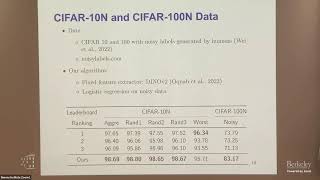
Label Noise and Machine Learning: Why Ignorance is Bliss
Explore theoretical frameworks for handling multi-class label noise in machine learning, focusing on relative signal strength and empirical risk minimization principles.
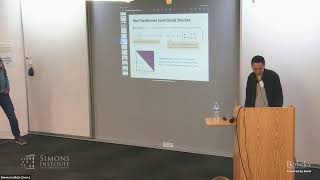
How Transformers Learn Causal Structure with Gradient Descent
Delve into the mathematical foundations of how transformer models learn and encode causal relationships through self-attention mechanisms and gradient-based training algorithms.
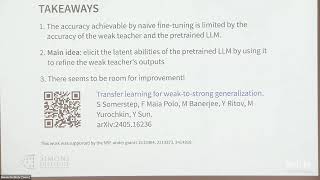
Transfer Learning for Weak-to-Strong Generalization in Language Model Alignment
Explore how to effectively transfer latent knowledge from weak to strong language models, focusing on alignment techniques and practical applications in LLM development.
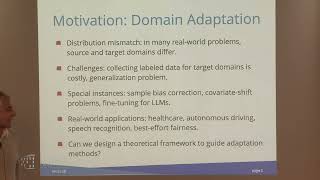
A Discrepancy-Based Theory of Domain Adaptation
Delve into domain adaptation theory through discrepancy concepts, exploring sample reweighting techniques and algorithmic applications for robust machine learning solutions.
Containers and Kubernetes Made Easy - Deep Dive into Podman Desktop and AI Capabilities
Dive into Podman Desktop's advanced container management features and AI capabilities, mastering efficient containerization and Kubernetes orchestration for modern development workflows.

The Compose Multiplatform Crash Course - Build a Clean Code Book App - 2025
Master Compose Multiplatform development by building a clean-architecture book app from scratch, covering Ktor, Room database, custom animations, and advanced UI features for cross-platform deployment.
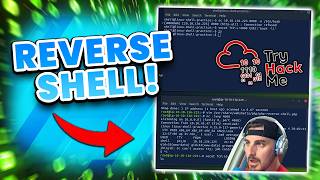
Executing Your First Reverse Shell with TryHackMe - A Beginner's Guide
Master the fundamentals of executing reverse shells through a guided walkthrough of TryHackMe's platform, featuring practical cybersecurity skills and hands-on learning experiences for beginners.