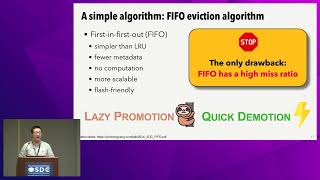
No More LRU: Simple Scalable Caching with FIFO Queues
Discover how S3-FIFO revolutionizes cache eviction algorithms, offering superior scalability and efficiency over traditional LRU methods through a simple three-queue design that optimizes data access in modern storage systems.

Supercharging OpenAI Training with Azure Blob Storage - Architecture and Best Practices
Dive into Azure Blob Storage's architecture and innovations enabling massive-scale AI training, featuring insights on achieving multi-exabyte storage and terabit-level throughput for advanced workloads.

Memory Optimizations in Machine Learning
Discover essential memory optimization techniques for machine learning, from data quantization to model pruning, and learn efficient strategies for minimizing resource consumption across different hardware setups.

Smart Data Accelerator Interface (SDXI) - Use Cases, Proof Points and Future Development
Explore SNIA's Smart Data Accelerator Interface standard, covering use cases in AI, implementation demos, v1.1 features, and opportunities to contribute to this emerging memory-to-memory data movement technology.

Storage Device Quality Control and Supply Chain Management Using Deep Machine Learning Models
Discover how machine learning models predict storage component failures and optimize supply chain management through dual predictive approaches, achieving 90-95% accuracy in real-world deployments.

Storage Acceleration via Decoupled Software Defined Storage Architecture
Discover how to optimize Software Defined Storage performance through decoupled architecture, achieving 10x lower read latency and 4-10x higher throughput using SPDK and NVMe-oF in Ceph environments.

CXL Technology for AI and ML Workloads - Memory Expansion and Performance Optimization
Explore how CXL technology revolutionizes AI/ML workloads through memory expansion, pooling, and sharing. Master performance optimization techniques for large language models and learn practical implementation strategies.

Accelerating GPU Server Access to Network-Attached Disaggregated Storage Using DPU
Explore how DPUs optimize GPU server performance for AI workloads, focusing on network-attached storage acceleration, improved efficiency, and scalability for Large Language Models using AMD systems.

Storage in the Era of Large-scale AI Computing
Explore the critical storage challenges and solutions in large-scale AI computing, focusing on emerging applications like Vector DBs and RAGs while examining full-stack infrastructure requirements.
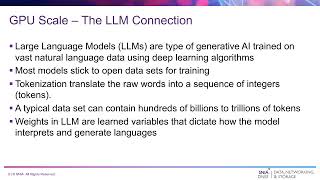
Ethernet in the Age of AI - Adapting to New Networking Challenges
Explore how Ethernet networks are evolving to handle AI workloads, from network topologies to congestion management, with focus on practical solutions for machine learning implementations.
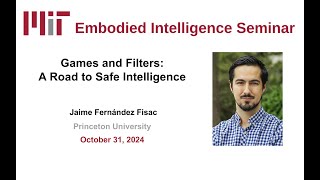
Games and Filters: A Road to Safe Intelligence
Explore game-theoretic approaches and safety principles in AI systems, from robotic control to human-AI interactions, focusing on developing reliable safety guarantees for autonomous systems.
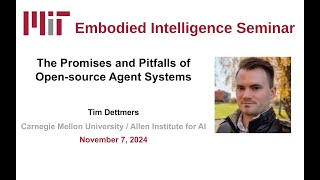
The Promises and Pitfalls of Open-source Agent Systems
Explore the potential and challenges of open-source AI agent systems, examining their performance compared to closed-source alternatives and key issues in evaluation and generalization.
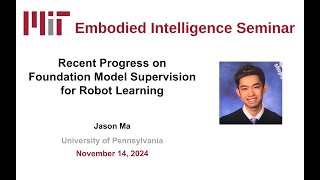
Recent Progress on Foundation Model Supervision for Robot Learning
Discover how foundation models from non-robot domains can revolutionize robot learning, enabling automated task acquisition without extensive data collection or manual controller design.

The Future of Gameplay Cinematic Authoring in Unreal Engine 5.5
Discover the latest Unreal Engine 5.5 Sequencer features for creating dynamic gameplay cinematics, exploring platform scalability, player choice, and future developments in cinematic authoring.

Number of Islands - LeetCode Problem Solution
Master the Number of Islands algorithm using C++ through a detailed graph-based solution approach to this popular LeetCode programming challenge.
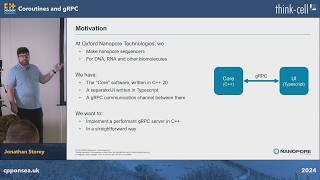
Introduction to C++ Coroutines and gRPC - Writing Coroutine Support Code
Dive into high-performance C++ coroutines and gRPC implementation, learning to write support code for production-ready applications with practical examples and composable library integration techniques.
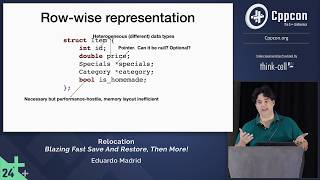
C++ Relocation - How to Achieve Blazing Fast Save and Restore
Discover advanced C++ relocation techniques for optimizing memory management, achieving faster save/restore operations, and implementing efficient runtime polymorphism through type erasure and value management concepts.

QWEN 2.5 Coder - Local AI Development with Ollama, Open WebUI and Continue
Master local AI coding with QWEN-2.5 Coder through Ollama, OpenWebUI, and Continue. Set up a powerful development environment and explore coding capabilities across Python, JavaScript, React, and Rust.
Incrementally Extending WASI from Version 0.2 to 0.3 and Beyond
Discover the evolution of WASI from version 0.2 to 0.3, exploring key developments, backwards compatibility, and the roadmap toward a full 1.0 release for outside-the-browser ecosystem applications.
The Wasm Wilderness: Technological Peaks We've Reached with WebAssembly
Explore WebAssembly's evolution beyond browsers, discovering its impact on cloud computing, IoT, and plugin systems while understanding the foundation of open standards.
FaaS Platform Engineering with WebAssembly - Building and Scaling Cloud Functions
Discover how American Express leverages WebAssembly and wasmCloud runtime to enhance their FaaS platform capabilities, improve performance, and scale adoption across enterprise systems.