Dynamic Defense - Context-Based Access Control and Zero Trust
Explore modern access control through zero trust principles, context-based security, and AI-driven threat detection for enhanced cybersecurity implementation and risk management.
Zero Trust Principles for AI Security and Protection
Explore the critical intersection of Zero Trust principles and AI security, learning strategies to protect autonomous systems and safeguard data integrity in AI environments.
End-to-end Generative AI Workflows for Developers
Discover how to deploy and scale Meta Llama 3.1 models using NVIDIA NIM, KServe, and PEFT techniques in a Kubernetes environment, with practical demonstrations of enterprise-grade AI workflows.
Building a Browser Rendering Engine in Rust - The Servo Project
Explore the evolution of Servo, a web rendering engine built in Rust, and discover how its memory safety and concurrent design are revolutionizing browser technology and web standards implementation.
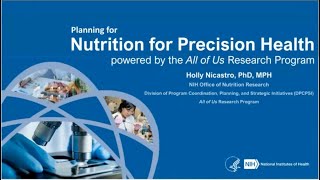
NIH Interest in the Field of Precision Nutrition - Understanding Individual Dietary Responses
Discover how NIH's Nutrition for Precision Health program uses AI, microbiome research, and diverse participant data to develop personalized dietary recommendations and predict individual responses to different foods.
The Relationship Between Language and Thought - Episode 2
Explore the intricate connection between human language and cognitive abilities through expert discussions on evolution, intelligence, and the fundamental role of communication in human society.
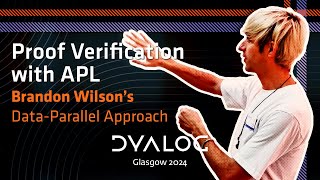
Data Parallel Proof Verification in APL - Using Metamath for Mathematical Databases
Discover how APL enables data-parallel verification of mathematical proofs using Metamath, exploring formal verification methods, proof structures, and efficient processing of large mathematical databases.
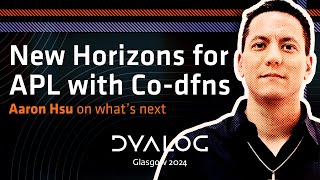
Co-dfns Compiler Roadmap and Updates - Implementation and Integration Features
Discover the latest developments in Co-dfns compiler for APL, exploring GPU integration, scalar optimization, static analysis, and traditional APL support through practical use cases and performance insights.
Telemetry and Protocol Buffers: Implementation in Dyalog APL
Discover how to implement OpenTelemetry in Dyalog APL and leverage Protobuf for efficient data serialization, with practical demonstrations of performance monitoring and cross-language data exchange.
Efficient XML and JSON Parsing in Elixir - Performance Optimization Techniques
Discover how to achieve 10x faster XML parsing in Elixir through selective parsing techniques, with practical applications for JSON processing and enhanced security measures.
Thread Pool Elements in C++20 - Understanding Consumer-Producer Patterns
Explore the fundamentals of building thread pools in C++20, understanding consumer-producer patterns and how various concurrency elements work together through practical implementation examples.

A First-Principles Approach to Understanding Deep Learning
Delve into the fundamental principles of deep learning through statistical physics, exploring connections between neural networks, Gaussian processes, and scaling laws with insights from a DeepMind researcher.
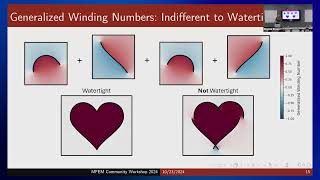
Robust Containment Queries over Collections of Parametric Curves via Generalized Winding Numbers
Discover advanced geometric containment query techniques for 2D regions using rational Bezier curves and generalized winding numbers, enabling efficient multiphysics simulations without expensive refinement processes.
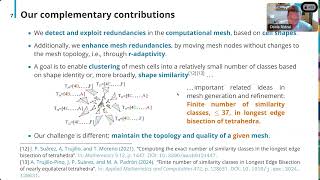
R-Adaptive Mesh Optimization to Enhance Finite Element Basis Compression
Explore advanced techniques for optimizing finite element mesh compression through dictionary-based schemes and r-adaptive mesh optimization to reduce memory usage while maintaining performance.
A Practical Introduction to Data Science and the Law
Explore essential legal considerations for data science projects, from data sourcing and model deployment to privacy, IP rights, and emerging AI regulations.

Installing ComfyUI - Complete Guide for Stable Diffusion and Flux Models
Master ComfyUI installation and setup, from basic AI image generation to advanced workflows using Stable Diffusion, Flux, LORAS, and ControlNets. Learn model management, custom workflows, and troubleshooting techniques.
Pulumi Infrastructure-as-Code and Configuration Management in VS Code
Master infrastructure-as-code development with Pulumi's VS Code extension, featuring debugging tools, environment management, and seamless configuration handling for cloud deployments.
Distributed Database Architectures - Lecture 22
Explore distributed database architectures, from fundamental concepts to real-world implementations, featuring insights from DataStax's Jonathan Ellis on modern distributed systems.
Building Resilient Environments - Incorporating Security and Compliance into Database Monitoring
Discover essential strategies for database security and compliance monitoring, from vulnerability detection to access control implementation and audit processes for maintaining industry standards.
Event Discovery for Kubernetes Applications Using Knative Eventing
Discover how Knative Eventing's dynamic features streamline event discovery in Kubernetes, enabling efficient event type management and automated processes for developers working with cloud-native applications.
How the Radius Dashboard Leverages Backstage to Build Visualizations of Cloud-Native Applications
Discover how Microsoft's team leveraged Backstage to create the Radius Dashboard, exploring plugin implementations, cloud-native application visualizations, and ecosystem integrations for enhanced development.