Negative Feedback as a Noise Suppression Mechanism in Collective Foraging
Explore how social insects use negative feedback signals in foraging behavior, examining their role in variance reduction and system robustness through stochastic dynamics analysis.
Metabolic Division of Labor Creates Organismal Cohesion
Explore how metabolic division of labor in ant colonies creates complex superorganisms, examining social transfers, resource allocation, and evolutionary implications for collective systems and organisms.
Does Life Compute? Understanding Protein Folding and Biomolecular Assembly
Explore the mathematical structures behind protein folding and biomolecular assembly, examining computational approaches and theoretical models that illuminate life's fundamental processes.
How Multiscale Collectives Collect Across Scales in Biological Systems
Explore groundbreaking research on how collective systems operate across different scales, from embryonic development to bioelectric patterns in brain formation, using minimal two-scale models and causal networks.
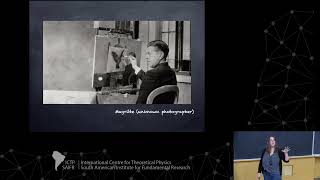
Integrating Different Levels of Pattern Formation: From Sub-cellular to Multi-cellular Structures - Class 2
Explore pattern formation across biological scales, from subcellular structures to multicellular systems, examining the integration and emergence of complex biological organization.
Integrating Different Levels of Pattern Formation: From Sub-cellular to Multi-cellular Structures - Class 3
Explore pattern formation across biological scales, from subcellular structures to multicellular systems, examining integrated mechanisms and hierarchical organization in living organisms.
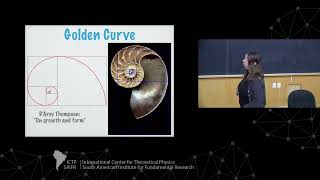
Integrating Different Levels of Pattern Formation: From Sub-cellular to Multi-cellular Structures - Class 4
Explore pattern formation across biological scales, from subcellular structures to multicellular systems, examining integrated mechanisms and hierarchical organization in living organisms.

Cancer Immunotherapy Data Science Challenge: Data Overview - Lecture 3B
Dive into single-cell sequencing data analysis and machine learning applications for enhancing T-cell effectiveness in cancer immunotherapy through genetic modification strategies.
Measuring Gene Expression in T Cells for Cancer Immunotherapy - Lecture 2
Discover how gene expression measurement techniques in cells contribute to understanding and enhancing T-cell based cancer immunotherapy approaches through advanced sequencing technologies.
Understanding Inflammatory Bowel Disease and How to Treat It - Part 2
Delve into advanced treatment approaches and clinical research findings for inflammatory bowel disease with expert insights from a leading gastroenterologist at Imperial College London.
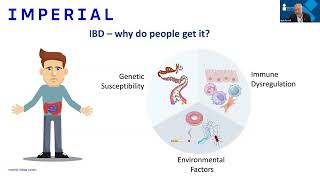
Understanding Inflammatory Bowel Disease and Treatment Mechanisms - Part 1
Gain insights into inflammatory bowel disease mechanisms and treatment resistance with Professor Powell's expert analysis of current medical understanding and therapeutic approaches.
Normalization Models of Attention - From Neural Computation to Behavioral Goals
Explore how attention interacts with neural normalization to shape perception and behavior, featuring hands-on MATLAB exercises and computational modeling frameworks for cognitive processing.
Flow, Transport and Mixing Limited Bioprocesses in Confined and Heterogeneous Media
Explore microscopic processes in porous media, from fluid dynamics to bacterial transport, and understand their impact on large-scale environmental phenomena through experimental and theoretical approaches.

New Frontiers in Cancer Care: Advances in Genomics, AI, and Personalized Treatment
Explore groundbreaking advances in cancer treatment, from genomic sequencing to AI-driven research, and discover how personalized medicine is revolutionizing patient care and prevention strategies.
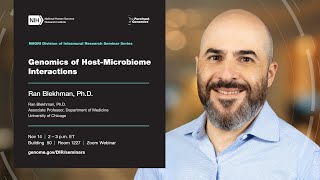
Genomics of Host-Microbiome Interactions
Explore the complex relationship between human genomics and microbiome through cutting-edge research, focusing on host-microbe interactions, disease impacts, and evolutionary aspects of human-microbiome symbiosis.
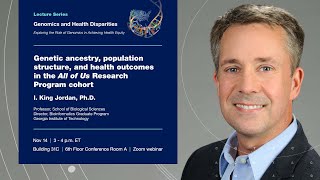
Genetic Ancestry, Population Structure, and Health Outcomes in the All of Us Research Program Cohort
Explore genetic ancestry research and population genomics in the All of Us Research Program, focusing on health equity, bioinformatics advances, and their impact on addressing health disparities.
Mathematical Modelling of Microtube Driven Invasion of Glioma
Explore mathematical modeling techniques for understanding glioma invasion through microtubes, featuring advanced research insights and theoretical frameworks for cancer progression analysis.
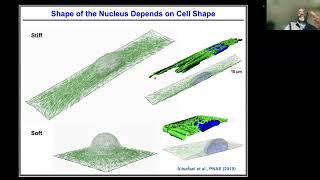
How Does the Tumor Microenvironment Regulate Genome Organization of Cancer Cells?
Explore the complex relationship between tumor microenvironments and cancer cell genome organization through mathematical modeling and cutting-edge research insights.
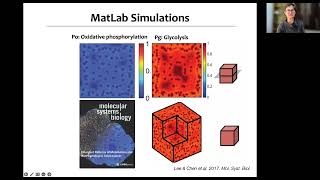
Cancer Stem Cell Heterogeneity and Tumor Microenvironments in Colorectal Cancer
Explore the complex relationship between cancer stem cells and tumor microenvironments in colorectal cancer through mathematical modeling and biological insights from leading research.
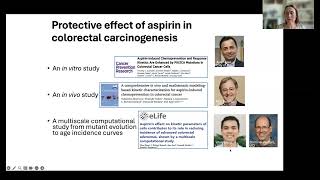
Protective Effect of Aspirin in Colorectal Carcinogenesis
Explore the mathematical modeling of aspirin's protective mechanisms in colorectal cancer development through advanced analytical approaches and research findings.
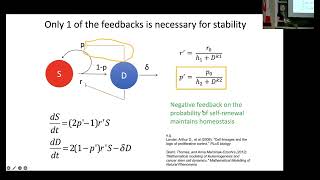
Mathematical Models of the Hematopoietic System at Homeostasis and the Clonal Evolution of Cells
Explore mathematical modeling approaches to understand hematopoietic system homeostasis and cellular clonal evolution patterns in cancer development and progression.