
Meiosis
Comprehensive explanation of meiosis, covering its stages, genetic recombination, and significance in creating genetic diversity. Includes detailed comparisons with mitosis and differences between male and female meiosis.
New Biology of Breast Cancer and Its Therapeutic Implications
Explore the latest advancements in breast cancer biology, including disease subtypes, targeted therapies, and immunotherapy approaches, with insights on ongoing research and clinical trials.

Cell Culture Engineering - Gene Therapy and Cell Physiology
Explore gene therapy, DNA delivery methods, and cell physiology. Learn about tissue types, cell development, and the extracellular matrix in this comprehensive biomedical engineering lecture.
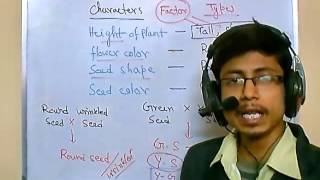
Genetics Lecture
Comprehensive exploration of classical and modern genetics, covering Mendelian laws, inheritance patterns, chromosomal structures, and evolutionary concepts for a solid foundation in genetic principles.

Microbiology
Comprehensive exploration of microbiology fundamentals, covering bacterial morphology, growth, staining techniques, sterilization methods, culture media, immunity, and specific pathogens.
A Multiscale Model of the CD8 T-Cells Immune Response
Explore mathematical models of CD8 T-cell immune response, examining molecular heterogeneity and population dynamics during pathogen infection.
A Simple Go-or-Grow Model of Aerotaxis Along a Self-Generated Gradient
Explore a minimal model of cell colony expansion driven by aerotaxis, examining division, directional movement, and diffusion in response to oxygen gradients.

Cell Cycle and Genes - Mitosis and Meiosis
Comprehensive exploration of cell cycle stages, mitosis, and meiosis, covering key processes like DNA replication, chromosome segregation, and cell division in eukaryotes and prokaryotes.

Phases of Meiosis
Explore the intricate process of meiosis, from prophase to anaphase II, gaining a comprehensive understanding of cell division and genetic variation in reproductive cells.

Phases of Mitosis
Explore the stages of cell division through a detailed explanation of mitosis phases, from interphase to metaphase, enhancing your understanding of cellular biology.
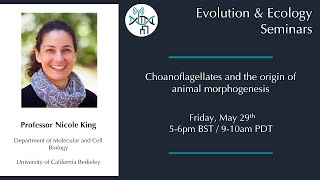
Choanoflagellates and the Origin of Animal Morphogenesis
Explore choanoflagellates' role in animal origins, focusing on morphogenesis, life history, and bacterial interactions. Gain insights into early animal development and evolution.

Meiosis - Biology - MCAT
Comprehensive overview of meiosis, focusing on key stages, differences from mitosis, and its significance in genetics and reproduction. Includes visual aids and mnemonics for effective learning.
Ideas on Self-Organization of Metabolic Networks, How it can Lead to Division - by Sunil Laxman
Explore self-organization in metabolic networks and its potential role in cell division. Gain insights into the complex interplay between cellular metabolism and biological processes.

DNA Replication, RNA, and Nucleotides in Cell Biology and Genetics
Comprehensive exploration of DNA replication, RNA, nucleotides, and genetic processes. Covers fundamental concepts and mechanisms in cell biology, offering in-depth understanding for biology students.
The Cell Cycle - Key Concepts in Cancer Pathophysiology
Explore the intricacies of cellular division and growth in this concise overview of the cell cycle, offering key insights for biology and medical students.
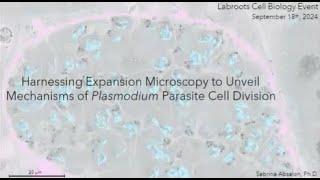
Exploring Plasmodium Parasite Cell Division Processes through Expansion Microscopy Visualization
Explore Plasmodium parasite cell division using expansion microscopy. Gain insights into eukaryotic cell polarity, organelle segregation, and universal division mechanisms in apicomplexan protists.
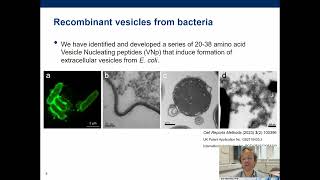
High-yield Vesicle Packaged Recombinant Protein Production from E. Coli
Explore high-yield vesicle packaged recombinant protein production from E. coli with Dr. Dan Mulvihill. Gain insights into microbial cell biology and innovative bacterial technologies for biotechnology applications.

The Science of Cells That Never Get Old
Nobel laureate Elizabeth Blackburn explores the science of aging, discussing telomerase and its role in cellular longevity. Learn about groundbreaking research that may give us more control over the aging process.

Cyclin and CDK in Cell Cycle Progression - How Cyclin CDK Works
Explore the role of Cyclin and CDK in cell cycle progression. Learn how these proteins interact and regulate key phases of cellular division.
Physics of Surface Segregation: From Industrial Formulations to Chromatin Organization
Explore surface segregation physics in polymers and its applications to biophysical processes like chromatin organization and cellular behavior.
Growth and Mechanics of Tissues - SPL Rothschild Lecture
Explorez les propriétés mécaniques des tissus et leur rôle dans la croissance et l'expression génétique, en mettant l'accent sur les tissus cancéreux et le développement précoce.