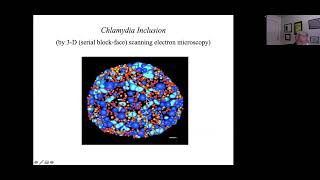
Growth of Reticulate Body (RB) Population in the Conversion Phase of Chlamydia Life Cycle
Explore mathematical modeling of reticulate body population dynamics in Chlamydia's life cycle, focusing on conversion phase analysis and population growth patterns.
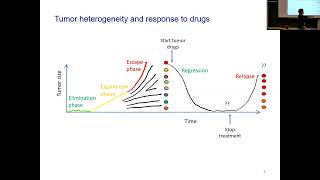
Statistical Dynamics of Tumor Initiation and Progression
Explore the mathematical modeling of tumor development through statistical dynamics, focusing on glioma invasion patterns and microtube-driven cancer progression mechanisms.

Optimizing Non-viral CRISPR HDR for High-efficiency Large Knock-in in Primary T Cells and iPSCs
Master advanced CRISPR HDR techniques for efficient large knock-ins in T cells and iPSCs, covering repair mechanisms, reagent selection, and optimized workflows using Aldevron Nanoplasmids™.
Artificial Intelligence for Protein Modeling - DNA, RNA and Ion Docking Explained
Discover how AlphaFold3 revolutionizes structural biology through AI-powered protein modeling, enabling accurate predictions of 3D molecular structures, DNA/RNA interactions, and protein-protein binding mechanisms.
What Do the Folds in Your Brain Say About You? - Understanding Brain Convolutions and Their Development
Explore the fascinating mathematics behind brain folding patterns, their development, and what these intricate structures reveal about brain size, evolution, and potential pathologies.
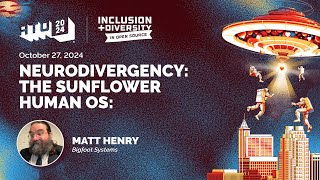
Neurodivergency: The Sunflower Human OS - Understanding Neurological Variations and Workplace Inclusion
Explore neurodivergence, its various forms, and workplace challenges faced by individuals with different neurological processing patterns. Gain insights into accommodating invisible disabilities in group settings.

End-to-End System Design for DNA Data Storage
Explore the groundbreaking potential of DNA data storage systems, from core components to real-world implementation challenges, focusing on scalability, automation, and environmental impact.
The Physics of Spatial Ecology - Class 4
Explore the fundamental principles of spatial ecology through physics-based approaches, examining pattern formation and biological systems across different scales in natural environments.
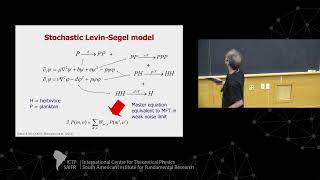
Stochastic Pattern Formation in Space and Time: From the Brain to the Biosphere - Class 5
Explore stochastic pattern formation principles across biological systems, from neural networks to ecosystem dynamics, with insights into spatial-temporal mathematical modeling.
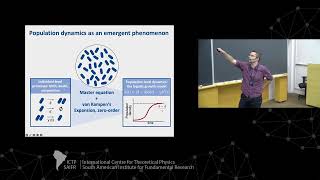
Integrating Different Levels of Pattern Formation: From Sub-cellular to Multi-cellular Structures - Class 1
Explore pattern formation across biological scales, from subcellular structures to multicellular systems, examining fundamental principles and mechanisms of biological organization.
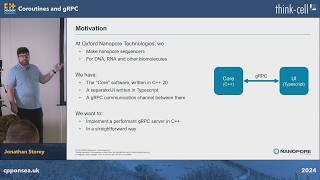
Introduction to C++ Coroutines and gRPC - Writing Coroutine Support Code
Dive into high-performance C++ coroutines and gRPC implementation, learning to write support code for production-ready applications with practical examples and composable library integration techniques.

How Inflammation Works - Understanding Your Body's Immune Response
Discover how inflammation works at the cellular level, from immune system responses to tissue repair mechanisms, and learn practical ways to support your body's natural healing processes.
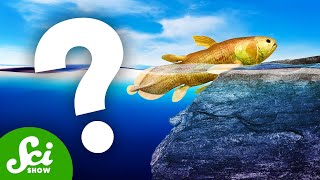
Romer's Gap: The Missing Link in Early Tetrapod Evolution
Explore the mysterious 20-million-year gap in the fossil record known as Romer's Gap, and discover how scientists are uncovering clues about early tetrapods' transition to land.
Exploiting Compositional Structure in Deep Learning - Theory and Applications
Delve into high-dimensional function modeling and deep learning applications for heart digital twins, exploring theoretical frameworks and practical implementations in medical risk prediction.

Stochasticity and Collective Escape Responses in Moving Animal Groups
Explore the fascinating dynamics of animal group behavior, focusing on stochastic influences and collective escape responses through theoretical models and empirical data analysis.

Mechanistic Theory of Social Foraging
Explore the quantitative framework of animal foraging behavior, examining decision-making strategies and cognitive dynamics in both individual and social contexts through mechanistic theoretical models.
Emergent Spatiotemporal Patterns in Insect Swarms
Explore fascinating research on how insect swarms create complex patterns through collective behavior, examining mathematical models and biological insights from cutting-edge studies.
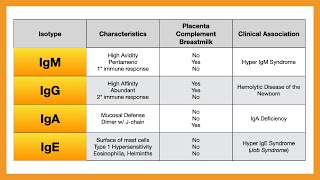
Antibody Isotypes and Their Functions - IgM, IgG, IgA, IgE, IgD
Master the key characteristics and functions of antibody isotypes IgM, IgG, IgA, IgE, and IgD in immune response, with focus on their unique roles and clinical significance.

The Evolution of Earth's First Predator - From Origins to Anomalocaris
Explore the fascinating evolution of Earth's first predators, from early cellular life to the emergence of Anomalocaris, examining predation's role in driving evolutionary arms races and biodiversity.
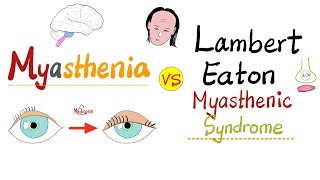
Myasthenia Gravis vs Lambert-Eaton Myasthenic Syndrome - A Neurological Comparison
Understand the key differences between Myasthenia Gravis and Lambert-Eaton Myasthenic Syndrome, exploring their causes, symptoms, diagnostic approaches, and treatment strategies.
Stochastic Pattern Formation in Space and Time: From the Brain to the Biosphere - Class 4
Explore stochastic pattern formation principles across biological systems, from neural networks to ecosystem dynamics, with insights into spatial-temporal mathematical modeling.