
Human Behavioral Biology
Explore the biological foundations of human behavior, from genetics to neuroscience, covering topics like evolution, endocrinology, sexuality, aggression, and complex psychological phenomena.

Zoology
Welcome to Crash Course Zoology! In this fourteen-episode series made in partnership with PBS and Nature, Crash Course Zoology will take a rapid deep dive into the weird and wonderful biology of animals.
Vertebrate Paleontology
Explore vertebrate evolution through fossils, anatomy, and key adaptations. Uncover the origins of major groups like fish, amphibians, reptiles, birds, and mammals, including human ancestors.
Archaic Admixture in Human History - Next in Evolution
Exploring human evolution through genetic analysis, focusing on interbreeding with archaic species like Neanderthals and Denisovans, and its impact on modern human DNA and health risks.
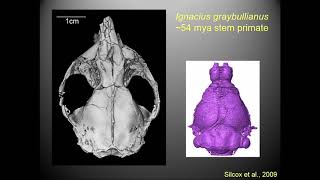
Why So Big? Understanding the Early Evolution of the Brain in Primates
Explore primate brain evolution through fossils and CT scans. Dr. Silcox examines why primates developed large brains, using advanced imaging to study ancient specimens and compare with modern species.
Daniel Lieberman on Evolution and Exercise - The Science of Human Endurance
Explore human evolution, endurance, and exercise with Daniel Lieberman. Discover how our unique physiology shaped our species' success and impacts modern health, aging, and physical activity habits.

The Future of Human Evolution - What Darwin Didn't Know
Explore the potential future of human evolution, from larger heads to robotic implants, as science takes over from nature. Discover how technology and medicine could shape our species' development.
Animal Navigation - Exploring Migratory Patterns and Mechanisms
Explore animal navigation strategies and research with expert Susanne Åkesson, discussing how various species orient themselves and navigate across long distances.
Early Life in the Oceans - From Sea to Changing Sea
Explore the origins and evolution of marine life with leading experts, discussing microbial ecosystems, deep-sea organisms, and the impact of changing oceans on early life forms.
Evolutionary Forces in Humans and Pathogens - Natural Selection and Genomic Studies
Explore genomic evolution in humans and pathogens, focusing on natural selection, adaptive traits, and disease-causing microbes. Learn about cutting-edge research methods and their public health implications.
DNA - Mammoths, Neanderthals, and Your Ancestors
Explore ancient DNA's role in understanding human evolution, from mammoths to Neanderthals, with leading experts discussing genetic research, anthropology, and the implications for our ancestral history.
The Evolution of Gene Expression - From Microevolution to Major Transitions
Explore gene regulation and expression evolution with Thomas Lenormand, covering microevolution, macroevolution, and major transitions in biological systems. Gain insights into regulatory mechanisms and their evolutionary implications.
Contagion - Exploring Modern Epidemics: Big Data in Epidemiology - Part 3
Experts discuss using big data to understand and predict modern epidemics, exploring innovative approaches in medical intelligence, evolutionary biology, and genetics for improved disease management and public health.
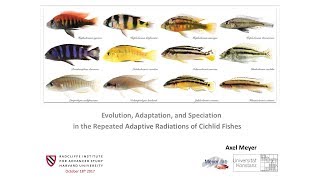
Evolution, Speciation, and Adaptation of Cichlid Fish
Explore cichlid fish evolution, speciation, and adaptation with Prof. Axel Meyer. Discover genome duplication, convergent evolution, and unique traits like scale eating and large lips in these fascinating aquatic species.
Genetic Prediction of Traits and Diseases Across Diverse Populations - Next in Evolution
Exploring genetic prediction of traits and diseases across diverse populations, focusing on innovative research in evolution, genetic adaptations, and cross-disciplinary approaches to understanding human genetics.
Evolution of Life in the City - Next in Science Series
Exploring urban evolution through white clover genetics, this talk examines how cities drive genetic changes and challenges assumptions about urban environments' impact on species adaptation.
Next in Evolution - The Evolution of Diversity in East African Cichlid Fishes
Exploring the evolution of diversity in East African cichlid fishes through genomic data and functional variation, highlighting adaptations and cross-disciplinary research approaches.
Crafty Crows - Christian Rutz - Radcliffe Institute
Explore the fascinating world of New Caledonian crows, their remarkable tool-making abilities, and what this reveals about animal intelligence and evolution in this insightful presentation by biologist Christian Rutz.
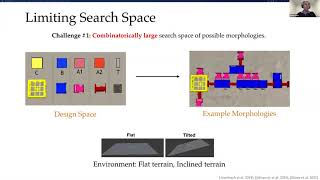
Towards Understanding and Building Embodied Intelligence
Exploring embodied intelligence: evolution, morphology, and learning in complex environments. Insights into AI agents' adaptability and performance using the DERL framework.

Sex and Violence Among the Apes - Global Problems of Population Growth
Explore primate behavior, focusing on chimpanzee social dynamics, mating strategies, and inter-group violence. Gain insights into evolutionary pressures shaping ape societies and their implications for human behavior.
Evolutionary Stability: Cooperation, Mutation, and Equilibrium in Game Theory - Lecture 11
Explore evolutionary stability in game theory, examining cooperation, mutation, and equilibrium concepts. Learn how biological strategies relate to economic principles like Nash equilibrium and domination.