What Is Cancer - What Is Tumor - Neoplasia - Benign vs Malignant - Oncology Basics
Comprehensive overview of cancer, tumors, and neoplasia, covering key concepts like benign vs malignant growths, metastasis, and oncology basics with mnemonics for better understanding.
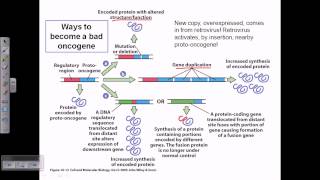
Cancer Biology
Explore oncogenes, tumor suppressors, and genetic mutations driving cancer development. Learn about cancer cell properties, growth patterns, and the progression of specific cancers like colon cancer.
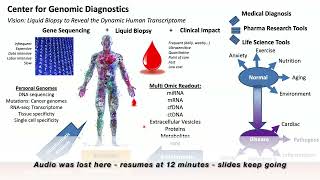
Ultrasensitive and Ultraselective Liquid Biopsy: Nanophotonics-Driven Digital Resolution Biomolecule Sensing - Spring 2023
Explore cutting-edge nanophotonics-driven digital resolution biomolecule sensing combined with target molecule recycling for ultrasensitive and ultraselective liquid biopsy techniques.
Understanding Breast Cancer Biology: New Discoveries and Treatments
Explore new breast cancer therapies, clinical trials, and personal insights from experts, offering hope and knowledge for patients and healthcare professionals alike.
Understanding Gastric Cancer and Its Relationship to the Immune System and Microenvironment
Explore gastric cancer's development, immune system role, and microenvironment impact. Learn about its disproportionate effect on Asian Americans and its status as a leading cause of cancer-related deaths worldwide.
Advances in Lung Cancer Treatment and Diagnosis from Stanford Health Care
Expertos de Stanford discuten cambios demográficos, factores de riesgo, síntomas y avances en diagnóstico y tratamiento del cáncer de pulmón, incluyendo cirugía, radioterapia e inmunoterapia.
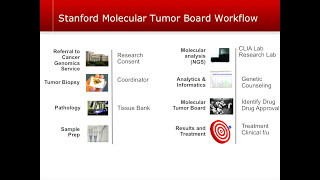
What's Happening with Cancer Genomics?
Explore clinical research in cancer genomics and its impact on treatment approaches, including personalized medicine, tumor profiling, and targeted therapies.
Immunotherapy for Gynecological Cancers
Explore current immunotherapy progress for gynecological cancers, including clinical trial data and promising new approaches for ovarian, endometrial, and cervical cancer treatment.
Dr. Oliver Dorigo on Ovarian Cancer - Current & Novel Treatment Strategies
Explore advancements in ovarian cancer diagnosis and treatment, including specialized approaches based on cancer location and cellular anatomy, with insights from Dr. Oliver Dorigo of Stanford University.

Biomedical Engineering Applications in Cancer Diagnosis and Treatment - Lecture 24
Explore biomedical engineering's role in cancer diagnosis and treatment, from tumor biology to drug development, highlighting challenges and opportunities for innovation in the field.
Big Data Approaches to Advance Colorectal Cancer Prevention, Treatment, and Biology
Explore innovative big data strategies for advancing colorectal cancer research, focusing on prevention, treatment, and biological understanding with expert insights.
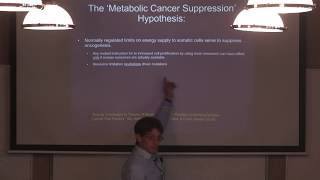
Does the Ecology of Somatic Tissue Normally Constrain Cancer Evolution?
Exploring how energy supply to tissues affects cancer evolution, proposing that normal physiological limits on cellular energy may suppress oncogenesis, with implications for cancer risk factors and prevention.
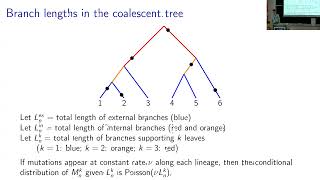
The Site Frequency Spectrum in Growing Cancer Cell Populations
Explore a lecture on the site frequency spectrum in growing cancer cell populations, delivered by Jason Schweinsberg from the University of California, San Diego. Delve into the mathematical aspects of cancer evolution as part of the Fields Institute's T…
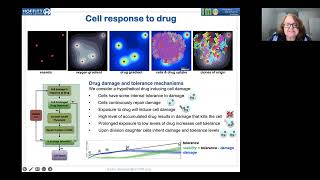
Ecological Niches for the Development of Drug-Induced Resistance
Explore the concept of ecological niches in the context of drug-induced resistance in cancer treatment through this 26-minute lecture by Kasia Rejniak from Moffitt Cancer Center. Delve into the intersection of ecology, evolution, and oncology as part of…
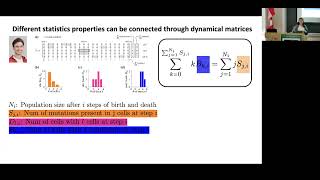
Mutation Accumulation in Healthy Tissues
Explore a thought-provoking lecture on mutation accumulation in healthy tissues delivered by Weini Huang from Queen Mary University of London. Delve into the intricate processes of genetic changes occurring in seemingly healthy bodily tissues and their p…
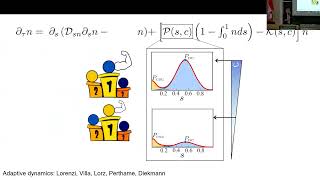
Modelling the Impact of Intra-Tumour Heterogeneity on Radiotherapy Outcomes
Explore a 39-minute lecture on the impact of intra-tumour heterogeneity on radiotherapy outcomes, delivered by Giulia Celora from University College London. Delve into the complex world of mathematical oncology as part of the Fields Institute's Thematic…
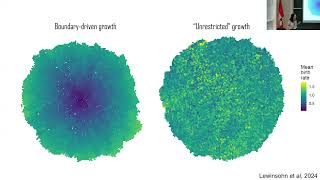
Decoding Evolutionary Information from Cancer Trees
Explore a 41-minute lecture on decoding evolutionary information from cancer trees, presented by Alison Feder from the University of Washington, Seattle. Delve into the intersection of oncology and evolutionary biology as part of the Thematic Program on…
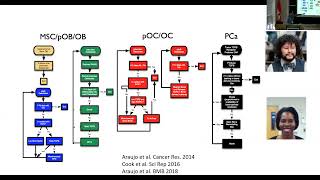
Defining Selection in Somatic Evolution by Modeling Tumor-Stromal Interactions
Explore the complex dynamics of tumor-stromal interactions and their role in somatic evolution through a 35-minute lecture by David Basanta from Moffitt Cancer Center. Delve into the fascinating field of mathematical oncology as part of the Thematic Prog…
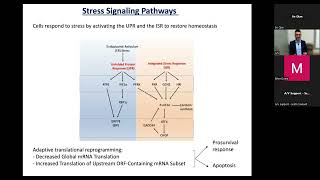
Stress Signaling in Glioblastoma Pathogenesis, Metabolism, and Response to Therapy
Explore stress signaling's role in Glioblastoma stem cells, tumor growth, lipid metabolism, and therapeutic resistance. Gain insights into cutting-edge cancer research.
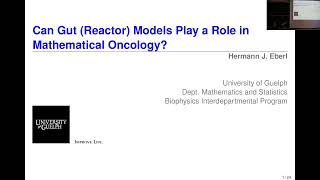
Can Gut Reactor Models Play a Role in Mathematical Oncology?
Explore the potential role of gut reactor models in mathematical oncology through Hermann Eberl's seminar on innovative approaches to cancer research.

Bioinformatics for Cancer Genomics 2018
Comprehensive exploration of cancer genomics, covering databases, sequencing analysis, gene expression, mutations, and cloud-based bioinformatics tools for reproducible research and big data integration.