
History of Science - CrashCourse
In 46 episodes, Hank Green teaches you the history of science! This course is based on the 2nd and 3rd edition of Science & Technology in World History by McClellan & Dorn.
Biology - CrashCourse
Crash Course creates free, high-quality educational videos used by teachers and learners of all kinds. And thus begins the most revolutionary biology course in history.
Vertebrate Paleontology
Explore vertebrate evolution through fossils, anatomy, and key adaptations. Uncover the origins of major groups like fish, amphibians, reptiles, birds, and mammals, including human ancestors.

Why So Many Species? The Factors Affecting Biodiversity
Explore biodiversity from ecological, economic, evolutionary, and personal perspectives, examining its importance, value, and our relationship with nature.
Software Engineering - Evolving Computer Programs
Explore how biological concepts, especially Darwinian evolution, can revolutionize software development, debugging, and our understanding of large-scale software systems.

Life Science and Biology Year in Review - Cells, Genetics, Evolution, Symbiosis, Biomes, Classification
Comprehensive review of life science fundamentals: cells, genetics, evolution, body systems, ecology, and classification. Covers key concepts for a solid understanding of biology.
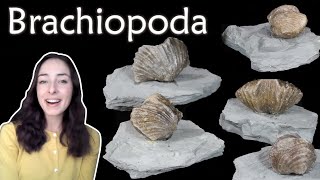
Brachiopoda - Invertebrate Paleontology - GEO GIRL
Explore brachiopod anatomy, morphology, and classification. Learn to distinguish these marine invertebrates from mollusks and understand their evolutionary history and diverse shell shapes.
Early Life in the Oceans - From Sea to Changing Sea
Explore the origins and evolution of marine life with leading experts, discussing microbial ecosystems, deep-sea organisms, and the impact of changing oceans on early life forms.
Evolutionary Forces in Humans and Pathogens - Natural Selection and Genomic Studies
Explore genomic evolution in humans and pathogens, focusing on natural selection, adaptive traits, and disease-causing microbes. Learn about cutting-edge research methods and their public health implications.
The Evolution of Gene Expression - From Microevolution to Major Transitions
Explore gene regulation and expression evolution with Thomas Lenormand, covering microevolution, macroevolution, and major transitions in biological systems. Gain insights into regulatory mechanisms and their evolutionary implications.

MIT Computational Biology - Genomes, Networks, Evolution, Health - Fall 2018
Comprehensive exploration of computational biology, covering genomics, networks, evolution, and health applications through advanced algorithms, data analysis, and cutting-edge research topics.

The Logic of Science - Principles of Evolution, Ecology and Behavior
Explore the evolution of scientific thought, including falsifiability, revolutions, and creativity. Learn how philosophy influences modern scientific approaches and the boundaries of scientific knowledge.
The Origin and Maintenance of Genetic Variation - Lecture 6
Explore genetic diversity's origins through mutations, selection, and recombination. Discover how population size impacts evolution and genetic variation maintenance in different scenarios.
Interspecific Competition in Ecology and Evolution - Lecture 27
Explore interspecific competition's impact on evolution, including classical patterns, experimental evidence, conceptual frameworks, and real-world implications in ecology and biology.
Selfishness and Altruism in Evolution, Ecology, and Behavior - Lecture 36
Explore evolutionary explanations for altruism, including kin selection and ecological constraints, challenging the idea that self-sacrifice contradicts natural selection.

Neutral Evolution - Genetic Drift and Molecular Clocks
Explore genetic drift and neutral evolution, understanding how random changes in genes can impact species over time without affecting reproductive success.

Sexual Selection in Evolution, Ecology, and Behavior - Lecture 13
Explore sexual selection's role in evolution, including intersexual and intrasexual selection, sexual dimorphism, and costly signaling in mate choice and competition.
Genomic Conflict in Evolution, Ecology and Behavior - Lecture 10
Explore genomic conflicts within cells, organisms, and between species. Learn about meiosis fairness, uniparental inheritance, and evolutionary strategies to resolve conflicts in sexual species.

Species and Speciation - Principles of Evolution, Ecology and Behavior
Explore the process of speciation, including definitions, mechanisms, and stages. Learn about reproductive isolation, ecological specialization, and genetic factors in species divergence.
Ecological Communities - Evolution of Concepts and Modern Perspectives
Explore ecological communities: from classical views to modern concepts like trophic cascades and meta-communities. Discover how predation and interconnected ecosystems shape our understanding of nature's complex web.
Evolutionary Game Theory: Fighting and Contests - Lecture 33
Explore how game theory applies to evolution and behavior, analyzing encounters between organisms as mathematical games to infer fitness payoffs and strategy proportions in populations.