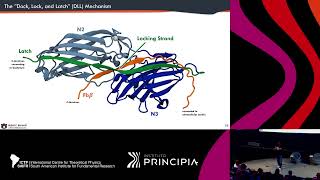
Computational Biophysics Approaches to Mechanosensing
Explore computational biophysics methods for understanding mechanosensing, focusing on cutting-edge approaches and their applications in molecular biology research.
PROTPARDELLE: An All-Atom Protein Generative Model - Broad Institute Machine Learning in Drug Discovery Symposium 2023
Explore PROTPARDELLE, an all-atom protein generative model, presented by Stanford's Possu Huang at the Broad Institute's Machine Learning in Drug Discovery Symposium.
Alpha Missense: Proteome-Wide Missense Variant Effect Prediction
Explore Alpha Missense, an AI model predicting missense variant pathogenicity. Learn how it combines structural context and evolutionary conservation to achieve state-of-the-art results in genetic benchmarks.
Protein Dynamics and the Brain
Explore protein dynamics and their impact on brain function with insights from renowned expert Peter Wolynes of Rice University.
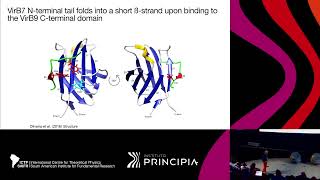
Uncovering Association Mechanisms and Functional Mechanisms of Intrinsically Disordered Proteins - Symposium Talks
Explore intrinsically flexible proteins and their association mechanisms, and unravel functional mechanisms of intrinsically disordered proteins through energy landscape visualization.
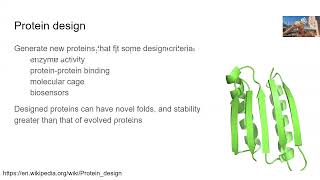
Protein Structure with Transformers - Lecture 9
Explore protein structure prediction using transformer models, uncovering advanced techniques for understanding and analyzing protein folding and interactions.
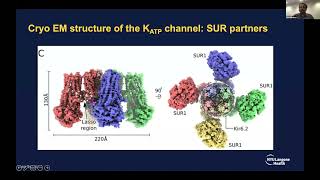
Chemically Probing the Mechanism of KATP Channels
Explore the mechanism of KATP channels through chemical probing, focusing on structure, gating, and the role of palmitoylation in channel opening.
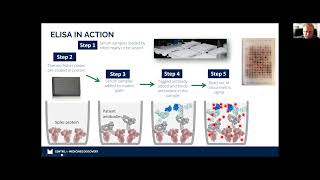
How Molsoft Scarab Helped Fight COVID-19 in the UK
Explore how Molsoft Scarab contributed to COVID-19 research in the UK, presented by Oxford's Dr. Brian Marsden at MolSoft's User Group Meeting.
Computational Protein Design and De Novo Design of Proteins
Explore computational approaches for designing functional proteins, including surface pattern analysis and de novo topology exploration, with applications in vaccine design, T-cell therapies, and biosensors.

Protein Design Using Deep Learning
Dive into protein design using deep learning with David Baker. Explore cutting-edge techniques and insights at the intersection of AI and biomedical research.
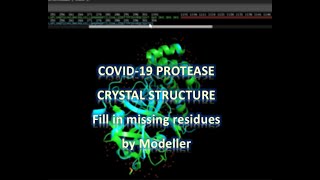
Protein Structure Prediction
Learn advanced protein structure prediction techniques, focusing on COVID-19 protease modeling, loop refinement, and homology modeling using MODELLER software.
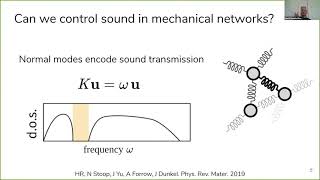
Physics of Functional Networks - Henrik Ronellenfitsch
Explore the physics of functional networks, from sound control in mechanical systems to resilient power grids and leaf venation. Discover optimization principles and their applications in engineering and biology.
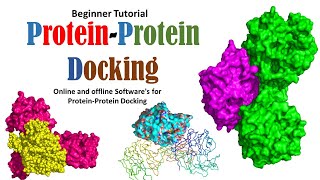
Protein-Protein Docking Tutorial for Beginners Using ClusPro, PatchDock, and Hex
Learn to perform protein-protein docking using validated tools like ClusPro, PatchDock, and Hex. Gain hands-on experience with step-by-step demonstrations and access to relevant literature.
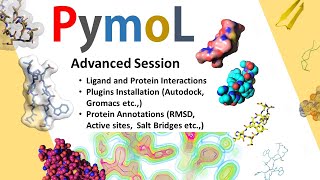
PyMol Advanced Session: Protein-Ligand Interactions and Plugin Installation
Explore advanced Pymol features: protein-ligand interactions, plugin installation, and protein annotations. Learn to visualize and analyze molecular structures effectively.
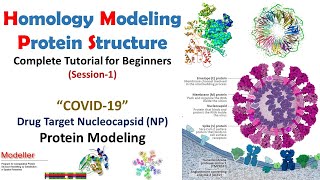
Homology Modeling for Beginners - COVID-19 NP Protein Modeling with Modeller
Learn homology modeling basics and hands-on pipeline using Modeller tool to construct atomic-resolution protein models from amino acid sequences and related homologous structures.
De Novo Protein Design Using Deep Learning and Musical Representations
Explore innovative protein design using deep learning and musical representations, bridging materials science and artificial intelligence for groundbreaking bioengineering applications.

Understanding AlphaFold - AI in Protein Structure Prediction
Explore AlphaFold's revolutionary impact on protein structure determination with Dame Janet Thornton. Discover how this AI program is transforming bioinformatics and its potential future applications.
A New Phase for Structural Biology - With Carol Robinson
Explore Carol Robinson's groundbreaking research in structural biology, focusing on protein interactions in the vapor phase and its impact on understanding human health and drug development.

Using Structural Biology to Support Variant Assessment - Webinar - Ambry Genetics
Explore structural biology's role in variant assessment, focusing on biophysical methods to evaluate protein function disruption and reclassify variants of unknown significance.
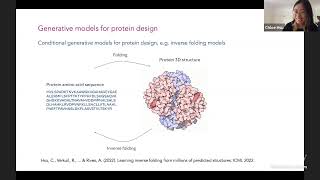
Deep Learning in Structural Biology and Protein Design - How, Where, and Why
Explore deep learning applications in structural biology and protein design, focusing on AlphaFold2 and emerging methods for visualizing proteins and creating novel ones for therapeutic use.
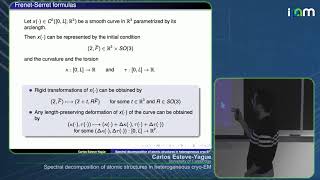
Spectral Decomposition of Atomic Structures in Heterogeneous Cryo-EM
Innovative approach to recover 3D atomic structures of flexible macromolecules from cryo-EM data, combining biological knowledge with spectral analysis to estimate conformational variations.