
How Do Insects Communicate? The Science of Entomology
Explore fascinating insect communication methods, from honeybees' waggle dance to ants' chemical signals. Discover how these behaviors impact colony decisions, survival strategies, and ecosystem interactions.
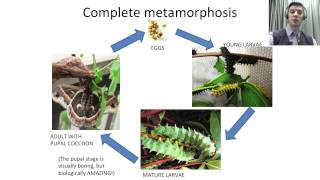
Forensic Entomology - With Chris Shreve
Explore forensic entomology with Chris Shreve, learning how insects aid death investigations and calculate postmortem intervals through predictable life cycles and environmental factors.

Zoology
Welcome to Crash Course Zoology! In this fourteen-episode series made in partnership with PBS and Nature, Crash Course Zoology will take a rapid deep dive into the weird and wonderful biology of animals.
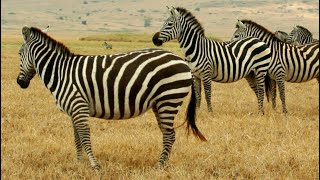
Zoology
Explora el fascinante mundo de los animales, desde los del zoológico hasta los del océano y la selva. Aprende sobre su clasificación, desarrollo, y características únicas en un viaje educativo completo.
Vertebrate Paleontology
Explore vertebrate evolution through fossils, anatomy, and key adaptations. Uncover the origins of major groups like fish, amphibians, reptiles, birds, and mammals, including human ancestors.
Communicating Science and Entomology Effectively - by Jerome Goddard
Learn effective science communication techniques from an experienced entomologist, covering media interviews, legal matters, and public engagement strategies for scientific topics.
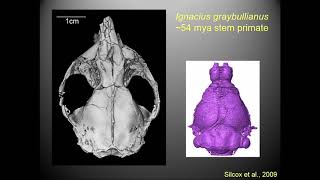
Why So Big? Understanding the Early Evolution of the Brain in Primates
Explore primate brain evolution through fossils and CT scans. Dr. Silcox examines why primates developed large brains, using advanced imaging to study ancient specimens and compare with modern species.
The Decline of Insects - What Should We Do About It?
Explore the alarming decline of insects, its implications, and actionable strategies to protect these vital creatures and drive positive environmental change.
From Democratic Consensus to Cannibalistic Hordes - The Principles of Collective Animal Behavior
Explore collective behavior in nature, from ant raids to bird flocks. Discover how individual actions create group dynamics and the concept of "collective mind" in various species, including humans.

Sex and Violence Among the Apes - Global Problems of Population Growth
Explore primate behavior, focusing on chimpanzee social dynamics, mating strategies, and inter-group violence. Gain insights into evolutionary pressures shaping ape societies and their implications for human behavior.

Evolution of Sex and Reproductive Strategies
Explore reproductive strategies, competition, and evolution across species, focusing on gender differences, mating behaviors, and the role of violence in reproduction among great apes.
Computation in Natural Systems - Mesoscopic Theories and Information Processing
Explore computation in natural systems, from primate behavior to physics, examining how information processing occurs across scales and the implications for understanding complex systems.
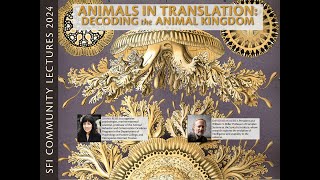
Animals in Translation - Interspecies Communication and Understanding
Explore interspecies communication and the Interspecies Internet with experts Diana Reiss and David Krakauer, delving into animal cognition and cross-species interactions.
The Languages of Animals: Finding a Mate - Lecture 2
Explore animal mating communication with Sir David Attenborough. Discover diverse courtship signals, from visual cues to scents, and learn how species-specific 'passwords' ensure successful breeding.
The Languages of Animals: Beware! - Lecture 1
Explore animal defense mechanisms, from warning signals to territorial marking, in this captivating lecture by Sir David Attenborough. Discover how creatures communicate danger and assert dominance without physical confrontation.

The Languages of Animals: Parent-Child Communication - Lecture 3
Explore animal parent-child communication across species. Discover how infants signal needs, parents convey warnings, and early interactions shape adult language abilities.
Animal and Human Languages - Lecture 5
Explore the complexity of animal communication with Sir David Attenborough. Discover how various species convey information, from simple declarations to intricate messages about food location and survival strategies.
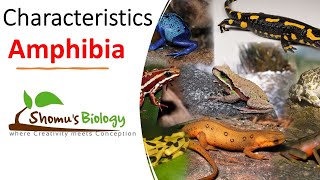
Animal Kingdom Classification
Comprehensive overview of animal kingdom classification, covering characteristics and classifications of major phyla and classes from Porifera to Mammalia.

Evolution of Flight and Echolocation in Bats
Explore the fascinating evolution of bat flight and echolocation through fossil evidence, anatomical comparisons, and scientific analyses in this paleontological lecture.
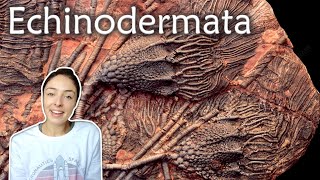
Echinoderms - Invertebrate Paleontology - Crinoids, Starfish, Sand Dollars, & More
Comprehensive exploration of echinoderms: diversity, anatomy, evolution, and classification. Focuses on crinoids and echinoids, their morphology, ecology, and evolutionary history. Includes identification practice and comparisons to vertebrates.
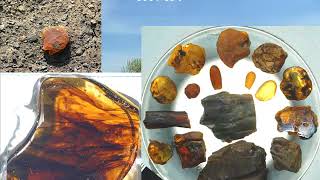
Canadian Amber: A Snapshot of a Late Cretaceous Forest and Its Inhabitants
Explore Late Cretaceous forests through Canadian amber, uncovering ancient insects, plants, and feathers. Learn about amber formation, preservation, and its significance in paleontology.