Information Structures and Consciousness
Exploring brain dynamics through evolving informational structures, linking to consciousness theories and providing insights into disorders of consciousness with high-precision classification.
Insights from the Conscious Turing Machine - A Machine Model for Consciousness
Explore a substrate-independent model of consciousness inspired by Turing's computation model and Baars' Global Workspace theory, offering insights into conscious experiences across animals and machines.
Consciousness Meets AI for a New Paradigm
Exploring connections between consciousness and AI, combining theories like Global Workspace Theory with deep learning to develop a new paradigm for general-purpose intelligence and brain-to-brain communication.
On the Degrees of Freedom Worth Having - Psychedelics and Free Will
Explore the intersection of psychedelics, free will, and consciousness. Discover how serotonergic pathways may influence volitional capacities and adaptive flexibility in human cognition and behavior.
Consciousness - Coherence of Modalities
Explores a coherence-based theory of consciousness, proposing structured nets and dynamic mappings as key elements. Discusses data structures, neural codes, and links to mathematical concepts.
A Theoretical Computer Science Approach to Consciousness and AGI
Explore a theoretical computer science approach to consciousness and AGI through the Conscious Turing Machine model, offering insights into processor utilization and problem-solving.
Holographic Quantum Theory of Consciousness
Explore the quantum nature of consciousness, its connection to brainwaves and Schumann Resonances, and how quantum information theory can illuminate neuroscience and human experience.
Consciousness as a Coordination Mechanism
Exploring the hypothesis that consciousness arises from brain signal coordination, drawing parallels between neural traffic and road networks to understand global optimization patterns in brain activity.
Thresholds, Noise and Response Bias - Insights from Blindsight
Explores perceptual decision-making, thresholds, and blindsight, challenging assumptions about visual awareness and highlighting the role of response criteria in conscious behavior.
Model Templates for Minimal Models of Consciousness
Exploring model templates as a tool for analyzing consciousness theories, focusing on the free energy principle and its application across disciplines.
Discovery of a Peri-Somatic Physical Effect Related to Consciousness
Groundbreaking research on a quantum physical effect potentially linked to consciousness, using a novel photoelectronic device to measure light wave interference near the body during different states.
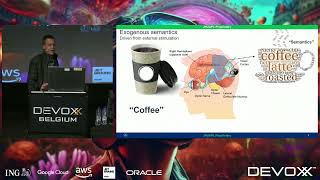
Explainable AI Analysis Visualization - Applications from Brain Computer Interfaces to ChatGPT
Explore cutting-edge applications of explainable AI, from brain-computer interfaces to ChatGPT, with a focus on analysis and visualization techniques.
Power of Brain Chemistry in Storytelling
Explore how hormones and neurotransmitters shape narratives, offering a unique perspective on the intersection of science and storytelling through personal anecdotes and experiences.
The Cell as a Computer - Turing Complete and Massively Parallel
Explore biological computing: cells as Turing-complete devices, biocomputers, and parallels between cellular processes and computer components. Gain insights into nature's 4-billion-year-old computing paradigm.
Sequencing DNA with Linux Cores and Nanopores
Explore real-time DNA sequencing using the Oxford Nanopore MinION device, from sample preparation to data analysis, showcasing the power of portable genomics and open-source software.
Open Education Through the Ages
Explore 100,000 years of human education evolution, examining societal changes, learning methods, and the impact of 'open' knowledge on modern educational approaches.
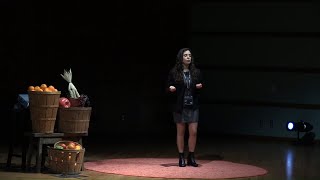
Why Humane Meat Is a Myth
Vegan educator explores the contradiction between societal opposition to animal abuse and widespread animal consumption, challenging the concept of humane meat through critical analysis and ethical considerations.
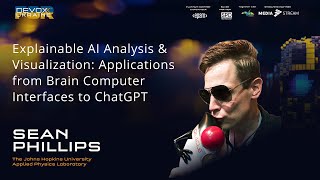
Explainable AI Analysis & Visualization - Applications from Brain Computer Interfaces to ChatGPT
Explore explainable AI analysis and visualization techniques, from brain-computer interfaces to ChatGPT, enhancing understanding of AI decision-making processes and applications.
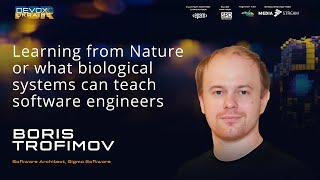
Learning from Nature - What Biological Systems Can Teach Software Engineers
Explore how biological systems inspire software engineering, uncovering nature's solutions for complex problems and innovative design approaches.
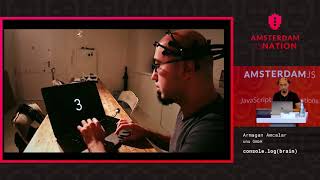
Console.log - Brain
Explore brain-computer interfaces with JavaScript, from signal processing to neural networks. Live demo showcases EEG headset integration, Electron, Node.js, and Vue.js for mind-controlled interactions.
Migrating from Enzyme to React Testing Library
Learn strategies for transitioning from Enzyme to React Testing Library, exploring key differences and best practices for effective component testing in React applications.