Inferring Parsimonious Migration Histories for Metastatic Cancers
Explore computational methods for inferring cancer metastasis patterns, focusing on parsimonious migration histories and multi-strain infections in tumor evolution.
Tumor Evolution: Methods for Comparing, Summarizing and Visualizing Clonal Trees
Explore methods for comparing, summarizing, and visualizing clonal trees in tumor evolution, focusing on weighted distance-based approaches and relaxing infinite sites assumptions.
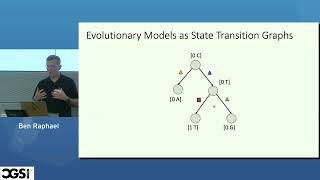
Evolutionary Models for Cancer and Lineage Tracing - CGSI 2023
Explore evolutionary models for cancer and lineage tracing, focusing on tumor phylogeny inference and CRISPR-Cas9 lineage tracing approaches.
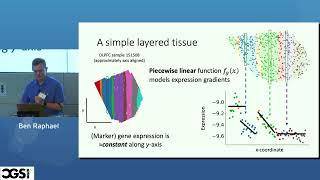
Models and Methods for Spatial Transcriptomics - CGSI 2023
Explore models and methods for spatial transcriptomics, focusing on alignment, integration, and modeling of gene expression variation in spatially resolved data.
Challenges in Developing a Universal Metagenomic Diagnostic Test - 2024
Explore challenges in creating a universal metagenomic diagnostic test for disease detection, focusing on scalability, sensitivity, and application in community surveillance.

New Developments in Wolfram Chemistry
Explore upcoming Wolfram Language chemistry features, including enhanced molecular visualization, crystal structures, and biomolecule representation. Learn about ChemistryFunctions paclet for dynamic manipulation and analysis.
CDMRP for Scleroderma Researchers - Navigating the Grant Application Process
Explore CDMRP funding opportunities for scleroderma research. Learn application processes, evaluation criteria, and grant cycle details from PRMRP Program Manager Dr. Cecilia Dupecher.
Designing the Morphology of Separated Phases in Multicomponent Liquid Mixtures
Explore algorithms for constructing phase diagrams and predicting morphology in multicomponent liquid mixtures, with applications from industry to cellular biology.

Functional Neuronal Networks
Explore functional data analysis integration in deep neural networks, enhancing interpretability and prediction for scalar responses with functional and scalar covariates.
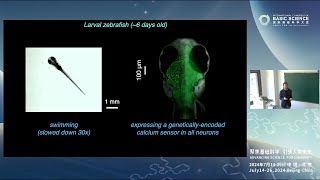
Whole-Brain Neuroscience in Larval Zebrafish
Explore whole-brain neuroscience in larval zebrafish, examining neuronal circuits, behavior, and advanced techniques for measuring and manipulating brain activity during virtual reality experiments.
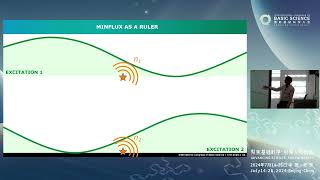
Accessing the Nanoscale with MINFLUX Light Microscopy
Explore MINFLUX, a groundbreaking light microscopy technique achieving nanometer-scale precision in superresolution imaging and single-molecule tracking, revolutionizing cellular observations.
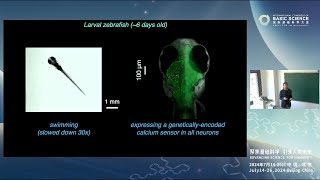
Whole-Brain Neuroscience in Larval Zebrafish
Explore whole-brain neuroscience in larval zebrafish, examining neuronal circuits, behavior, and advanced techniques for measuring and manipulating brain activity during virtual reality experiments.
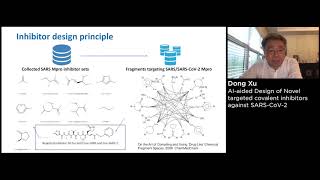
AI-Aided Design of Novel Inhibitors Against SARS-CoV-2
Explore AI-driven drug design for SARS-CoV-2, focusing on 3CLpro inhibitors. Learn about deep Q-learning networks, fragment-based design, and structure-based optimization for developing potential lead compounds.
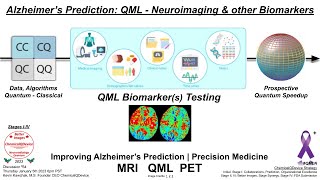
Alzheimer's Prediction: QML for Neuroimaging and Other Biomarkers
Explore quantum machine learning applications in Alzheimer's prediction, focusing on language impairment, blood/CSF biomarkers, and neuroimaging. Discover potential QML advantages in early detection and diagnosis.
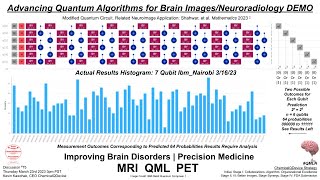
Advancing Quantum Algorithms for Brain Images Neuroradiology - Live Demo
Explore quantum algorithms for neuroradiology through live demos in IBM Qiskit and Pennylane. Learn about hybrid networks, recent advancements, and their potential impact on brain image processing.
Ethics of AI in Healthcare Informatics - Grand Rounds Lecture
Explore ethical considerations of AI in healthcare with Dr. Michael Abramoff, covering FDA approval, bias, health equity, and policy implications for medical practice.
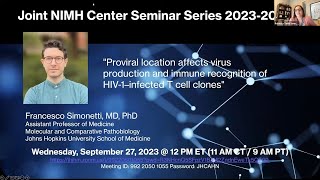
Proviral Location Affects Virus Production and Immune Recognition of HIV-1-Infected T Cell Clones
Explore how proviral location impacts HIV-1 virus production and immune recognition in T cell clones, presented by Dr. Francesco Simonetti.
miRNA Export, Transport and Uptake via Extracellular Vesicles in Mammalian Cells
Explore miRNA dynamics in mammalian cells, focusing on export, transport, and uptake through extracellular vesicles. Gain insights from expert Dr. Suvendra Battacharyya.
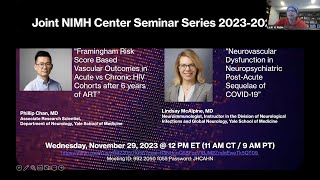
Framingham Risk Score Based Vascular Outcomes in Acute vs Chronic HIV Cohorts after 6 Years of ART
Explore vascular outcomes in HIV cohorts and neurovascular dysfunction in post-COVID-19 patients through expert presentations on risk assessment and neuropsychiatric sequelae.
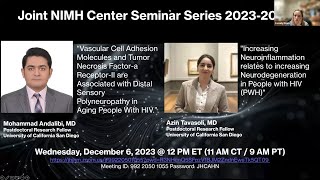
Vascular Cell Adhesion Molecules and Tumor Necrosis Factor-a Receptor-II in HIV-Related Neuropathy and Neurodegeneration
Explore the link between vascular cell adhesion molecules, TNF-α receptor-II, and distal sensory polyneuropathy in aging HIV patients. Examine neuroinflammation's role in neurodegeneration.

Plant-Based Diets: Prevention and Wellbeing Through Nutrition
Explore the health benefits of plant-based diets with a clinical dietitian, focusing on disease prevention and overall wellbeing.