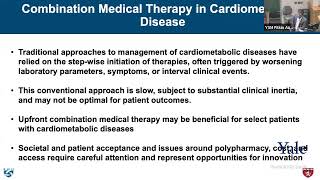
Upfront Combination Medical Therapy in Cardiometabolic Disease Management - One Size Fits Many?
Explore modern strategies for cardiometabolic disease management, examining the benefits of upfront combination therapy versus traditional step-wise treatment approaches.

Hemodynamic Reserve and Right Heart Failure Prediction After LVAD Implantation
Explore how hemodynamic reserve and right ventricular function serve as predictive indicators for post-LVAD right heart failure outcomes in cardiovascular patients.
Modeling Communicating Systems in a Functional Style: 30+ Years of Evolution
Explore the evolution of modeling communicating systems using functional programming over 30+ years, from telecoms protocols to probabilistic models and Bigraphs, with insights on future challenges.
Integrating Single-Cell Data with Substantial Batch Effects - Improving cVAE Regularization
Explore advanced techniques for integrating single-cell data with substantial batch effects, focusing on cVAE regularization constraints to improve batch correction while preserving biological information.

The Continuous Language of Protein Structure
Explore a novel approach to protein structure generation using continuous autoregressive language models. Learn about innovative techniques for in silico protein design and their potential applications.

Integrating -omic Data Across Datasets and Layers
Explore techniques for integrating -omic data across datasets and layers, focusing on redundancy, neural networks, and genetic associations in cancer research.
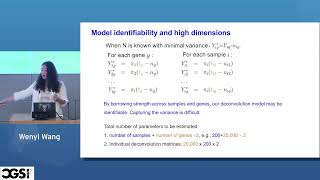
Computational Deconvolution of Cancer Genomes and Transcriptomes - CGSI 2022
Explore computational methods for deconvoluting cancer genomes and transcriptomes. Learn advanced techniques to analyze tumor heterogeneity and uncover molecular phenotypes shaping clinical outcomes in cancer research.
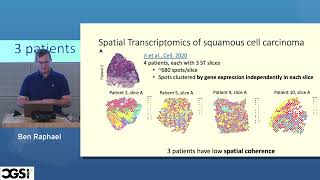
Alignment, Integration, and Modeling of Spatial Transcriptomics Data
Explore alignment, integration, and modeling techniques for spatial transcriptomics data, focusing on innovative approaches to analyze gene expression patterns in tissue samples.
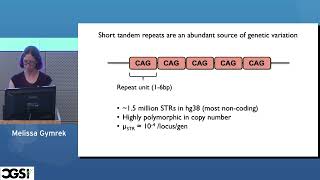
A Practical Guide to Performing Genome-Wide Analyses of Tandem Repeats
Explore genome-wide tandem repeat analysis techniques. Learn practical tools and methods for identifying, profiling, and interpreting repetitive DNA sequences across entire genomes.
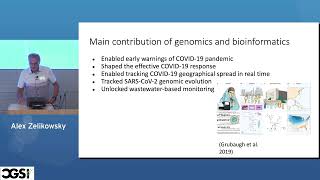
Analysis of SARS-CoV-2 Sequencing Data
Explore advanced techniques for analyzing SARS-CoV-2 sequencing data, including haplotype assembly, phylogeny reconstruction, variant identification, and network representation of genomic information.
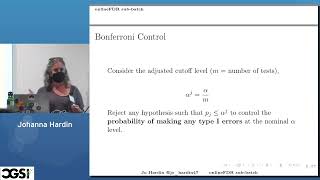
OnlineFDR Control with Applications to RNA-Seq Data
Explore onlineFDR control techniques for RNA-Seq data analysis, focusing on adaptive algorithms and their applications in multiple hypothesis testing scenarios.
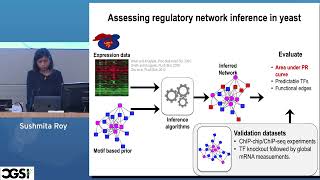
Inference of Gene Regulatory Networks from Bulk and Single Cell Omic Datasets
Explore gene regulatory network inference techniques using bulk and single-cell omic datasets. Learn about integrative approaches, predictive models, and applications in cellular reprogramming and single-cell genomics.
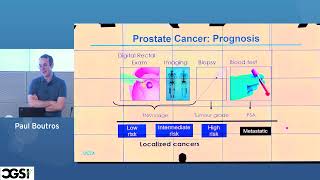
Computational Methods to Quantify Lethal Cancer Evolution
Explore computational methods for quantifying lethal cancer evolution. Gain insights into driver mutations, evolutionary history, and genomic correlates of prostate cancer's epigenetic landscape.
Large Language Models for Computational Biology - A Primer
Explore large language models in computational biology, covering transformers, pretraining, and applications in genomics and single-cell analysis.
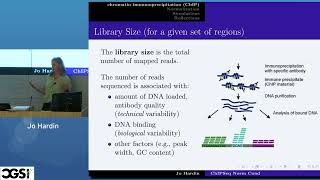
Selecting Between-sample ChIP-Seq Normalization Methods - Assumptions and Implications
Explore ChIP-seq normalization methods, their assumptions, and impact on differential binding analysis. Learn to select appropriate techniques for accurate genomic data interpretation.
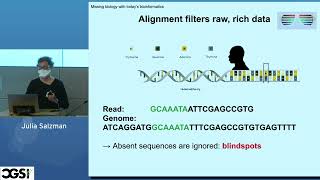
Statistical Reference-Free Genomics Solves Myriad Problems in Bioinformatics - 2023
Explore statistical reference-free genomics to solve bioinformatics challenges. Learn about Splash algorithm, RNA splicing, and novel approaches for analyzing sequencing data in cancer and human disease research.
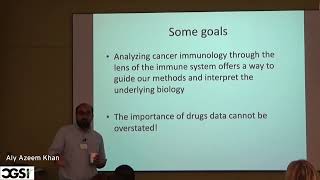
Computational Insights into Cancer Immunology
Explore computational approaches in cancer immunology, focusing on RNA sequencing, tumor microenvironment analysis, and immunotherapy response prediction in non-small cell lung cancer.
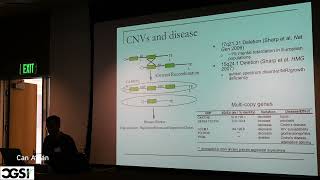
Characterization of Genomic Structural Variation Using Various Sequencing Technologies
Explore genomic structural variation analysis using diverse sequencing technologies. Learn about copy number variation genotyping and deep learning applications in exome sequencing.
Methods for Disease Analysis Using Multiomic Data
Explore advanced methods for analyzing diseases using multiomic data, focusing on clustering algorithms, cancer subtyping, and driver gene prioritization.
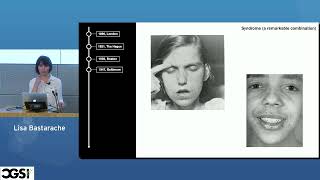
From Population to Person - How to Help a Single, Actual Person with Data Science
Discover how data science can be applied to help individual patients, bridging the gap between population-level insights and personalized healthcare interventions.
Computationally Scalable Approaches for Characterizing Genetic Architectures in Diverse Ancestries
Explore computationally scalable methods for characterizing genetic architectures across diverse ancestries, focusing on fine-mapping and heritability estimation techniques.