Zoobiquity - What Dolphin Diabetes Can Teach Us About Human Health
Explore how animal diseases can inform human health, bridging veterinary and medical sciences for innovative approaches to physical and behavioral well-being across species.
The Brain and the Law - How Neuroscience Will Shift Blameworthiness
Explore how neuroscience challenges criminal justice assumptions, examining brain equality, incarceration effectiveness, and rehabilitation technologies. Insights into unconscious behavior drivers and future-focused legal approaches.
Keystone Individuals in Animal Societies - Pros and Cons
Explore the impact of influential individuals in animal societies, focusing on social spiders in African deserts. Learn about their effects on group dynamics and adaptability.
The Rise and Fall of Evolutionary Sand Castles
Exploring evolutionary models of biological interdependence, from organism components to ecological systems, and how these structures can fail catastrophically due to their interconnected nature.
Male Mate Choice and Female Ornamentation - A Mathematical Model
Explores mathematical model challenging assumptions about male mate choice and female ornamentation in polygynous species, revealing weak sexual selection on female traits despite common inferences.
The Singular Origin of Complex Life
Explore the unique evolutionary event that led to eukaryotes, examining mitochondrial impact on genome expansion and the role of energy in complex life development.
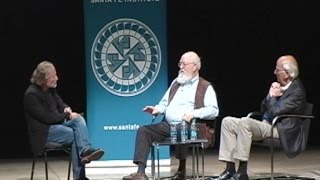
Caught in the Pulpit: From Religion to Reason - A Play and Discussion
Exploring clergy's journey from belief to atheism through a play based on interviews, followed by a discussion on brain-mind mechanisms in religious belief and societal implications.
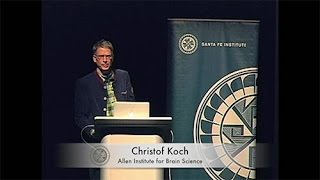
Consciousness in Biological and Artificial Brains
Exploration of consciousness in biological and artificial brains, discussing Integrated Information Theory and why digital systems may never truly experience consciousness like humans do.
The Information Edge: Creation in Life, the Economy, and the Universe - Lecture 1
Explore the Information Edge principle and its role in creation across the universe, from cosmic structures to economic systems, with MIT professor Seth Lloyd.

Darwin's Extra Sense - Mathematics in Life Sciences
Explore how modern mathematics enhances our understanding of life sciences, bringing an "extra sense" to biological research as envisioned by Charles Darwin.
Emerging Diseases, Deadly Lessons - Preventing Future Epidemics
Insights from recent epidemics on preventing future outbreaks, exploring ecological, social, political, and economic factors in disease spread and their implications for global health security.
Smart Machines and What They Can Still Learn from People
Cognitive scientist Gary Marcus explores AI's progress, challenges, and potential lessons from human cognition, offering insights into the future of machine intelligence.
The Urban Species - How Domesticated Humans Evolved
Explore the evolutionary impact of urbanization on humans, comparing modern megacities to Neolithic settlements and examining potential future changes in our civilization.
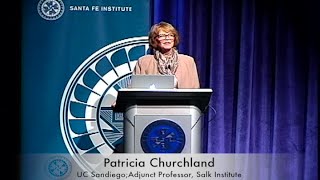
Touching a Nerve: The Self as Brain
Explore the biological basis of consciousness, identity, and decision-making with neurophilosopher Patricia Churchland as she examines how brain activity shapes our thoughts, feelings, and experiences.

Questioning the Science of Gender Difference - A New Perspective
Explores how cultural beliefs influence gender research, challenging long-held assumptions about biological differences between sexes and offering a fresh perspective on gender in society.
Technological Requirements for Sustaining Socio-ecosystems with Hyper-dense Humans
Exploring ecological theory to analyze human societies' energy use and density compared to other mammals, and modeling sustainable conditions for hyper-dense populations through green technologies.
Quantifying Resilience in Complex Systems - From Humans to Ecosystems
Explore quantitative methods for measuring resilience in diverse systems, from ecosystems to human psychology, using critical slowing down and probabilistic approaches to understand tipping points and recovery.
Component Systems: Understanding Complex Systems Through Building Blocks
Explore complex systems composed of defined building blocks, from Lego sets to genomes. Learn about common theoretical frameworks and data analysis tools for understanding these "component systems" across various fields.
Living in Space
Explore the challenges and possibilities of human habitation beyond Earth, examining scientific, technological, and societal aspects of space colonization.
The Nature of Time - Panel Discussion on Physics, Biology, and Culture
Explore the mysteries of time with experts discussing its physical, biological, and cultural aspects, focusing on the arrow of time, entropy, and adaptive systems.
The Effects of Personality, Networks, and Space on Collective Behavior
Explore how environment, interactions, group composition, and genetics shape collective outcomes in complex biological systems through field studies, simulations, and novel analytical methods.