Materials Characterization
Comprehensive exploration of materials characterization techniques, covering optical and electron microscopy, X-ray diffraction, and transmission electron microscopy, with hands-on demonstrations and practical applications.

Computational Genomics
Explore computational genomics, covering DNA sequencing technologies, genome assembly, BLAST algorithms, antibiotic resistance, and advanced k-mer analysis techniques.
Introduction to Basic Cognitive Processes
The approach adopted in this course will look at human behavior at large as made up of many component mental processes such as sensation, perception, attention, memory, language, imagery, decision making, problem solving, emotion and others.

Brain Computer Interface With Python and OpenBCI
Explore brain-computer interfaces using Python and OpenBCI for EEG data analysis. Learn to collect, process, and interpret neural signals for innovative applications.
Andrea Wulf on The Invention of Nature - Humboldt's Dangerous Idea
Exploring Humboldt's legacy: interdisciplinary science, ecology, and the interconnectedness of nature. Discusses his influence on modern thought, politics, and the challenges of holistic understanding in an increasingly complex world.
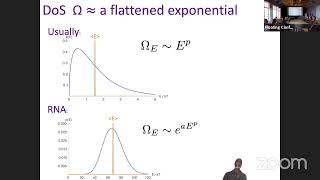
RNA Macrostates and Landscapes
Explore RNA macrostates, scaling of base-pair probabilities, and optimization for protein over-expression. Gain insights into advanced RNA folding concepts beyond minimum free energy structures.
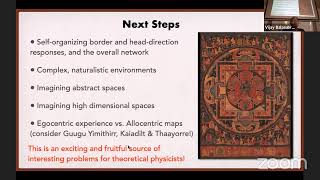
Imagining Space
Explore the neuroscience of spatial perception, from neurons to grid patterns, and discover how the brain constructs our sense of place and navigation.
Emergence of Life in the Brain
Explore the potential emergence of a new form of life within the brain, examining neural matter, replicators, and the intersection of evolution and learning.
Natalie Grefenstette on Agnostic Biosignature Detection
Exploring agnostic biosignature detection for extraterrestrial life, discussing innovative approaches to define and identify living systems beyond Earth's biology.
The Art & Science of Resilience in the Wake of Trauma with Laurence Gonzales
Explore resilience after trauma through psychology and neuroscience. Learn strategies for coping, finding wisdom, and living fully despite hardship. Gain insights on the body-mind connection and personal growth.
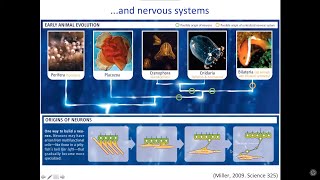
The Evolution of Agency
Explore the emergence of agency in living organisms, challenging reductionist views and proposing a framework for understanding purposeful behavior, free will, and mental causation in biological systems.
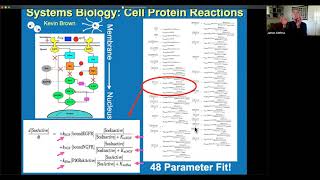
Sloppy Models, Differential Geometry, and Why Science Works
Explore how complex systems can be modeled despite parameter uncertainties, using differential geometry to understand 'sloppiness' and its implications for scientific comprehension and prediction.
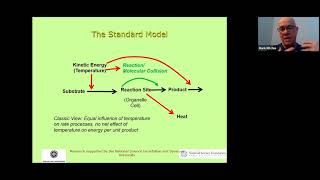
Thermodynamics of Far From Equilibrium Systems, Biochemistry, and Life in a Warming World
Explores new thermodynamic approaches to biological temperature responses, challenging traditional enzyme stability theories and offering insights into optimum temperatures for biochemical reactions and ecological impacts.
The Future of the Human Climate Niche with Tim Kohler and Marten Scheffer
Exploring the narrow climate range suitable for human habitation and its implications for our future as global temperatures rise. Discusses adaptation challenges, migration pressures, and potential solutions.
The Evolutionary Causes of Quantitative Genetic Variation
Explore the genetic architecture of quantitative traits, examining how mutation, selection, and drift shape heritable variation. Gain insights into missing heritability and interpret genome-wide association studies findings.
Invasion of the Inferential Cell
Explore the evolution of intelligence on Earth, from cellular behavior to complex cognition, examining common principles across biological systems and the unique aspects of human thought.
Function in an Abiotic World
Explore the interplay of function, stability, and competition in abiotic systems, examining selection processes and constraint satisfaction through examples and metaphors.
DNA, Love, and Gender
Explore epigenetics: how environment alters DNA, impacting behavior, health, and even love. Discover the role of RNA molecules in understanding complex epigenetic phenomena and their potential applications.
The Landauer Limit and Thermodynamics of Biological Computation
Explore the intersection of physics, information theory, and biological computation, focusing on the Landauer limit and its implications for engineered and natural systems.
The Organism as Subject and Object of Evolution
Explore how organisms and environments co-evolve through a process of construction, challenging the traditional view of adaptation in evolutionary biology.
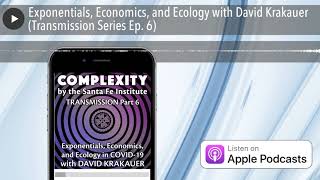
Exponentials, Economics, and Ecology with David Krakauer
Explore exponential changes, nonlinear dynamics, and interconnected systems in ecology and economics. Gain insights on aligning individual and public good in a complex world.