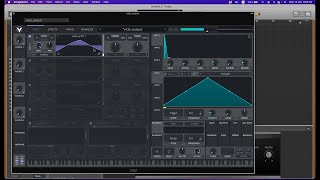
Parameter Inference of Music Synthesizers with Deep Learning
Explore deep learning techniques for parameter inference in music synthesizers, enhancing sound design efficiency and creativity for producers and audio professionals.
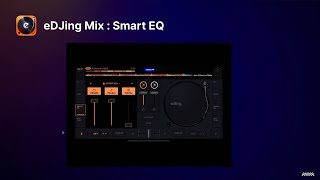
Real-Time Audio Source Separation on iOS Devices
Explore real-time audio source separation on iOS, covering deep learning algorithms, model optimization, and low-latency integration for innovative music interaction and learning applications.
Deep Learning in Audio for Absolute Beginners: From No Experience to a Deployed Model
Jumpstart deep learning in audio: from basics to deploying models. Learn myths, dataset creation, PyTorch training, and real-time plugin deployment for Virtual Analog modeling of audio effects.
Deep Learning in Audio for Absolute Beginners: From No Experience to a Deployed Model
Jumpstart deep learning in audio: from basics to deploying models. Learn myths, fast techniques, dataset creation, PyTorch training, and real-time plugin deployment for Virtual Analog modeling.
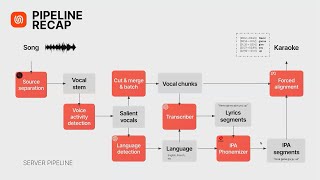
Developing an AI-Powered Karaoke Experience
Explore AI-powered karaoke development, including audio source separation, voice transcription, and real-time remixing. Learn challenges and solutions for mobile and web platforms.
Odd Challenges of Using Deep Learning in Designing a Feedback Delay Network Reverb
Explore challenges in optimizing audio effects using deep learning, focusing on Feedback Delay Network reverb design. Gain insights into DSP, machine learning, and innovative approaches to audio processing.
Inference Engines and Audio - Machine Learning in Audio Applications
Explore inference pipelines in machine learning for audio applications, including common engines, their functionality, and creating custom solutions for platforms like Cmajor.
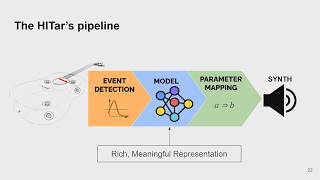
Deep Learning for DSP Engineers: Challenges and Tricks for Audio AI
Explore AI-based musical instrument development from a DSP engineer's perspective. Learn about real-time audio models, dataset creation, and deployment, with insights from HITar and Bessel's Trick projects.
Vector Databases for Generative AI Applications
Explore vector databases' role in generative AI, covering concepts like RAG and efficient open-source tools for building AI applications.
Fine-tuning LLMs Without Maxing Out Your GPU - LoRA for Parameter-Efficient Training
Discover parameter-efficient fine-tuning of large language models using LoRA. Learn to classify consumer finance complaints with RoBERTa on Google Colab's V100 GPU.
LLMs and Transformers Demystified: Introduction to AI Engineering - Lecture 1
Demystify transformers and LLMs through intuitive weather analogies. Explore the architecture's impact on AI, from 'Attention is All You Need' to modern applications like ChatGPT.
Sparse Training of Neural Networks Using AC/DC
Explore AC/DC, a novel sparse training algorithm for DNNs. Learn its benefits, implementation, and deployment for improved performance and accuracy in deep learning.
Fine-tuning Optimizations - DoRA, NEFT, LoRA+, and Unsloth
Explore advanced fine-tuning techniques like DoRA, NEFT, LoRA+, and Unsloth to optimize language models. Learn implementation, comparisons, and practical applications through code examples and demonstrations.
Full Fine-Tuning vs LoRA and QLoRA - Comparison and Best Practices
Explore full fine-tuning vs (Q)LoRA techniques, comparing VRAM usage, training time, and quality. Learn parameter selection, tips for QLoRA, and step-by-step guidance for TinyLlama and Mistral 7B fine-tuning.
Very Few Parameter Fine-Tuning with ReFT and LoRA
Explore advanced fine-tuning techniques ReFT and LoRA for efficient parameter optimization in transformer models. Learn implementation, comparison, and practical tips for improved model performance.
Transformers from Scratch - Part 2: Building and Training a Weather Prediction Model
Dive deep into advanced transformer concepts, exploring encoder-decoder architectures, GPT-4o, and positional embeddings. Apply knowledge to weather prediction and analyze model performance.

Fine-tuning Llama 3 on Wikipedia Datasets for Low-Resource Languages
Learn to fine-tune Llama 3 on Wikipedia datasets for low-resource languages. Master dataset creation, LoRA setup, blending techniques, and parameter optimization for improved language model performance.
Fine-Tuning a Diffusion Model with Your Photos
Learn to fine-tune a diffusion model using your own photos. Explore Flux Schnell, set up GPU environments, create datasets, and understand the intricacies of diffusion models and their architectures.
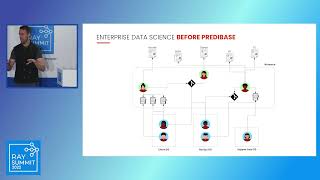
Predibase: A Low-Code Deep Learning Platform Built for Scale
Explore Predibase: a low-code deep learning platform combining large-scale ML with state-of-the-art architectures for NLP, computer vision, and tabular data, built on Ludwig and Ray for scalable, end-to-end solutions.
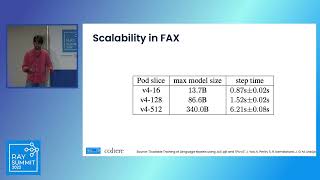
Scalable Training of Language Models Using Ray, JAX, and TPUv4
Explore challenges and design decisions for scalable language model training, with quantitative analysis of efficiency improvements using Ray, JAX pjit, and TPUv4.
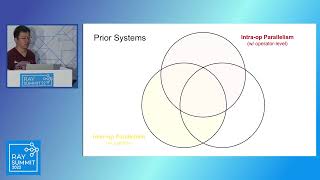
Alpa: Simple Large Model Training and Inference on Ray
Explore Alpa, a Ray-native library for automated model-parallel training of large deep learning models, optimizing execution plans and scaling complex architectures efficiently.