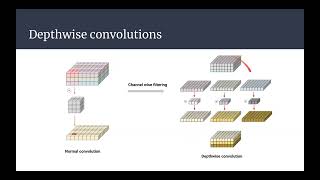
Computer Vision Architecture Evolution: ConvNets to Transformers - Lecture 21
Explore the evolution of vision architectures, comparing SWIN and CNNs, and learn about modernizing ConvNets with macro and micro design changes for improved performance.
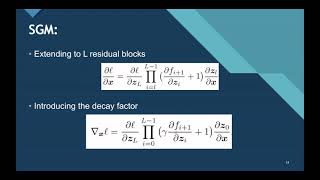
CAP6412 - Skip Connections Matter: On the Transferability of Adversarial Examples Generated with ResNets
Explore skip connections in ResNets, their impact on adversarial examples, and implications for model robustness and transferability in deep learning.
Scaling Insights from Infinite-Width Theory for Next Generation Architectures and Learning Paradigms
Explore scaling insights from infinite-width theory for advanced architectures and learning paradigms. Gain understanding of optimal scaling rules across various models and their impact on training stability and generalization.
Distributed TensorFlow Training - Google I/O 2018
Learn to scale TensorFlow training across multiple GPUs and machines efficiently. Explore distribution strategies, performance optimization techniques, and practical implementation using Google Cloud.
BlindAI - An Open-source Solution for Privacy-friendly AI Deployment
Explore BlindAI, an open-source project leveraging Confidential Computing for privacy-friendly AI deployment. Learn about end-to-end encryption, ONNX model support, and real-world applications in document analysis and medical imaging.
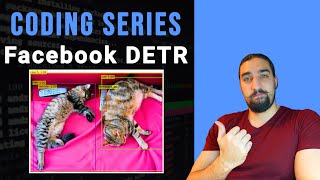
End to End Object Detection With Transformers
Comprehensive walkthrough of Facebook's DETR model, covering implementation details, attention visualization, and training process for end-to-end object detection using transformers.
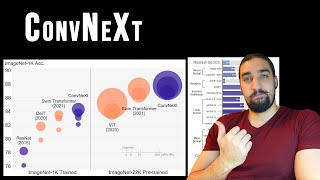
ConvNeXt- A ConvNet for the 2020s - Paper Explained
Explore ConvNeXt, a modern ConvNet outperforming vision transformers in computer vision tasks. Learn about its design, training, and performance across various applications.
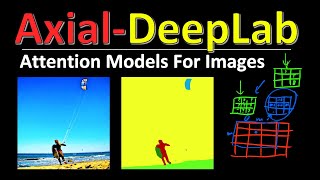
Axial-DeepLab - Stand-Alone Axial-Attention for Panoptic Segmentation
Explore a novel approach to image processing using axial-attention, combining positional embeddings and factorized self-attention to achieve state-of-the-art results in image segmentation tasks.

Deep Residual Learning for Image Recognition - Paper Explained
Explore deep residual learning for image recognition, covering the problem of depth, residual connections, and their impact on neural network performance in computer vision tasks.
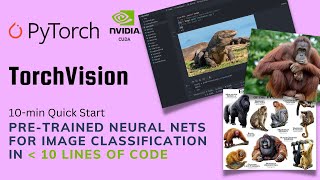
TorchVision Quick Start - Building an Image Classifier in 10 Minutes
Build an image classifier for orangutans and komodo dragons using PyTorch's torchvision library and a pretrained ResNet model. Learn to leverage pre-trained models for quick and effective computer vision tasks.

TensorFlow Tutorial - Model Subclassing with Keras - Part 8
Learn to build flexible TensorFlow models using Keras subclassing, including a ResNet-like model with skip connections. Gain advanced model creation skills beyond Sequential and Functional APIs.

Transfer Learning with TensorFlow - Live Coding and Explanation
Comprehensive live coding session on transfer learning with TensorFlow, covering model reuse, data processing, CNN architectures, and performance optimization techniques for efficient deep learning.
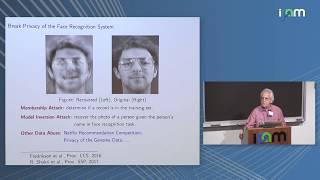
Trustworthy Deep Learning
Explore robust, accurate, efficient, and private deep learning with theoretical guarantees, drawing insights from differential equations for trustworthy AI applications.
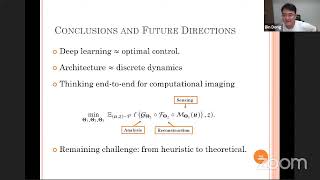
SPACE Webinar Series: Adaptive Dynamic Scanning and Task-Driven Image Reconstruction
Prof. Bin Dong explores signal processing challenges, focusing on image reconstruction, deep learning applications, and task-driven approaches in computer vision and medical imaging.
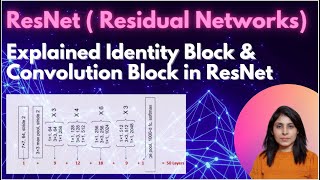
Explained Identity Block and Convolution Block in ResNet - Residual Networks
Practical explanation of identity and convolutional blocks in ResNet, including line-by-line code breakdown and discussion of residual concepts in deep learning architectures.

Neural ODEs - From ResNet to Continuous-Time Machine Learning
Explore Neural ODEs: a powerful machine learning approach for learning ODEs from data. Discover its advantages over ResNet and extensions like HNNs and LNNs.
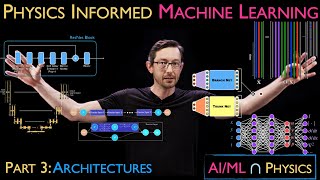
Designing an Architecture for Physics-Informed Machine Learning - Part 3
Explore various neural network architectures for physics-informed machine learning, including ResNets, UNets, and PINNs. Learn how to incorporate physical principles and symmetries into model design for improved performance.
Deep Learning - Devoxx Crowd Counting in Realtime
Practical introduction to deep learning, showcasing real-time crowd counting at Devoxx. Covers model deployment, framework comparison, and leveraging pre-trained models for predictive power.
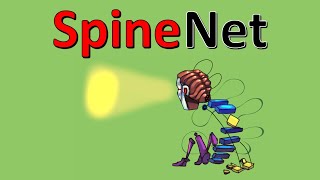
SpineNet - Learning Scale-Permuted Backbone for Recognition and Localization
Explores SpineNet, a novel CNN architecture using scale-permuted features and cross-scale connections, outperforming traditional models in object detection and classification tasks.
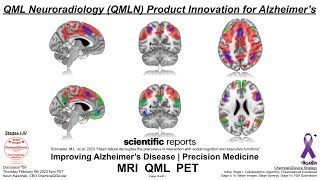
QML Neuroradiology - Product Innovation for Alzheimer's Classification
Explore quantum-enhanced Alzheimer's classification using hybrid models. Analyze recent studies, discuss potential applications, and evaluate the impact of quantum computing on medical imaging advancements.
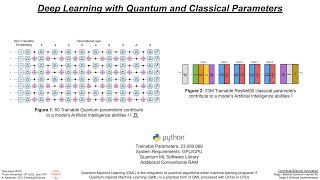
Deep Learning with Quantum and Classical Parameters
Explore end-to-end differentiation in QML/QiML AI, focusing on quantum-inspired workflows, quantum transfer learning, and troubleshooting techniques for improved AI accuracies and utilities.