Deep Learning for Visual Computing
Comprehensive exploration of deep learning techniques for visual computing, covering neural networks, autoencoders, and CNNs with hands-on implementations using Python and popular datasets.

Deep Generative Modeling
Explore deep generative modeling, including autoencoders, variational autoencoders, and GANs. Learn about latent variable models, reparameterization tricks, and recent advances in generative AI techniques.
Deep Learning
Comprehensive exploration of deep learning concepts, from feature descriptors to advanced neural networks, covering theory and practical applications in computer vision and generative models.
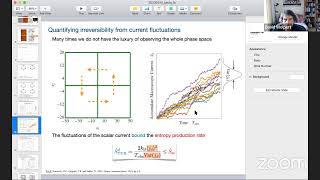
Irreversibility of Biological Active Matter
Explore the fascinating world of biological active matter, focusing on irreversibility in living systems and its implications for understanding complex dynamics and nonreciprocal behaviors.
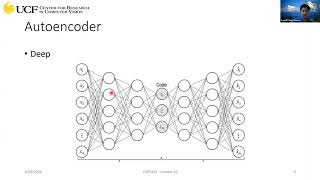
Autoencoder Architecture and Applications - Lecture 10
Explore autoencoders: architecture, comparison, applications in image retrieval, denoising, and anomaly detection. Gain insights into this powerful neural network technique.
Keras Tutorial - Neural Network Architectures and Advanced Concepts - Part 2
Learn advanced deep learning concepts including neural networks, VGG, residual connections, autoencoders, and GANs. Explore batch processing, reproducibility, and practical implementation in Keras.
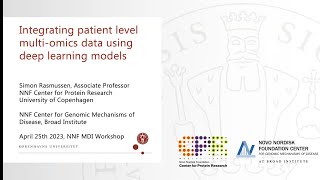
Integrating Patient Level Multi-omics Data Using Deep Learning Models
Explore deep learning models for integrating patient-level multi-omics data, focusing on supervised and unsupervised approaches for predicting outcomes and uncovering latent representations in genomics.
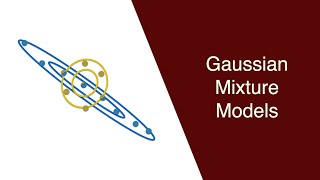
Unsupervised Learning
Explore key unsupervised learning techniques including clustering, dimensionality reduction, and generative models. Gain insights into real-world applications like recommendation systems and image compression.

Autoencoder in PyTorch - Theory & Implementation
Learn to implement Autoencoders in PyTorch, covering theory, data loading, simple and CNN architectures, training loops, and image plotting. Gain practical deep learning skills through hands-on coding.
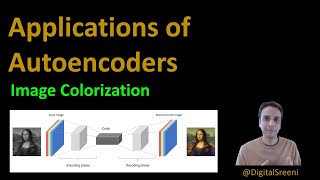
Application of Autoencoders - Image Colorization
Learn to artificially colorize black and white images using autoencoders in Python. Explore the process, implementation, and practical application of this advanced image processing technique.
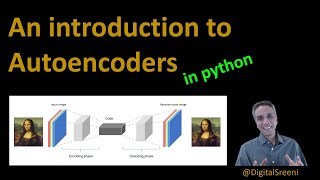
An Introduction to Autoencoders - In Python
Learn to build and implement autoencoders in Python for image compression, reconstruction, and various applications like denoising and anomaly detection.
Deep Generative Modeling
Explore deep generative modeling, including autoencoders, variational autoencoders, and GANs. Learn about latent variable models, reparameterization tricks, and recent advances in generative AI.
Deep Generative Modeling
Explore deep generative modeling, including autoencoders, VAEs, and GANs. Learn about latent variables, representation learning, and applications in image generation and domain transformation.
Energy-Based Approaches to Representation Learning - Yann LeCun
Explore energy-based approaches to representation learning with Yann LeCun, covering self-supervised learning, video prediction, and sparse modeling in high-dimensional spaces.
MOSIP Research Platform - Integrating Anomaly Detection Prototypes into Centralized ID Systems
Explore novel anomaly detection methods for digital identity systems using autoencoders, with a focus on fraud prevention during registration in MOSIP architecture.
From Causal Inference to Autoencoders, Memorization & Gene Regulation - Caroline Uhler, MIT
Exploring causal inference, autoencoders, and gene regulation through genomics and 3D genome organization. Integrates data modalities, analyzes overparameterized autoencoders, and links memorization to real-valued data retrieval.
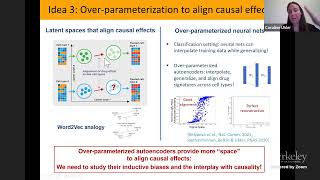
Causality and Autoencoders in Light of Drug Repurposing for COVID-19
Explore causal inference and autoencoders in drug repurposing for COVID-19, covering observational data, causality hierarchy, and predicting interventions with Caroline Uhler from MIT.
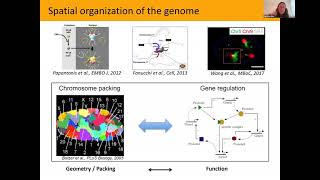
Mathematics of Genome Packing and Regulation
Explore the mathematics of genome organization and its impact on gene expression through geometric packing models and deep learning, with insights on 3D genome reconstruction and autoencoder applications in genomics.
Identifying Representations for Intervention Extrapolation
Explore identifiable representations for intervention extrapolation, improving generalizability in machine learning. Learn theoretical foundations and practical applications through simulations and Q&A.
Modelling and Controlling Turbulent Flows Through Deep Learning
Explore deep learning applications in fluid mechanics, including flow prediction and control using CNNs, autoencoders, and GANs. Learn about non-intrusive sensing and transfer learning in turbulent flows.
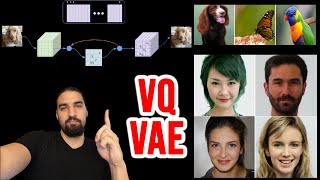
VQ-VAEs - Neural Discrete Representation Learning - Paper + PyTorch Code Explained
Explore VQ-VAEs for neural discrete representation learning, covering key concepts, implementation details, and applications in generative modeling. Gain insights into this important AI technique.