
Maximizing Slide Staining Quality and Workflow Efficiency in Clinical Laboratories
Master essential techniques for optimizing automated slide staining workflows in clinical laboratories, focusing on programming, consistency, traceability, and quality preservation for accurate sample analysis.
Menacing Molds - Immunodeficiency and Fungal Opportunism in the Lung
Explore the mechanisms behind pulmonary aspergillosis and fungal infections in immunocompromised patients, from transplant cases to chronic respiratory conditions like asthma and cystic fibrosis.
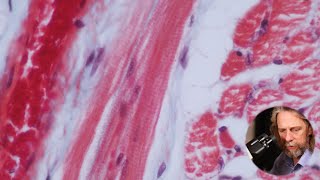
Microscopic Anatomy of Skeletal Muscle - Structure and Striations
Explore the intricate structure of skeletal muscle tissue, examining striations, multinucleated fibers, and essential connective tissue layers that enable muscle contraction.
Development of Digital PCR-Based Products to Test for Cancer-Related Gene Mutations
Discover how digital PCR technology revolutionizes cancer mutation detection through advanced products and innovative research methodologies for enhanced diagnostic accuracy.
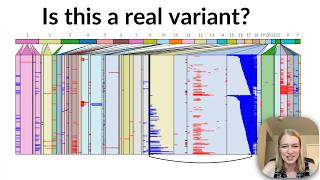
Investigating Structural Variants in Cancer Genomics - A Bioinformatics Tutorial
Explore bioinformatics tools Ribbon and SplitThreader to analyze structural variants in cancer genomes using long-read sequencing data and GIAB's HG008 tumor/normal samples.

Understanding Research Study Designs - Case-Control, Cross-Sectional, and Cohort Studies
Master different types of epidemiological study designs, from case-control and cross-sectional studies to prospective and retrospective cohort studies, including key statistical concepts and research methodologies.
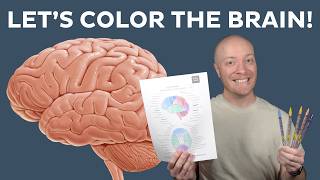
Learning Brain Anatomy Through Coloring - A Step-by-Step Guide
Discover effective techniques for mastering brain anatomy through coloring exercises, combining visual learning with step-by-step guidance to enhance retention and make studying engaging.
Neural Machines: From Fruit Flies to Embedded Devices
Explore neural machines through biological and artificial systems, from fruit fly olfactory architectures to low-power embedded devices, revealing innovative approaches to lifelong learning and adaptation.
Honey Bee Intelligence: Thinking with One Million Neurons
Explore the fascinating mechanisms of honey bee cognition, learning how these remarkable insects navigate complex tasks with just one million neurons, offering insights for AI development.

Cystic Kidney Disease - Pathophysiology, Diagnosis and Treatment
Delve into the comprehensive exploration of cystic kidney diseases, covering pathophysiology, diagnostic approaches, and treatment strategies for simple cysts, ADPKD, and ARPKD.

Why Building New Proteins from Scratch Is Our New Superpower | David Baker | TED
Biochemist David Baker discusses his Nobel Prize-winning work using AI to design new proteins with novel functions never seen in nature, exploring how protein design can solve major global problems like blocking viruses, breaking down pollutants, and creating new materials.

The Link Between Evolution and Language | Richard Dawkins | TED
Evolutionary biologist Richard Dawkins and linguist John McWhorter explore the parallels between biological evolution and language evolution, discussing how both genes and words change through random mutations and cultural selection, revealing deep patterns that shape life and language.

Why Your Body Fights Weight Loss | Katherine Saunders | TED
Physician Katherine Saunders explains why obesity is a complex chronic disease rooted in evolutionary biology, not just a lack of willpower. She discusses the science behind weight regulation and shares breakthroughs in treatment from lifestyle interventions to new medications.

How to Make Your Cat Happier — in 3 Minutes | Nicky Trevorrow | TED
Animal behaviorist Nicky Trevorrow explains the importance of play for cats' mental and physical health, sharing specific actionable strategies to increase feline happiness. The talk emphasizes that play benefits all species, including dogs.

A Bold Plan to Rewild the Earth — at Massive Scale | Kristine McDivitt Tompkins | TED
Conservationist Kristine McDivitt Tompkins discusses rewilding our minds as the first step to saving nature. She shares her work creating vast conservation parks across South America with her late husband, and her current mission to connect parks across geographic boundaries to create continental-scale wildlife corridors.

Why Broken Hearts Hurt — and What Heals Them | Yoram Yovell | TED
Neuroscientist Yoram Yovell explores the deep connection between physical and mental pain, revealing how brain endorphins and opioid receptors can ease both physical and emotional suffering. This understanding could lead to new treatments for mental health and well-being.

How I stay young in my 90s | Eileen Greene | TEDxPacific Avenue
In this remarkable 96 year old's first TED Talk, at the age of 87, she shared how "It's Never Too Late". In this Talk she shares her 4 most important secrets for staying young . . . in order to do more of the things you want to do in your life. Secret #1 will surprise many, but prominent Neuro
You can run 100 miles. Here's why. | Seth Moyer | TEDxBrentwoodCollegeSchool
Seth will be speaking about how every able-bodied human has the capacity to run 100 miles. He will support his claim with physiological concepts and evolutionary biology to show that our running capacity is much greater than we think. Seth is a former Division 1 lightweight rower, ultramarathon runn

Why We Don’t All See the Same World | Vivien Puppa Kocsis | TEDxAthens
What we see may feel objective, but our brains constantly interpret and reshape visual information. Vivien Puppa Kocsis explores how the brain processes visual signals and why people can perceive the same image, situation, or environment in completely different ways. Understanding perception can ch

Bad Breath: What Your Mouth Is Really Telling You | Mel Rosenberg | TEDxAthens
Bad breath is something almost everyone experiences, yet very few talk about it. Dr. Mel Rosenberg, one of the world’s leading researchers on oral malodor, explains what actually causes bad breath and how it can impact our relationships, our personal and social well being and eventually, our life.

Bio Conversion: From Waste to Energy | Dana Kang | TEDxHQIS Youth
Bio Conversion: From Waste to Energy Dana is a high school student at Hongqiao International School with a passion for advocacy, creativity, and making an impact. She’s actively involved in student leadership and often uses her voice to promote inclusion and awareness of global issues. Through TEDx