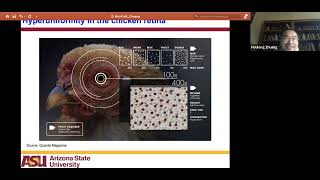
Disordered Hyperuniformity in Two-Dimensional Materials
Explore disordered hyperuniformity in 2D materials, its impact on electronic structures, and role of topological defects in preserving hyperuniformity in amorphous materials.
Intro to Artificial Intelligence - Evolutionary Computing - Lecture 11
Explore evolutionary computing techniques for AI problem-solving, including genetic algorithms and their applications in optimization and game AI.
Introduction to Artificial Intelligence - Evolutionary Computing - Lecture 12
Explore evolutionary computing techniques for AI problem-solving, including genetic algorithms and their applications in optimization and game AI.
Intro to Artificial Intelligence - Evolutionary Computing - Lecture 13
Explore evolutionary computing techniques for AI problem-solving, including genetic algorithms and their applications in optimization and game AI.
The Essential Role of Philosophy in Cognitive Neuroscience and Psychology
Explore the crucial intersection of philosophy with cognitive neuroscience and psychology, gaining insights into interdisciplinary research and scientific inquiry.
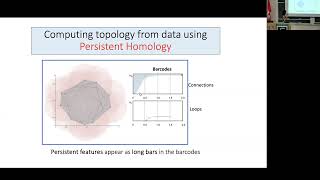
Applications of Topological Data Analysis in Cancer - Lecture 2
Explore applications of topological data analysis in cancer research, focusing on mathematical modeling of treatments, resistance, and optimization.

Machine Learning in Medical Diagnostics and Drug Discovery
Explore machine learning applications in genomics and proteomics for medical diagnostics and drug discovery. Learn how advanced analytics improve sequencing projects and translate technologies into practice.

Reinforcement Learning and Architectures of Intelligence - Part 3
Explore advanced reinforcement learning concepts and intelligence architectures with Microsoft Research's Ida Momennejad in this in-depth tutorial from IPAM's Mathematics of Intelligences series.
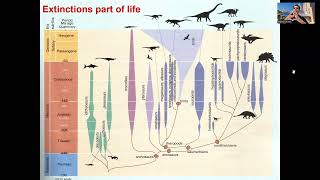
Sequence Alignment and Dynamic Programming in Computational Biology - Lecture 4
Comprehensive exploration of sequence alignment techniques, from comparative genomics to dynamic programming, covering local alignment, hashing, and BLAST for efficient genomic analysis and evolutionary insights.
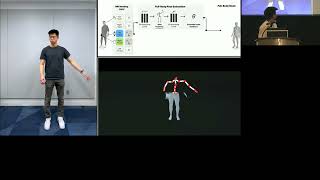
MobilePoser - Real-Time Full-Body Pose Estimation and 3D Human Translation from IMUs in Mobile Consumption
Discover real-time full-body pose estimation techniques using IMU sensors for mobile applications, exploring cutting-edge methods for accurate human motion tracking and translation.
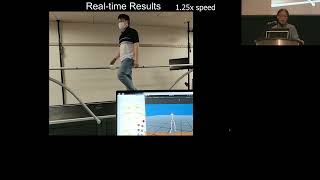
Real-Time 3D Human Pose Estimation Using Insole Pressure Sensors
Discover how pressure-sensing insoles enable real-time 3D human pose estimation, offering innovative solutions for motion tracking and biomechanical analysis.
Machine Learning for Protein Engineering in Drug Discovery
Discover how machine learning intersects with molecular biology and protein engineering through insights from UC Berkeley Professor Jennifer Listgarten's keynote address on advancing drug discovery innovations.
Leveraging Machine Learning and Clinico-Genomic Data for Cancer Care and Drug Discovery
Discover how machine learning and genomic data from 500,000 cancer cases drive innovations in cancer treatment and pharmaceutical development through advanced computational approaches.
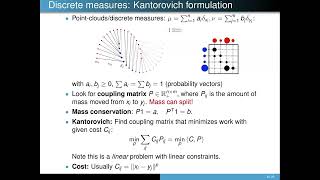
Trajectory Inference in Wasserstein Space
Explore advanced trajectory inference methods using Wasserstein geometry and B-spline approximation for analyzing dynamic processes in computational biology and point cloud data.

Non-Neural Intelligence: Biological Architecture Problem-Solving in Diverse Spaces
Explore biological intelligence beyond neural systems, examining how cells, tissues, and subcellular components demonstrate problem-solving abilities and collective decision-making across different scales.
From McCulloch-Pitts to Retina: A Journey Through Neural Networks and Sensory Encoding
Explore the evolution of neural networks from McCulloch-Pitts to modern retina-inspired digital encoding, examining theoretical biophysics' impact on AI and signal processing breakthroughs.
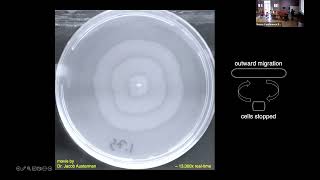
Micro-crowdsourcing: How Swarming Bacteria Integrate Signals During Collective Migration
Explore how bacteria communicate and move collectively, focusing on P. mirabilis's identity-based signaling and its impact on bacterial communities and population-wide swarming behavior.
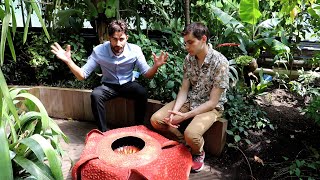
Plants and Mathematics - How Science Collaborates Through Botanical Research
Discover how mathematics and botany intersect in understanding the world's largest, smelliest flower through groundbreaking scientific collaboration and research methods.
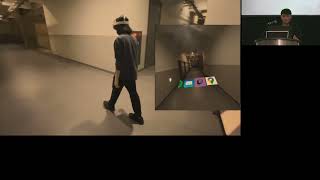
Gait Gestures - Examining Stride and Foot Strike Variation as an Input Method While Walking
Explore innovative research on using walking patterns and foot movements as novel input methods for human-computer interaction while maintaining natural mobility.
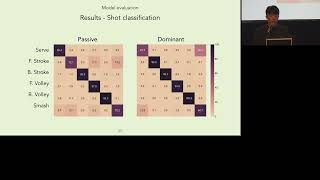
Silent Impact - Tracking Tennis Shots from the Passive Arm
Discover innovative motion tracking technology that analyzes tennis shots by monitoring the non-dominant arm's movements, offering new insights into sports performance analysis.
Extra History: Medicine
Explore humanity's medical history, from ancient beliefs to modern breakthroughs. Learn about epidemics, discoveries, and medical mysteries that shaped our understanding of health and disease.