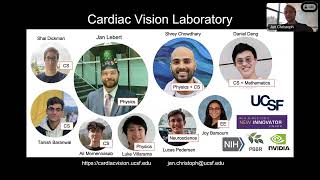
Predicting Heart Rhythm Disorders from Spatio-Temporal Imaging Data Using AI
Explore AI-driven techniques for predicting heart rhythm disorders using spatio-temporal imaging data, combining fluorescence and ultrasound imaging to overcome diagnostic limitations.
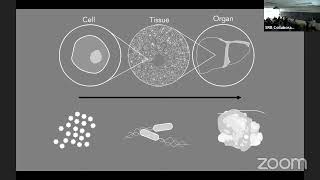
Bi-directional Lessons Between Traditional Evolutionary Biology and Cancer
Explore evolutionary biology's impact on cancer research and vice versa, uncovering insights that bridge these interconnected fields.
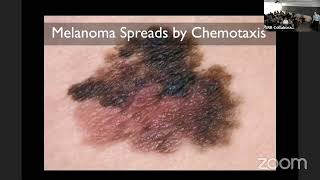
Computational Modeling of Chemotaxis - The Best Way to Understand Cell Migration
Explore computational modeling techniques for understanding cell migration and chemotaxis, enhancing knowledge of cellular movement mechanisms.
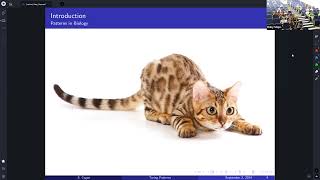
Turing Patterns in Mathematical Biology
Explore Turing patterns in mathematical biology, examining their formation and applications in biological systems. Gain insights into this fascinating intersection of mathematics and biology.

Model-Based Evaluation of HIV Treatment Strategies
Explore mathematical models for evaluating HIV treatment strategies, understanding disease dynamics, and guiding therapeutic development for improved patient outcomes.
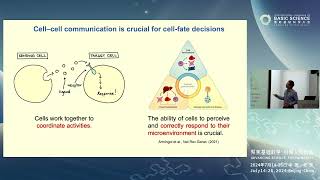
Modeling and Analyzing Cell-Cell Communication from Single-Cell Data
Explore CellChat, an integrated method for inferring and analyzing cell-cell communication from single-cell sequencing data using systems biology and machine learning approaches.
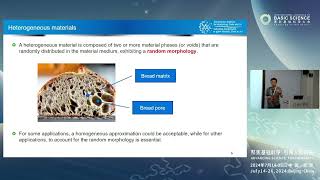
Modelling, Data Analytics, and AI for Investigating Heterogeneous Substances
Explore advanced techniques for studying heterogeneous materials, integrating physics-based modeling, data analytics, and AI to unlock new insights and accelerate research in material science.
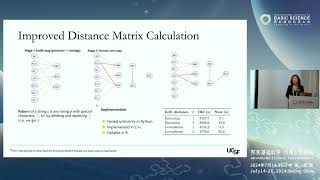
Prediction of Multi-Class Peptides by T-Cell Receptor Sequences with Deep Learning
Explore deep learning techniques for predicting multi-class peptides using T-cell receptor sequences, enhancing immune system understanding and potential disease treatments.
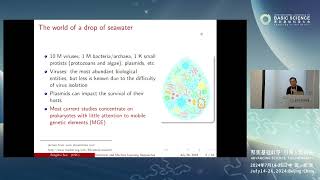
Statistical and Machine Learning Approaches for Investigating Viruses and Virus-Host Interactions
Explore statistical and machine learning methods for identifying novel viruses and virus-host interactions in metagenomic studies, enhancing understanding of microbial communities.
Reverse Engineering Structural Connectivity in Brain Networks
Explore the relationship between causal and structural connectivity in brain networks. Learn techniques for reconstructing neural circuitry using pulse outputs and various causality measures.
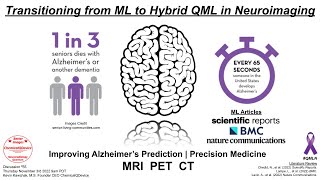
Transitioning from ML to Hybrid QML in Neuroimaging - Episode 55
Explore the transition from machine learning to hybrid quantum-classical approaches in neuroimaging, focusing on Alzheimer's detection and neurodegenerative syndrome classification.
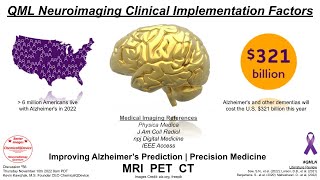
QML Neuroimaging Clinical Implementation Factors for Alzheimer's Disease
Explore QML neuroimaging implementation factors for Alzheimer's disease, covering regulatory frameworks, AI challenges, and quantum machine learning applications in biomedicine.
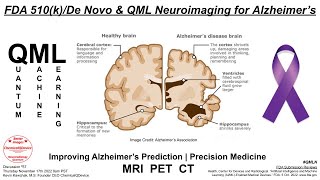
FDA 510(k)/De Novo and QML Neuroimaging for Alzheimer's - Discussion 57
Explore FDA approval processes for Quantum Machine Learning in neuroimaging, focusing on 510(k) and De Novo classifications for AI/ML software as medical devices in Alzheimer's research.
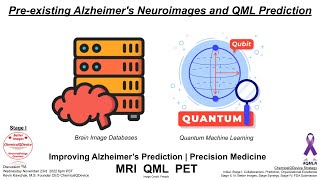
Pre-existing Alzheimer's Neuroimages and Quantum Machine Learning Prediction
Explore quantum machine learning applications for Alzheimer's prediction using pre-existing neuroimages. Discover recent FDA approvals, regulatory standards, and key research supporting this innovative approach.
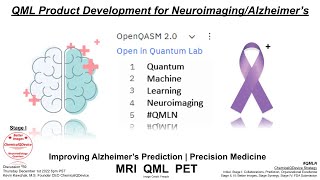
QML Product Development for Neuroimaging and Alzheimer's
Explore quantum machine learning for neuroimaging in Alzheimer's research. Learn product development strategies, QML techniques, and healthcare innovation principles to advance neuroimaging solutions.
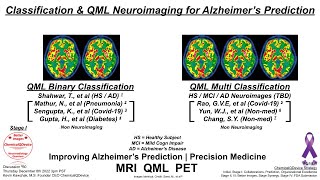
Classification and QML Neuroimaging for Alzheimer's Prediction
Explore quantum machine learning for Alzheimer's prediction using neuroimaging. Learn about recent advancements, Pennylane circuits, and potential business applications in healthcare and neurological disorders.
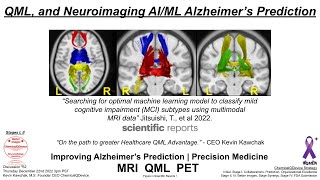
QML and Neuroimaging AI/ML for Alzheimer's Prediction
Explore cutting-edge AI/ML and quantum computing applications in Alzheimer's prediction using neuroimaging. Learn about multimodal approaches, recent research, and industry developments in QML for medical imaging.
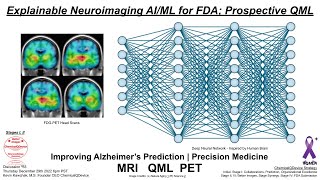
Explainable Neuroimaging AI/ML for FDA and Prospective QML
Explore explainable AI in neuroimaging, focusing on FDA requirements and future quantum machine learning applications. Gain insights into transparent algorithms for medical decision-making.
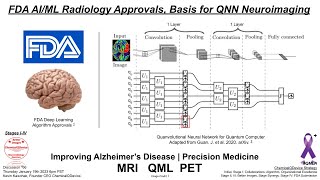
FDA AI/ML Radiology Approvals - Basis for Quantum Neural Network Neuroimaging
Explore FDA approvals for AI/ML in radiology and their implications for quantum neural networks in neuroimaging. Gain insights into regulatory processes and future prospects for quantum-based medical algorithms.
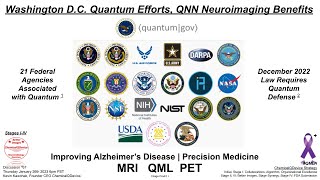
Washington D.C. Quantum Efforts and Neuroimaging Benefits
Explore Washington D.C.'s quantum technology initiatives and their impact on medical regulations, healthcare understanding, and diagnostic imaging advancements. Gain insights into future quantum applications in medicine.
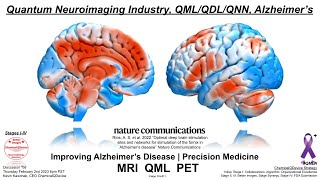
Quantum Neuroimaging for Alzheimer's: Applications of QML, QDL, and QNN
Explore quantum neuroimaging advancements for Alzheimer's, focusing on QML, QDL, and QNN applications in neuroscience and radiology. Gain insights into future innovations and industry pain points.