Interpreting Deep Neural Networks Towards Trustworthiness
Explore methods for interpreting neural networks, including contextual decomposition and adaptive wavelet distillation, to enhance model trustworthiness and performance.
Perception of Visual Art and Topological Data Analysis
Explore topological data analysis applications in visual art perception, comparing eye movements for abstract paintings vs. AI-generated images using algebraic topology methods.
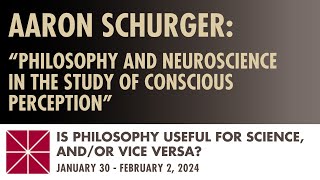
Philosophy and Neuroscience in the Study of Conscious Perception
Explore the intersection of philosophy and neuroscience in understanding conscious perception with insights from Aaron Schurger's conference talk.
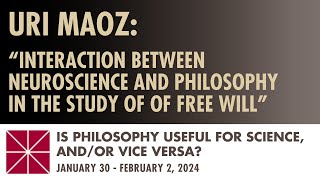
Neuroscience and Philosophy in the Scientific Study of Free Will
Explore neuroscience and philosophy's intersection in free will research, examining scientific approaches and philosophical implications.
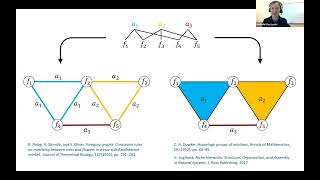
Persistent Homology of Plant-Pollinator Interactions - The Importance of Flowering Plant Surveys
Explore persistent homology in plant-pollinator interactions, analyzing topological features and the impact of flowering plant surveys on understanding community structures.
Functional and Structural Connectome of Reinforcement Learning
Explore functional and structural connectomes of reinforcement learning, focusing on neural substrates, computational models, and applications in depression research.
Mapping Brain Dynamics and Trajectories with Geometric and Topological Machine Learning
Explore geometric and topological machine learning techniques for mapping brain dynamics and trajectories, enhancing understanding of neural processes.

Validation of AI Techniques in MRI for Clinical Studies
Explore AI validation techniques for MRI in clinical studies, focusing on enhancing accuracy and reliability in medical imaging analysis.
Open Quantum Computing - One Atom at a Time
Explore ion-trap quantum computing: build qubits from atoms, simulate complex systems, and discover open-access hardware advancing research in this cutting-edge field.
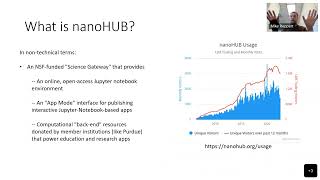
Hands-on Teaching with Jupyter Notebooks on nanoHUB
Explore hands-on teaching using Jupyter Notebooks on nanoHUB for chemistry courses. Learn to create interactive simulations, visualizations, and programming projects for enhanced student engagement and learning.
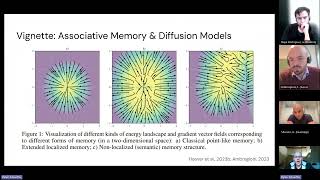
Bridging Associative Memory and Probabilistic Modeling
Explore the connection between associative memory and probabilistic modeling in this insightful presentation by Rylan Schaeffer.
Probabilistic Machine Learning in Bioinformatics
Explore probabilistic machine learning applications in bioinformatics, focusing on cutting-edge techniques and their impact on biological data analysis.
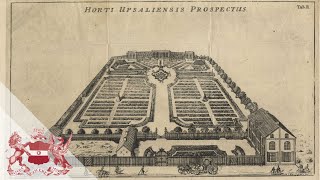
The Linnaeus Household - Identity and Materiality
Explore the Linnaeus household's role in shaping Carl Linnaeus's fame, examining social practices, academic life, and identity formation in 18th-century Uppsala.
Natural Artificial Intelligence - Keynote JuliaCon 2024
Exploring brain-inspired AI: Free Energy Principle, unsupervised learning, and real-time skill acquisition. Insights into brain computations and their application to AI engineering tools using Julia.
Tools for Agent-Based Modelling in Developmental Biology
Explore tools for agent-based modeling in developmental biology using Julia, including SpatialHashTables.jl, BoundedDegreeGraphs.jl, and AgentTools.jl. Learn about Position-Based Dynamics for particle simulations.
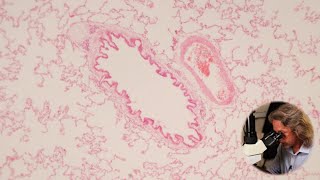
Histology of the Airway and Lungs - A Visual Exploration
Explore the intricate cellular structure of airways and lungs through microscopic examination, understanding their functions and clinical relevance in respiratory health.
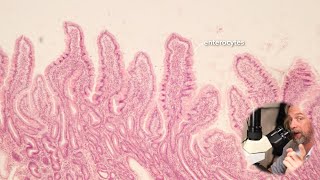
Histology of the Small Intestine: Duodenum, Jejunum, and Ileum Comparison
Explore cellular anatomy of the small intestine, examining epithelium, villi, crypts, and more. Compare duodenum, jejunum, and ileum structures, relating to diseases like celiac.
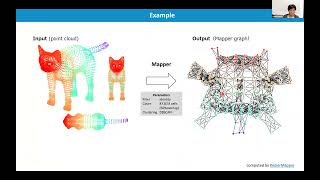
Single-cell Trajectory Analysis with V-Mapper
Explore V-Mapper, an innovative method for analyzing single-cell gene expression data. Learn how it extracts topology and flow of cell differentiation, enhancing trajectory inference in high-dimensional spaces.

Computing Generalized Ranks of Persistence Modules via Unfolding to Zigzag Modules
Efficient algorithm for computing generalized ranks of persistence modules using unfolding to zigzag modules, with applications in algebraic topology and data analysis.
Mastering the Mic: Interview Strategies for Science Communicators
Discover interview strategies for science communication with podcast host Kira Dineen. Learn podcast basics, networking tips, and effective interviewing techniques to enhance your skills as a host or guest.

Comparing Top Large Language Models for Python Code Generation - 340
Experiment comparing top LLMs for Python code generation in scientific image analysis. Tests models' ability to segment nuclei, measure intensities, and calculate ratios in microscopy images.