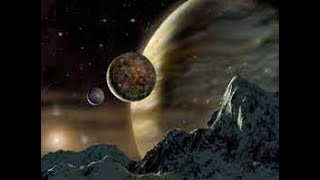
Detecting Exo-Earth Candidates with Next Generation Direct Imaging Space Telescopes
Explore cutting-edge techniques for identifying Earth-like exoplanets using advanced space telescopes in direct imaging missions.
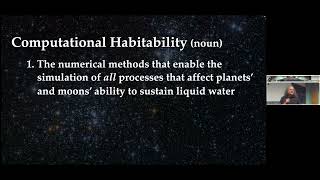
Computational Habitability
Explore computational methods for assessing planetary habitability, covering atmospheric, interior, surface, and system-wide factors in exoplanet research.
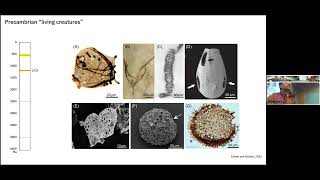
Insights into Ancient Sedimentary Environments via Three-Dimensional Reconstructions
Explore ancient sedimentary environments through 3D reconstructions, uncovering Earth's history and early life evolution via innovative analysis of rock records and fossils.
Non-enzymatic RNA Copying in Carbonate Lakes - Resolving Challenges for the Origin of Life
Explore non-enzymatic RNA copying in carbonate lakes and its implications for the origin of life. Uncover groundbreaking insights into early Earth's biochemistry.
Ice Science Advances: From Antarctic Cores to Future Mars Sampling
Explore advances in ice science through Antarctic cores and potential Mars sampling, uncovering insights about Earth and Mars' ancient climates and environments.
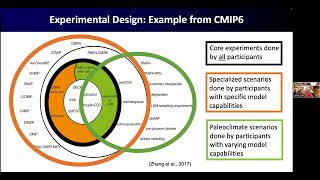
Looking Ahead to the Future of Exoplanet Climate Modeling
Explore the evolution of exoplanet climate modeling, from 1D models to sophisticated 3D simulations, and learn how JWST observations will shape future research and model refinement.
The Origin of Mercury's Structure and Chemical Composition and Their Astrobiological Implications
Explore Mercury's unique composition, formation, and implications for astrobiology. Investigate its metal-rich core, volatile elements, and comparisons to chondrites through experimental data and spacecraft observations.
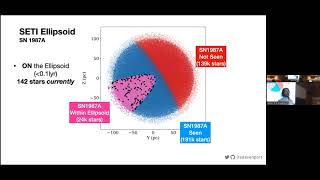
Searching the SETI Ellipsoid
Explore the concept of the SETI Ellipsoid and its role in the search for extraterrestrial intelligence with Astrobiology/Astronomy expert Jim Davenport.
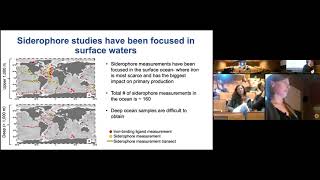
Microbial Iron Acquisition and Adaptations at Hydrothermal Vents
Explore microbial adaptations for iron acquisition in hydrothermal vents, focusing on siderophores and their role in maintaining bioavailable iron in deep-sea ecosystems.
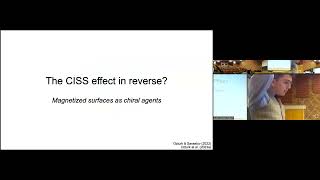
Origin of Biological Homochirality by Crystallization of an RNA Precursor on a Magnetic Surface - Astrobiology Colloquium Spring 2024
Explore the origin of biological homochirality through crystallization of RNA precursors on magnetic surfaces, uncovering potential pathways to life's molecular asymmetry.
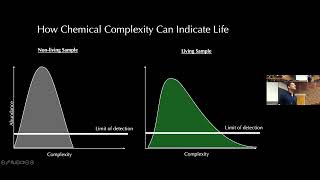
Expanding the Agnostic Biosignature Toolkit: Estimating Molecular Assembly with GC-MS
Explore techniques for detecting extraterrestrial life using molecular assembly theory and gas chromatography/mass spectrometry, focusing on agnostic biosignatures and analytical challenges.
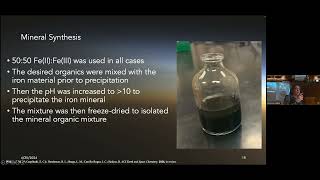
Photochemical Stability and Reactivity of Prebiotic Molecules Under Ceres-Like Conditions
Explore prebiotic organic material stability and reactivity under Ceres-like conditions, with implications for astrobiology and future mission planning.
Future of Computer Progress: Trends in Technology and Computing Economics
Explore future computing trends with MIT's Neil Thompson. Gain insights on algorithm progress, specialized hardware, and quantum computing's potential impact on technological advancements.
Foundation Models for Enabling Rational Design of Biological Systems - Lecture 3
Explore foundation models for rational design of biological systems with Arvind Ramanathan, advancing understanding in computational biology and system engineering.
Introduction to Tokenizing Scientific Data - Omics - Tutorial 2
Explore tokenization techniques for scientific data in omics, focusing on applications in genomics and bioinformatics.
Tree Learning: Optimal Algorithms and Sample Complexity - Hierarchical Clustering and PAC Learning
Explore optimal algorithms and sample complexity for learning hierarchical tree representations from labeled data, covering PAC learning, online learning, and efficient tree classifier construction.
Processing Very Large Image Volumes with the Adaptive Particle Representation
Explore advanced techniques for processing massive image datasets using adaptive particle representation, enabling efficient visualization and analysis of terabyte-scale biomedical data.
Biocosmology: Lessons from Biology on Physics of the Continuum
Explore biocosmology and its insights from biology for understanding physics of the continuum with astrophysicist Marina Cortês.
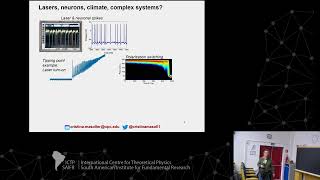
Time Series Analysis Tools with Applications to Neuroscience - Class 1
Explore time series analysis tools and their applications in neuroscience, focusing on nonlinear dynamics and complex networks in brain function.
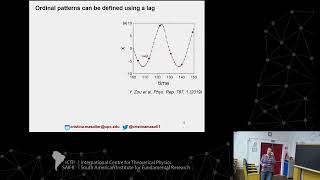
Time Series Analysis Tools with Applications to Neuroscience - Class 2
Explore time series analysis tools and their applications in neuroscience, focusing on advanced techniques for understanding complex neural data.
Structure-to-Function Relationship in Neuronal Cultures: Applications to Biological Machine Learning and Reservoir Computing - Class 2
Explore structure-function relationships in neuronal cultures, focusing on biological machine learning and reservoir computing applications.