
Biophysical Chemistry
Explore protein structure, folding mechanisms, and biophysical techniques. Gain insights into forces driving protein stability, denaturation processes, and experimental methods for studying protein dynamics.
Functional Genomics
Explore genomics, epigenetics, and DNA sequencing methods. Learn about genome editing, transcriptomics, and comparative genomics. Gain hands-on experience through tutorials and laboratory sessions.
Introduction to Dynamical Models in Biology
This course is intended to introduce students of biology to elementary mathematical concepts and tools for dynamical models. The course will focus on modeling using ordinary differential equations (ODEs).

The Mathematics of Visual Illusions - Ian Stewart
Explore visual illusions and their mathematical underpinnings with Ian Stewart, uncovering how the brain processes ambiguous information and makes perceptual decisions.
Modelling Genes
Explore genetic variation patterns through mathematical models, examining inheritance, natural selection, and population dynamics to interpret DNA data and understand evolutionary mechanisms.
Why There Are No Three-Headed Monsters
Explore developmental constraints, brain tumors, and marriage dynamics through mathematical biology, offering insights into morphogenesis, medical interventions, and relationship predictions.
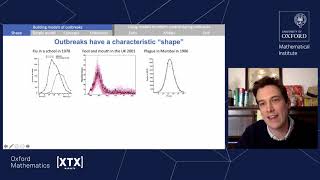
How Do Mathematicians Model Infectious Disease Outbreaks?
Explore mathematical modeling of infectious diseases, including outbreak shapes, compartmental modeling, and using models to inform control strategies and vaccination efforts.
The Number Mysteries - Marcus du Sautoy
Explore the unexpected applications of mathematics in predicting the future, from prime numbers to football, in this engaging lecture by Marcus du Sautoy.
Scaling the Maths of Life
Explore mathematical links between biological scales, from developmental biology to ecology and neuroscience, through real-life examples, games, and elegant mathematical concepts.
Mathematical Modelling in Biology - Infectious Disease Modelling - Lecture 3
Explore infectious disease spread using the Kermack McKendrick model, deriving the 'R' number and its significance in epidemiology. Gain insights into mathematical biology applications.

Mathematical Modelling in Biology - Neuronal Signalling
Explore Nobel Prize-winning neuronal signalling models, including Hodgkin-Huxley and Fitzhugh-Nagumo, to understand how neurons generate and propagate electrical signals vital for bodily communication.
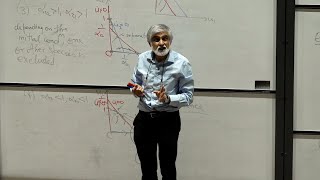
Mathematical Modelling in Biology - Enzyme Kinetics and Perturbation Theory - Lecture 2
Explore enzyme-substrate reactions using separation of timescales and perturbation analysis to derive solutions and simplify complex biological systems.
Economics of IPR
Explore the economic aspects of intellectual property rights, from patents to copyrights, and their global impact on trade, development, and innovation.
How the Brain Creates Mind
Explore the fascinating journey of how neural activity gives rise to consciousness, cognition, and emotions through in-depth lectures on brain dynamics, electrical activity, and sleep.
The Path to the Nobel Prize - From Childhood Chemistry to Genetic Breakthroughs
Explore a Nobel laureate's scientific journey, from childhood curiosity to groundbreaking discoveries in genetics, offering insights into the path of scientific excellence and innovation.
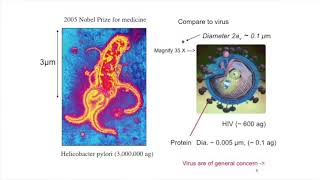
NYU Tandon's Ultra-sensitive Whispering Gallery Mode Biosensor - Part One: Motivation and History
Explore ultra-sensitive biosensors for pathogen detection, focusing on whispering gallery mode technology and its applications in virus detection and molecular spectroscopy.
Introductory Neuroscience and Neuro-Instrumentation
This course is a system, design-oriented course aimed to provide exposure to Neuroscience and its importance in the real world. Neuroscience and Neuro- Instrumentation are popular research areas and this course is an introduction to both.
Perform Your Best Under Stress - Strategies for Managing Performance Anxiety
Discover strategies to perform optimally under stress, exploring mind-body connections and their impact on success, happiness, and safety. Insights from brain science reveal techniques to overcome performance anxiety.
Nonalcoholic Fatty Liver Disease - UCLA Digestive Diseases
Comprehensive overview of nonalcoholic fatty liver disease, covering diagnosis, prevalence, testing methods, and treatment options, including lifestyle modifications and emerging pharmacotherapies.
Microbiome and Gut Health - Emeran A. Mayer, MD - UCLA Digestive Diseases
Explore the intricate relationship between gut microbiome and overall health, covering topics from metabolites to immune effects and their impact on chronic diseases and the pandemic.
When Scleroderma Gets Hard on the Stomach - Lisa D. Lin, MD, MS - UCLA Digestive Diseases
Explore scleroderma's impact on the digestive system, focusing on esophageal and gastric complications. Learn about pathophysiology, symptoms, and treatment options for improved patient care.