
Type II Diabetes Mellitus
Explore Type II Diabetes Mellitus: causes, symptoms, diagnosis, and management strategies for improved patient care and outcomes.
Asymptotic Analysis for Selection-Mutation Models: Locations and Weights of Limit Singular Measures
Explore asymptotic analysis of selection-mutation models, focusing on limit singular measures' locations and weights. Gain insights into population dynamics and mathematical biology.
A Spline Tour of Deep Learning: The Scattering Way
Explore deep learning's progress, challenges, and theoretical foundations. Gain insights into the geometric interpretation of deep networks and spline approximation, with a focus on Scattering Networks.

Artificial Intelligence for More Effective Cancer Diagnosis - Part 2
Explore AI's role in enhancing cancer diagnosis through digital pathology, improving research, diagnostics, and genomics for more effective patient care.
Gene Therapy and Its Potential for Treating Health Conditions - Part 2
Explore gene editing treatments for inherited blood disorders with Professor De La Fuente's research insights and potential health applications.
From Exploitation to Reverence - Reimagining Our Relationship with Nature
Explore the shift from exploiting nature to revering it, examining personal experiences, ethical responsibilities, and the need for cultural and spiritual transformation to foster a harmonious relationship with the environment.
The Coach's Role in the Constraints-Led Approach - Adaptation and Instruction
Exploring the coach's role in the constraints-led approach: adapting, instructing, and facilitating learning through thoughtful design of practice environments and athlete interactions.
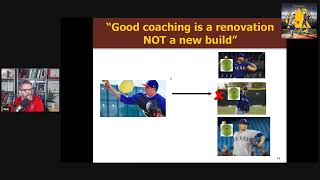
The Art and Science of Constraints-Based Coaching
Explore the scientific foundations and practical applications of Constraints-Led Approach (CLA) in coaching, enhancing effectiveness and performance outcomes.
Advice on Applying Ecological Dynamics in Coaching - Episode 467
Practical advice for coaches on implementing ecological dynamics theory in training design, focusing on real-world applications and expert insights for effective skill development.
Exploring Coaches' Experiences in Adopting a Nonlinear Approach to Skill Development
Exploring coaches' adoption of nonlinear, ecological approaches to skill development. Insights into contemporary pedagogical methods and their impact on coaching practices across different sports and cultures.
The Coaching Eye - How Reliably Can Expert Coaches Observe Movement?
Expert coaches' ability to observe and analyze tennis serves, examining factors like viewing angle, age, and gender that may influence their judgments. Insights into the reliability of visual assessments in sports coaching.
The Personalisation of Cardiovascular Models Using Julia
Innovative workflow for personalizing cardiovascular models using Julia, combining data assimilation, sensitivity analysis, and optimization to enhance clinical decision-making and improve patient outcomes.
NetSurvival.jl - A Glimpse into Relative Survival Analysis
Explore relative survival analysis in cancer studies using NetSurvival.jl, a Julia package offering fast, reliable tools for extracting net survival curves and integrating with StatsModels.jl API.

Cutting Mirrors with Diamonds - Optical Mirror Fabrication Techniques
Explore diamond-based optical mirror creation techniques, focusing on precision cutting methods and applications in quantum optics and advanced scientific instruments.
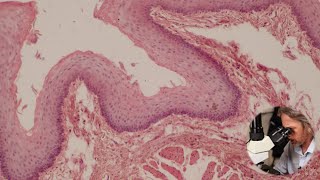
Histology of the Esophagus - Structure and Function
Explore the cellular structure of the oesophagus, providing a foundation for understanding the entire gastrointestinal tract's anatomy and tissue organization.
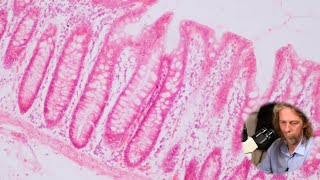
Histology of the Large Intestine - Microscopic Structure and Comparison
Explore the microscopic structure of the colon, comparing it to other parts of the gastrointestinal tract and understanding its role in intestinal diseases.
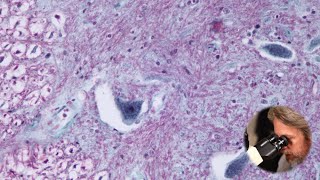
Histology of the Spinal Cord - Neuronal Structure and Organization
Explore the microscopic structure of the spinal cord, examining its grey and white matter, neurons, axons, and support cells.
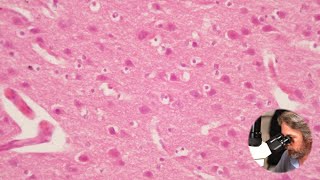
Histology of the Brain: Cerebral Structure and Cell Types
Explore brain structure: identify 4 cell types, examine grey matter organization, and trace myelinated axons into white matter. Uncover cerebral complexity.
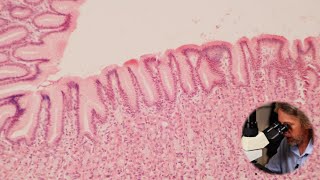
Histology of the Stomach - Structure, Function, and Protective Mechanisms
Explore the unique epithelium of the stomach, its role in producing hydrochloric acid, and protective mechanisms against self-digestion in this comprehensive histological overview.

Sholl Analysis - Aggregating Profiles from Multiple Soma
Aprenda a realizar análise de Sholl em múltiplos neurônios, combinando perfis de diferentes tamanhos através de interpolação para comparação e cálculo de médias significativas.

Sholl Analysis Using Python - Quantifying Neuronal Branching Patterns
Learn to perform Sholl analysis on neuronal images using Python, quantifying branching complexity and comparing neuronal structures across different conditions or cell types.