Bladder Cancer in Women: Diagnosis and Treatment Challenges
Gain insights into the unique challenges and complexities of bladder cancer diagnosis and treatment specifically for women, discussed by leading Johns Hopkins specialists.

Multiple Sclerosis - Symptoms, Signs, Risk Factors, Diagnosis and Treatment
Delve into the comprehensive overview of Multiple Sclerosis, exploring symptoms, diagnosis, and treatment options while understanding its autoimmune nature and impact on the central nervous system.

Understanding Fast-Twitch vs Slow-Twitch Muscle Fibers and Athletic Performance
Discover the science behind muscle fiber types, their impact on athletic performance, and how training can influence your body's natural composition of fast-twitch, slow-twitch, and hybrid fibers.
Rheumatoid Arthritis Nodules: Causes, Complications, and Treatment
Discover the complexities of rheumatoid arthritis nodules, from their formation and risk factors to management strategies, including their surprising connection to common RA treatments and internal organ involvement.
What Killed the Dinosaurs - The Series of Events Following the Asteroid Impact
Explore the catastrophic chain of events that led to dinosaur extinction, from the initial asteroid impact through global climate changes, and discover how life eventually recovered on Earth.
Two Paradigms of the Unconscious and What They Might Tell Us About Consciousness
Explore the intersection of Neo-Freudian unconscious theory and dual-process cognition to gain fresh perspectives on consciousness, unconscious processing, and their relationship.
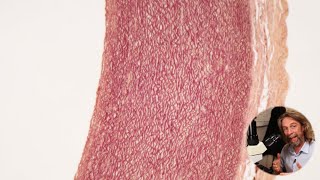
Microscopic Anatomy of the Aorta - Understanding Cardiovascular Disease and Atherosclerosis
Explore the cellular and tissue structure of the aorta to understand cardiovascular diseases, including atherosclerosis and aortic dissection mechanisms.

Reconstructing Every Haplotype with De Novo Assembly
Discover advanced techniques for haplotype-resolved de novo genome assembly, focusing on phased assembly graphs and innovative methods for diploid and polyploid genome reconstruction.
ML-Enabled Genetic Association Studies of High-Content Phenotypes
Explore cutting-edge machine learning applications in genetic association studies, focusing on high-content phenotypes and innovative frameworks like HistoGWAS for analyzing tissue phenotypes in histology cohorts.
How Would We Know What an Astrocyte Knows? - Understanding Neural Computation Beyond Neurons
Explore how astrocytes compute using calcium patterns and neurotransmitters, challenging traditional neuron-centric views of cognition and proposing new frameworks for understanding consciousness across diverse systems.
Space of Possible Minds - The Landscape of Consciousness
Explore the vast landscape of consciousness across biological species, artificial minds, and theoretical entities through mathematical frameworks and philosophical perspectives.

Holding on to Existence: Self-Models, Mortality Denial, and the Phenomenology of Meditative Self-Dissolution
Explore how self-models and meditation practices influence our relationship with mortality, examining neural mechanisms of death denial and the role of mindfulness in fostering acceptance.

The Hodgkin-Huxley Model - Understanding Neural Electrical Signals
Dive into the Nobel Prize-winning Hodgkin-Huxley model to understand how neurons generate electrical signals, exploring membrane voltage, ion channels, and the biophysical principles of neural computation.
GERD and Barrett's Esophagus - Surgical Candidates and Treatment Options
Explore surgical interventions and treatment options for GERD and Barrett's disease, including risk factors and minimally invasive approaches for optimal patient outcomes.
Cystinosis - Causes, Symptoms, Diagnosis and Management
Understand the genetic disorder cystinosis, its impact on kidney function, clinical manifestations, and treatment approaches including cysteamine therapy and management of complications.

5 Common Brain Myths Debunked - From Left Brain Dominance to Mozart Effect
Uncover common misconceptions about brain development, creativity, and learning as scientific evidence debunks five popular myths about how our minds really work.
STRUCTURE Harvester: Determining Optimal Subpopulations Using Python Scripts
Master the STRUCTURE Harvester analysis method using Python scripts to determine optimal subpopulation numbers in genomic data, with practical demonstrations and result interpretation guidance.
Classical Serotonergic Psychedelics' Acute Effects Induce Changes to Brain's Functional Hierarchy
Explore how psychedelics affect brain hierarchy and information flow, focusing on acute effects of psilocybin, LSD, and DMT across multiple timescales of neural reorganization.
Why Nature Does Not Like Zombies - Unifying Lower and Higher Order Theories of Consciousness: A Computational Approach
Explore a computational theory unifying consciousness levels, examining why natural selection favors conscious beings over unconscious zombies through the lens of causal learning and self-awareness.
Complexity Measures During Brain Dying Stages: Epistemological and Methodological Discussion on the Dying Process and Associated Experiences
Explore brain activity complexity during death, examining EEG data analysis methods and their implications for understanding near-death experiences and consciousness in final moments.
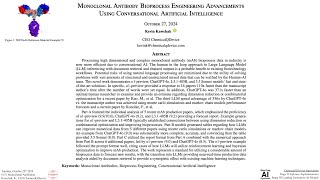
Monoclonal Antibody Bioprocess Engineering Advancements Using Conversational AI
Explore how AI models analyze and optimize monoclonal antibody production through advanced machine learning techniques, focusing on real-time data analysis and manufacturing improvements.