The Origins of Life - From Darwin's Warm Little Pond to Modern Theories
Explore theories on life's origins with experts discussing abiogenesis, evolutionary processes, and the implications for interplanetary exploration and our understanding of life itself.

After the First Wave - Strategies for Public Health and Economic Recovery Post-COVID-19
Experts discuss strategies for public health and economic recovery post-COVID-19, exploring testing, modeling, interventions, and balancing epidemiological and economic concerns for future pandemic waves.
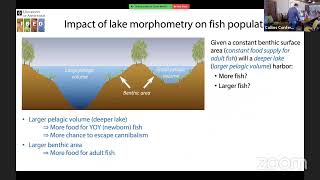
The Effects of Intergenerational Conflict on Ecological and Evolutionary Dynamics
Explore intergenerational conflict's impact on ecological and evolutionary dynamics, examining management strategies, adaptive dynamics, and conservation efforts in marine ecosystems.
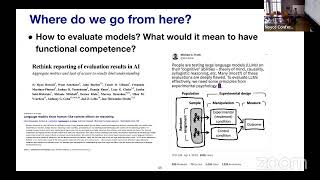
Formal and Functional Competence in Large Language Models - A Cognitive Perspective
Explore cognitive perspectives on large language models, examining formal and functional competence, linguistic confidence, and implications for AI development and evaluation.
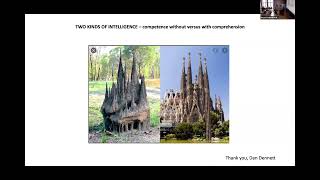
What Understanding Adds to Cambrian Intelligence - A Taxonomy
Explore the intersection of understanding and intelligence with John Krakauer, delving into a taxonomy that enhances our perspective on cognitive processes and artificial intelligence.
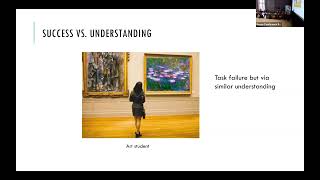
How Do We Know What an Animal Understands?
Explore animal cognition and communication through innovative research methods, uncovering insights into how non-human species perceive and interact with their world.
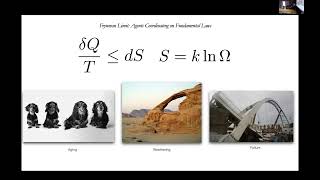
Feynman, Shannon, and Darwin Worry About Understanding
Explore how Feynman, Shannon, and Darwin's ideas intersect in the pursuit of understanding complex systems and scientific knowledge.
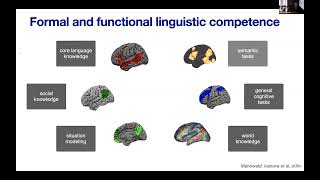
Language Understanding Goes Beyond Language Processing
Explore how language comprehension extends beyond traditional processing, delving into cognitive mechanisms and neural networks that shape our understanding of communication and meaning.

What Makes a Reaction Network "Chemical"?
Explore the fundamental principles of chemical reaction networks, from basic concepts to modern applications, emphasizing reversibility, conservation, and complex systems.
The Neuroscience and Philosophy of Curious Minds - Exploring Curiosity as a Network Phenomenon
Exploring curiosity as a networked phenomenon, bridging neuroscience and philosophy to reframe how we understand desire, wonder, and discovery in both the brain and society.
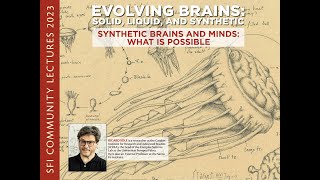
Evolving Brains - Synthetic Brains and Minds: What is Possible? - Lecture 2
Exploring synthetic biology, artificial life, and AI to understand cognitive complexity and the potential for creating synthetic minds different from human cognition.
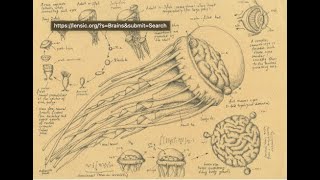
Evolving Brains: Solid, Liquid and Synthetic - Lecture 1: Liquid Brains and Solid Brains
Explore diverse intelligences across life forms, from cells to humans. Examine brain evolution, commonalities, and differences, and consider possibilities for new types of minds.
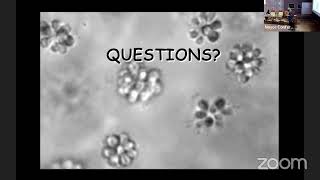
Evolution of Multicellularity in the Ancestors of Animals - Hydrodynamic Performance and Selective Factors
Explore how choanoflagellates provide insights into the evolution of multicellularity in animal ancestors, examining hydrodynamic performance and selective factors affecting colony formation and survival.
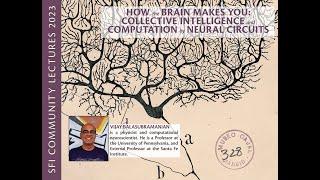
How the Brain Makes You - Collective Intelligence and Computation by Neural Circuits
Explore how billions of neurons collectively create intelligence, perception, memory, and imagination through electrical signals, revealing the mysteries of the mind's computational function.
Liquid and Solid Brains: Cognition, Criticality, and Terraforming the Biosphere
Exploring liquid and solid brains, cognitive scaling, criticality, and terraforming the biosphere through synthetic biology. Insights on collective intelligence and the future of technology in ecology and evolution.
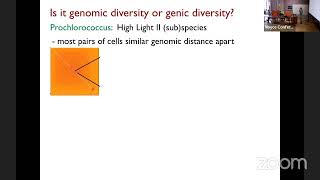
Why is There So Much Fine Scale Microbial Diversity - Ecology and Evolution in High Dimensions
Explore the ecological and evolutionary factors driving microbial diversity at fine scales, examining high-dimensional perspectives on this complex phenomenon.
Learning, Curiosity, and Consciousness in Human Cognition - Part 2
Exploring human uniqueness through neuroscience, comparing cognitive abilities with other animals, and examining curiosity in larger systems. Discusses learning, imagination, and consciousness in humans and beyond.
Taking Multiple Perspectives on The Brain - Part 1
Exploring diverse approaches to understanding the brain's complexity, emphasizing the importance of multidisciplinary perspectives and collaborative discourse in advancing neuroscience research.
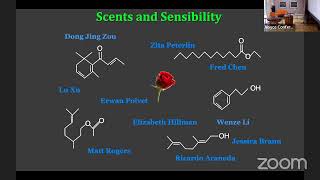
The Smell of Inhibition - A Code in the Nose?
Explore the intriguing world of olfactory perception and the potential existence of an inhibitory code in the nose, uncovering new insights into how we process and interpret smells.
How to Find Life Anywhere - The Universal Rules of Life
Explore universal rules of life spanning from simple organisms to complex ecosystems, and their application in the search for extraterrestrial life. Gain insights into biology's fundamental principles across diverse contexts.
When Will We Need a Theory of Intelligence - Panel Discussion
Panel discussion exploring the need for a theory of intelligence, its potential components, and applications beyond human and machine intelligence, considering the limits of current AI successes and future challenges.