Models for Interdisciplinarity Inspired by Mathematical Biology
Explore frameworks for interdisciplinary modeling, including "Rule-of-Five" and disciplines as coevolving networks, to improve teaching and research across fields.
Unifying the Study of Biodiversity Across Timescales - What a MESS!
Explore a mechanistic model of community assembly that integrates macro-ecology, phylogeography, and macro-evolution to predict biodiversity patterns and infer complex histories of island assembly.
Hybridizing Mechanism and MaxEnt - Ecological Theory for the Anthropocene
Explore a groundbreaking ecological theory combining maximum entropy and mechanism to predict ecosystem patterns and responses to anthropogenic stresses in the Anthropocene era.

Toward a New Understanding of Aging, Adaptation, and the Arrow of Time
Explore the interplay between biological aging, adaptation, and time through examples from physics research, aiming to identify pathways for healthy aging and formulate a new concept of complex time.
The Connected World - Networks and Their Properties
Explore the hidden world of networks, from social connections to cellular metabolism, and discover how scientists study these complex systems to unravel their mysteries.

On Composition and Complexity
Explore the intricate relationship between composition and complexity, delving into how elements combine to create emergent properties and complex systems across various disciplines.
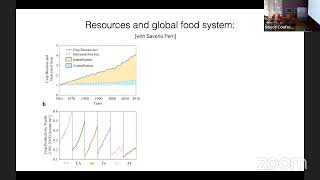
Resources and the Assembly of the Land Biosphere
Explore the intricate relationship between resources and the formation of Earth's land biosphere, uncovering key insights into ecological assembly and evolution.
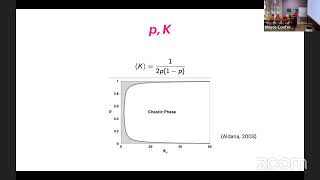
Criticality - A Balance Between Robustness and Adaptability
Explore the concept of criticality and its role in balancing robustness and adaptability in complex systems, offering insights into system behavior and optimization.
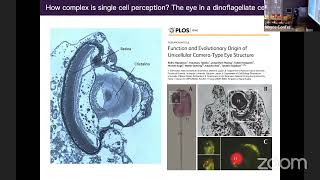
Liquid and Solid Brains - Mapping the Cognition Space
Explore the fascinating comparison between liquid and solid brains, delving into cognitive processes and mapping the intricate landscape of cognition with Ricard Solé.
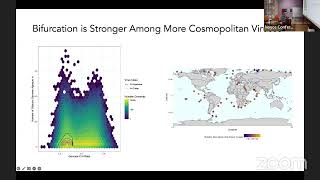
Emergent Spatial and Temporal Patterns in the Biochemistry of Earth's Open Oceans
Explore emergent patterns in ocean biochemistry, examining spatial and temporal dynamics that shape Earth's marine ecosystems and their impact on global processes.
Animal Dominance Hierarchies - From Pecking Orders to Human Society
Explore a century of research on dominance hierarchies in animals and humans, examining their impact on social structures, behavior, and evolution across species.
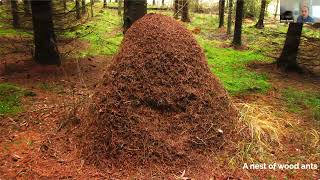
The Self-Assembling Horde: Building Functional Structures on the Move
Explore how collective organisms build functional structures while in motion, focusing on self-assembling processes and their applications in various fields of science and engineering.
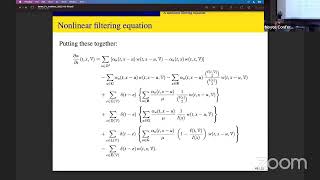
Phylodynamics and Markov Genealogy Processes
Explore phylodynamics and Markov genealogy processes to infer disease transmission from genomic data. Learn about a unified approach using exact likelihood expressions and dynamic genealogy evolution.
On the Shape of Epidemics
Explore the patterns and dynamics of epidemic spread, examining factors that influence their shape and progression through populations.
Canopy Biology and Human Societies - Lessons from Treetops to Urban Jungles
Explore canopy biology's insights into ecosystem diversity and human societies. Discover how structural ecology in treetops reveals lessons for urban life and the organization of super-organisms like ant colonies and human groups.
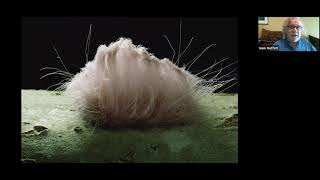
Comparative Canopy Biology and the Structure of Ecosystems
Explore the emerging field of comparative canopy biology, its challenges, and potential for understanding ecosystem structures across various biological communities, from forest canopies to periphyton.
Scaling Laws and Social Networks in the Time of COVID-19 - Part 1
Exploring scaling laws in biology, cities, and economies, and their implications for societal challenges like pandemics and sustainability. Insights from complex systems science for understanding human civilization.
The Future of the Economy - Technology Evolution and AI Impact
Exploring technology's evolution through biology, this talk examines how AI reshapes labor and finance, offering insights into designing human systems that align with physical and biological laws.
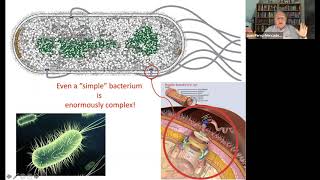
Mimicking Simple Life Without Biochemistry
Explore the creation of life-like chemical systems exhibiting growth, replication, and evolution through non-biochemical processes, offering insights into artificial biology and early Earth proto-life formation.
Artificial Intelligence: What We Still Don't Know - Melanie Mitchell
Explore AI's challenges, limitations, and future potential with computer scientist Melanie Mitchell. Delve into fundamental questions about intelligence, cognition, and the intersection of technology and human understanding.
The Physical Constraints on Life and Evolution
Explore how physics and scale shape biological evolution, from bacterial structures to complex organisms, revealing universal constraints and evolutionary strategies that apply to both life and human institutions.