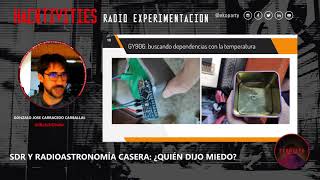
SDR y Radioastronomía Casera - ¿Quién Dijo Miedo?
Experimentos caseros de radioastronomía con SDR: medición del efecto Doppler de la Vía Láctea y detección de radiogalaxias. Aprende sobre proyectos amateur, desafíos y soluciones en esta fascinante área.
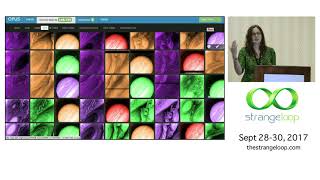
How to Play with Deep Space Data
Explore deep space data for personal projects with NASA developer Lisa Ballard. Learn to access and utilize space mission imagery and information in web and hardware applications.
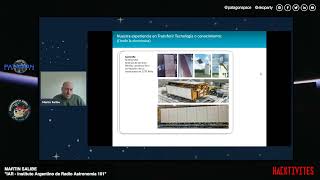
Instituto Argentino de Radio Astronomia 101 - Patagon Aerospace
Exploración del Instituto Argentino de Radio Astronomía: proyectos, desarrollos, facilidades y transferencia tecnológica. Presentado por Martin Salibe, responsable de vinculación tecnológica del IAR y técnico del Conicet.
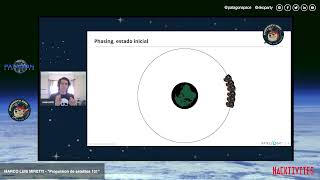
Propulsión de Satélites 101
Exploración detallada de la propulsión satelital, enfocada en adquisición orbital, fases y evasión de colisiones, con ejemplos prácticos de los Ñusat de Satellogic.
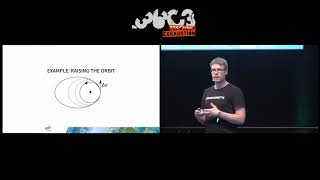
Thrust Is Not an Option - How to Get to Mars Really Slow
Explore low-energy space trajectories using chaos theory and three-body problem physics. Learn about orbital mechanics, Lagrangian points, and the interplanetary transport network for efficient space travel.
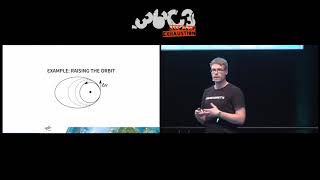
Thrust is Not an Option - How to Get to Mars Really Slow
Entdecken Sie faszinierende Einblicke in die Orbitalmechanik und chaotische Trajektorien für Raumfahrzeuge im Sonnensystem. Erfahren Sie mehr über energiearme Transfers und das interplanetare Transportnetzwerk.
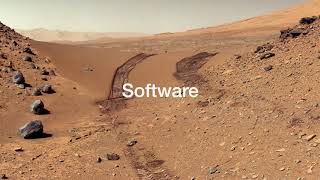
The Mars Rover On-board Computer
Explore Curiosity's autonomous onboard computer, its hardware, software, and fault-tolerance systems. Learn from NASA's innovative design for space exploration and long-term maintenance.
SuperMUC-NG
Einblick in den SuperMUC-NG Supercomputer: Architektur, Anwendungen und globaler Vergleich. Diskussion über Bedeutung und Grenzen von Höchstleistungsrechnern in der Wissenschaft.
Kosmische Teilchenbeschleuniger und ihre Spuren in der Antarktis
Entdeckung des ersten kosmischen Teilchenbeschleunigers und Beginn der Multimessenger-Astronomie. Erläuterung der bahnbrechenden Beobachtung des Blazars TXS0506+056 durch das IceCube Neutrino Observatory in der Antarktis.
Simulating Universes
Explore computational simulations of cosmic structure formation, revealing the Universe's evolution through dark matter dynamics, galaxy formation, and comparison with observations.
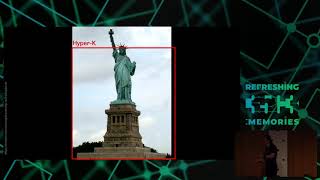
Going Deep Underground to Watch the Stars
Explore neutrino astronomy with Hyper-Kamiokande, a massive underground detector. Learn how it unveils solar mysteries, observes supernovas, and advances our understanding of particle physics and the universe.
Astronomy and Modern Society
Explore the critical role of solar flare research in disaster prevention and its impact on modern society with astrophysicist Daisaku Nogami.
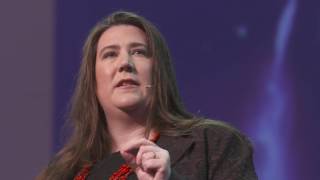
Astrophysics and Algorithms
Explore how computer science and big data revolutionize astrophysics, unlocking new insights into the universe and advancing scientific discovery across multiple fields.

Physics in the Dark - Searching for Missing Matter
Leading physicists explore the mystery of dark matter, discussing its role in the universe, detection methods, and alternative theories, challenging our fundamental understanding of physics and cosmology.
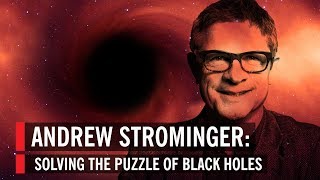
Solving the Puzzle of Black Holes
Explore black hole research puzzles and recent breakthroughs with Harvard physicist Andrew Strominger. Delve into Einstein's theories, quantum mechanics, and string theory to unravel the mysteries of these cosmic enigmas.
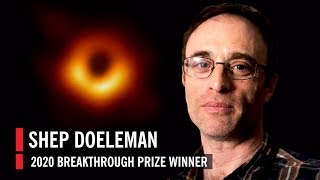
How EHT Imaged a Black Hole
Shep Doeleman explains how the Event Horizon Telescope team captured the first-ever image of a black hole, confirming Einstein's theories and opening new avenues for studying these mysterious cosmic objects.

Loose Ends - String Theory and the Quest for the Ultimate Theory
Explore string theory's evolution, challenges, and potential as a unified theory of physics, featuring insights from leading theoretical physicists on extra dimensions, multiple universes, and black holes.
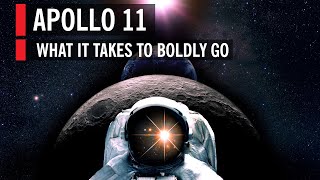
What It Takes to Boldly Go
Astronauts discuss the challenges, experiences, and future of space exploration, from Apollo 11 to Mars missions, covering technical, psychological, and philosophical aspects of human spaceflight.

Alien Contact - What Happens Next?
Experts explore the implications of potential alien contact, discussing detection methods, communication challenges, and societal impacts, while considering our place in the universe.

Solving the Puzzle of Black Holes - Hawking, Entropy, and a Theory of Everything
Explore black hole mysteries with experts, delving into entropy, string theory, and Hawking radiation. Uncover insights on singularities and the intersection of general relativity and quantum mechanics.
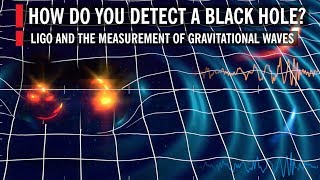
How Do You Detect a Black Hole? - LIGO and the Measurement of Gravitational Waves
Explore the groundbreaking LIGO experiment, its detection of gravitational waves from black hole collisions, and the implications for our understanding of the universe with experts Brian Greene and Vicky Kalogera.