Radioastronomy and the LLAMA Project
Exploración de la radioastronomía y el proyecto LLAMA, abordando sus aplicaciones, desafíos y contribuciones al estudio del universo desde una perspectiva científica innovadora.
Overview of SKA Radio Interferometer Telescope Activities - Design and Implementation
Explore the design challenges and scientific activities of the Square Kilometer Array (SKA) radio telescope project, focusing on the low-frequency aperture array and RRI's contributions to pulsar research.
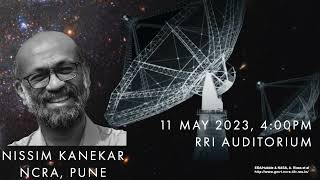
Atomic Hydrogen in Galaxies Nine Billion Years Ago
Explore the groundbreaking detection of atomic hydrogen in ancient galaxies, tracing 30 years of research that reveals how galaxies evolved through gas-to-star conversion 9 billion years ago.
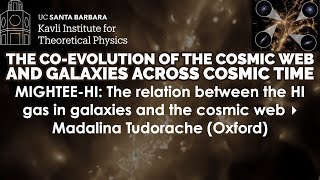
MIGHTEE-HI - The Relation Between the HI Gas in Galaxies and the Cosmic Web - Madalina Tudorache
Explores the relationship between neutral hydrogen gas in galaxies and the cosmic web, discussing observations, data sources, and implications for galaxy formation and evolution.
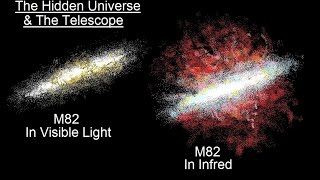
Astronomy - Telescopes
Explore telescopes, from basic principles to advanced technologies, covering refracting and reflecting designs, adaptive optics, interferometry, CCDs, and various types of astronomical observations.
X-ray and Microwave Cosmology: Synergy and Competition - Lecture 1
Explore X-ray and microwave cosmology, focusing on CMB interactions with hot electrons and their impact on our understanding of the Universe. Learn about cutting-edge telescopes and spacecraft.
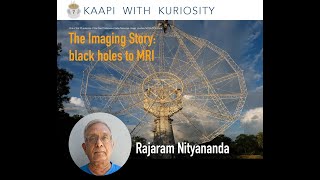
The Imaging Story - Black Holes to MRI by Rajaram Nityananda
Explore modern imaging techniques beyond traditional cameras, from medical MRI to radio telescopes. Learn how optics, computation, and statistics revolutionized image creation across various fields.
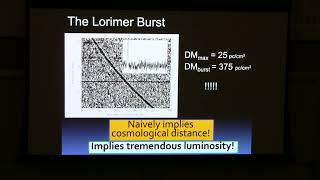
Fast Radio Bursts: Extragalactic Transients and Their Origins
Explore the enigmatic world of Fast Radio Bursts, their phenomenology, and remarkable sources. Discover insights from CHIME project and future plans for unraveling these mysterious extragalactic signals.
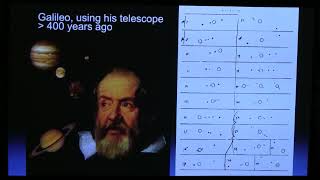
The Fast Radio Sky - Exploring Fast Radio Bursts and Their Cosmic Origins - 2024 Bunyan Lecture
Explore the enigma of Fast Radio Bursts with astrophysicist Victoria Kaspi, uncovering their origins and significance in our Universe through cutting-edge radio telescope technology.
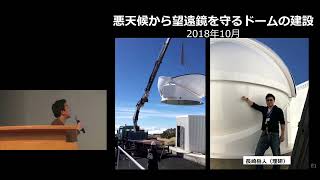
宇宙背景放射でみる宇宙のゆらぎと量子のゆらぎ - CMB偏光望遠鏡 - 第7回
宇宙背景放射の偏光を観測する望遠鏡の仕組みと、それを通じて初期宇宙の量子ゆらぎを探る最先端の研究について学びます。
Atomic Hydrogen in Galaxies Nine Billion Years Ago
Delve into groundbreaking research on atomic hydrogen distribution in ancient galaxies, exploring how these observations reshape our understanding of early universe evolution and galaxy formation.

Why the Search for Alien Intelligence Matters
Explore the significance of searching for extraterrestrial intelligence with SETI Institute's Jill Tarter as she discusses radio telescope technology and the potential impact of cosmic discoveries.

Our Mathematical Universe
MIT physicist Max Tegmark explores the radical idea that our universe is fundamentally mathematical, proposing that reality itself is a mathematical structure and examining the implications for our understanding of the cosmos.

How Radio Telescopes Show Us Unseen Galaxies
Astronomer Natasha Hurley-Walker explores how radio telescopes reveal unseen galaxies, probing the universe's mysteries through light spectrums invisible to the human eye.
Efforts at RRI Towards Hunting Elusive Signatures from the First Stars
Explore groundbreaking research on detecting signals from the universe's first stars, examining innovative detection methods and scientific discoveries at the Raman Research Institute.
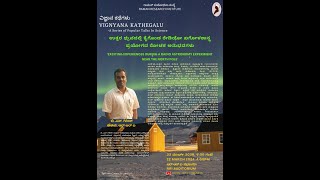
Exciting Experiences During a Radio Astronomy Experiment Near the North Pole
Discover fascinating stories and scientific insights from a radio astronomy expedition to the Arctic, exploring unique challenges and breakthrough moments in astronomical research.