
How Do You Observe a Black Hole?
Explore cutting-edge techniques for observing black holes, including radio telescope arrays and simulations. Learn about evidence for their existence and potential implications for understanding gravity and the universe.
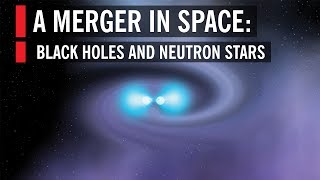
Black Holes and Neutron Stars - A Merger in Space
Explore the groundbreaking detection of colliding black holes and neutron stars, their implications for astrophysics, and how they're revolutionizing our understanding of the universe through gravitational wave astronomy.

Is Alien Life Weirder Than We Imagine - Who Is Out There?
Explore the search for extraterrestrial life, from defining life itself to considering AI as potential aliens. Experts discuss detection methods, the Fermi Paradox, and the importance of this quest for humanity.
Evolution Beyond Earth
Explore the biological challenges and potential genetic adaptations for human life beyond Earth, featuring experts discussing space habitation, gravity, and interplanetary colonization.
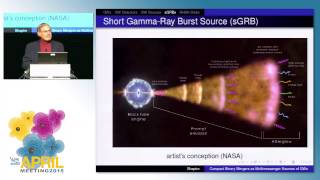
Compact Binary Mergers as Multimessenger Sources of Gravitational Waves
Exploration of compact binary mergers as sources of gravitational waves, electromagnetic radiation, and neutrinos. Discusses detection methods, simulations, and implications for multimessenger astronomy.
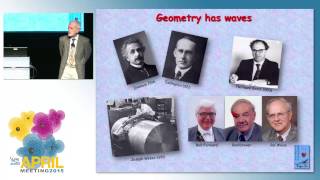
Was Einstein Right? A Centennial Assessment
Explore Einstein's general relativity through diverse experiments, from solar system observations to gravitational waves, assessing its validity and potential limitations a century after its formulation.
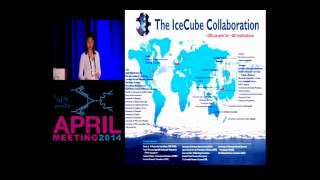
Cosmic Neutrinos in the IceCube Detector
Explore high-energy cosmic neutrinos, their detection using IceCube, and the birth of neutrino astronomy in this talk on astrophysical neutrino observations and their implications for understanding cosmic phenomena.
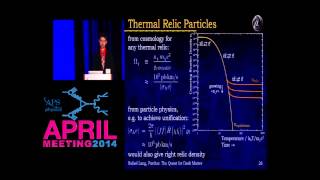
The Quest for Dark Matter
Explore the mystery of Dark Matter with Rafael Lang, covering its evidence, potential composition, and ongoing experimental efforts to unravel this cosmic enigma.
Grow Your Own Planet
Explore how simulations advance our understanding of the Universe, from basic orbits to complex gas flows. Learn about state-of-the-art hydrodynamics programs and their applications in astronomy.
Nuclear Propulsion – From the Somewhat Reasonable to the Utterly Insane - Easterhegg 2019
Explore nuclear propulsion systems, from practical applications to outlandish concepts. Discover the potential and risks of harnessing nuclear reactions for rockets and other propulsion methods.

Let's Reverse Engineer the Universe
Exploración del universo oscuro: materia y energía oscuras, su existencia, características y misterios. Desafíos actuales en cosmología y perspectivas futuras sobre estos enigmáticos componentes del cosmos.
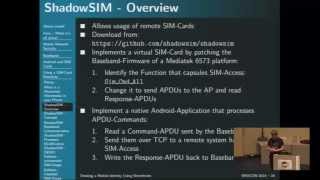
Stealing a Mobile Using Wormholes
Explore mobile network vulnerabilities, SIM card access techniques, and baseband firmware analysis. Learn about "wormholes" in smartphones and their potential for identity theft and unauthorized authentication.
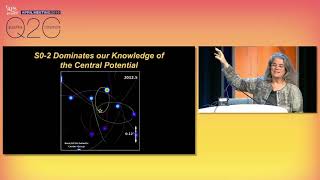
Our Galactic Center - A Unique Laboratory for the Physics & Astrophysics of Black Holes
Exploring the Galactic center's supermassive black hole through high-resolution imaging and stellar orbit measurements, revealing unexpected phenomena and testing Einstein's theory of relativity.
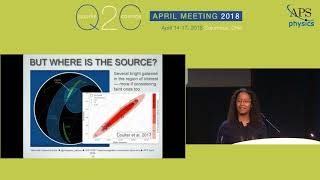
Physics Implications of the Electromagnetic Signatures of GW170817
Explore electromagnetic signatures of GW170817, the first observed binary neutron star merger, and its implications for astrophysics and cosmology. Discover the challenges and breakthroughs in this groundbreaking field.
Testing the Massive Black Hole Paradigm and GR with Infrared Interferometry
Explore cutting-edge infrared interferometry techniques to study massive black holes and test General Relativity, featuring the GRAVITY near-IR beam combiner and its groundbreaking observations.

Seeing the Unseeable - Capturing an Image of a Black Hole
Explore groundbreaking black hole imaging techniques, Einstein's theories, and the Event Horizon Telescope's historic achievement in capturing the first-ever image of a supermassive black hole.

Exploring the Universe
Exploring the universe's expansion, dark matter, and cosmic inflation through ΛCDM cosmology. Discusses ongoing research, challenges, and potential anomalies in our understanding of the large-scale universe.
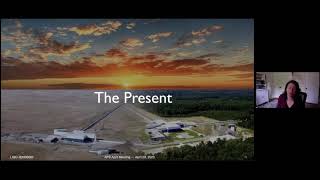
LIGO - Virgo & the Promise of Multi-Messenger Observations
Exploring multi-messenger astronomy: combining gravitational waves, photons, and neutrinos to unveil cosmic mysteries, probe celestial bodies, and challenge our understanding of the Universe's evolution.
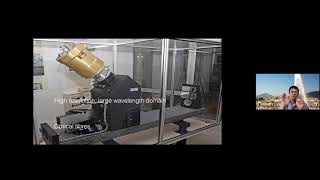
Frontiers of Discovery Plenary Session - The Exoplanet Revolution
Explore the revolutionary field of exoplanet discovery, its impact on our understanding of planetary systems, and the exciting prospects for detecting potential signs of life beyond Earth.
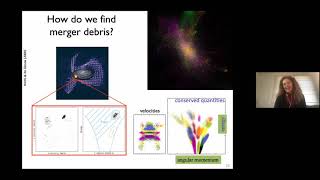
New Views on the Galaxy from the Gaia Space Mission
Explore the Milky Way's dynamics and assembly through Gaia mission data. Discover new insights on galactic archaeology, halo stars, and dark matter using cutting-edge space observations.
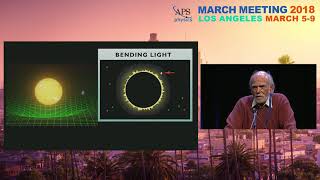
Einstein, Gravitational Waves and a New Science
Explore gravitational waves, their detection by LIGO, and the groundbreaking observations of black hole collisions and binary neutron stars, opening a new window to the universe.