Earth Science - A Tour of the Solar System
Explore the diverse worlds of our solar system, from rocky terrestrials to gas giants, examining their unique features, interiors, atmospheres, and geological activities.
What Is Europa's Ocean Made Of and How Do We Know? - Geo Girl
Explore Europa's hidden ocean: its composition, salinity, and potential for life. Discover geological evidence, water-rock interactions, and the role of hydrothermal vents in this fascinating Jovian moon.
Life on Europa - What Conditions Make Europa Habitable? - Astrobiology
Explore Europa's potential for harboring life by examining its water, essential elements, and energy sources. Discover possible metabolic pathways and the distinction between habitable and inhabited environments.

New Search Methods for Primitive and Intelligent Life Beyond Earth
Explore novel techniques for detecting primitive and intelligent life beyond Earth, from our solar system to distant stars, and discuss the implications for our cosmic understanding.
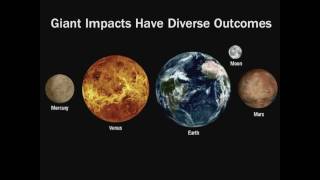
The Violent Origin of the Earth and Moon
Explore the Earth-Moon system's violent origins through a new model reconciling observations and emphasizing early stochastic events in shaping our habitable world.
Retaining an Atmosphere - Planetary Conditions and Atmospheric Dynamics
Explore planetary atmospheres, escape velocity, and molecular dynamics. Understand why some planets retain atmospheres while others don't, and learn about atmospheric temperature profiles.
Greenhouse Effect and Earth's Energy Balance - Lecture 6
Explore Earth's energy balance, black body radiation, and the greenhouse effect. Learn about planetary energy budgets and the role of greenhouse gases in atmospheric dynamics.
Planetary Transits and Hot Jupiters in Astrophysics - Lecture 5
Explore astrophysics controversies, from Pluto's demotion to hot Jupiter discoveries. Learn how scientific understanding evolves, the impact of cultural factors, and techniques for studying exoplanets.
Why We Search for Life on Mars
Explore Mars' potential for past and present life through NASA rover missions. Learn about ongoing research, sample return plans, and how Earth's knowledge informs Mars exploration.
Cassini to Saturn - The Journey, Legacy, and Future
Explore the groundbreaking Cassini mission to Saturn with planetary scientist Carolyn Porco. Discover key milestones, scientific breakthroughs, and the mission's lasting impact on space exploration.
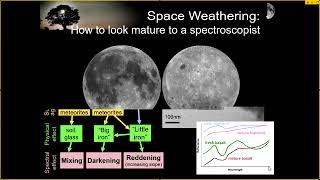
The Weather on the Moon and the Mystery of the Swirls
Explore lunar swirls, unique bright features on the Moon associated with magnetic anomalies. Learn about space weathering, competing formation theories, and recent research findings on these intriguing lunar phenomena.
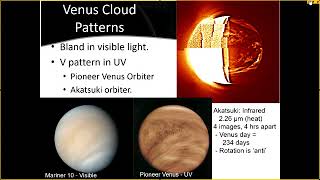
Venus' Radar-Reflective Highlands - Ferroelectric and Semiconductor Materials
Explore Venus' highlands through radar reflectivity, examining ferroelectric and semiconductor materials. Uncover the planet's geological mysteries and atmospheric interactions.
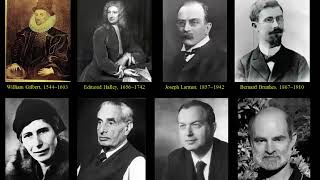
Planetary Dynamos
Explore planetary magnetic fields, their generation through internal dynamos, and the mathematical models used to study these phenomena in various celestial bodies.
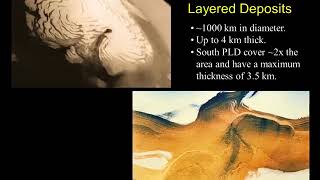
The Climatic and Hydrologic Evolution of Water on Mars
Explore Mars' water history, from early oceans to current ice deposits. Learn about climate evolution, hydrosphere changes, and evidence for past liquid water on the Red Planet's surface.

Why Venus Shouldn't Be Considered Earth's Twin - Our Solar System's Planets
Explore Venus's unique characteristics and discover why it differs significantly from Earth, challenging the notion of planetary twins in our solar system.

The Insane Engineering of Europa Clipper
Explore the engineering challenges and innovative solutions behind NASA's Europa Clipper mission to Jupiter's icy moon, uncovering potential for extraterrestrial life.
Paleoenvironmental Context in Searching for Past Life on Mars
Explore the paleoenvironmental context for seeking evidence of ancient life on Mars with Dr. Kathleen Campbell's insightful presentation on astrobiology and planetary exploration.
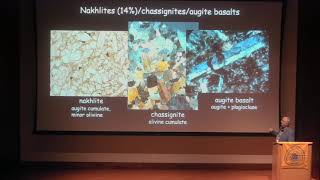
The Mineralogy of Mars from Rocks in Hand
Explore Mars' mineralogy through meteorites and rover data, revealing unique planetary composition, mantle sources, and geological processes that shaped the Red Planet's surface and interior.
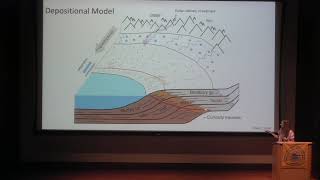
New Perspectives of Ancient Mars - Mineral Diversity and Crystal Chemistry at Gale Crater, Mars
Explore Mars' mineral diversity at Gale crater through Curiosity rover data. Discover new insights on Martian geology, including igneous silicates, iron oxides, sulfates, and phyllosilicates.
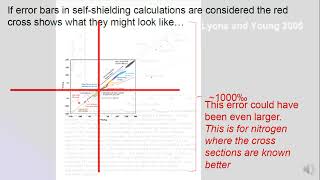
Discoveries of Mass Independent Isotope Effects in the Solar System - Past, Present and Future
Explore mass-independent isotope effects in the solar system, covering measurements, photochemistry, meteorites, and implications for understanding solar system formation and evolution.
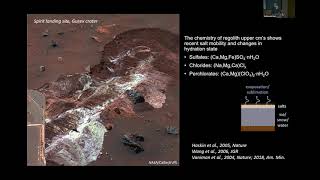
Mars- History of a Habitable World and Lessons for Terrestrial Planet Evolution - Bethany Ehlmann
Explore Mars' geological history, habitability, and lessons for planetary evolution. Discover diverse aqueous environments, climate changes, and implications for exoplanets through recent scientific findings and ongoing missions.