Astronomy by CrashCourse
This course starts with the astronomical observations we can make with the naked eye and expands out to cover the solar system, stars, galaxies, and the universe itself. The content is loosely based on an introductory university-level curriculum.

Astronomy and Space for Children
Explore the wonders of space and astronomy through engaging, kid-friendly lessons on planets, stars, galaxies, and celestial phenomena.
Introduction to Astronomy - Night Sky
Explore celestial phenomena visible to the naked eye, including daily and annual motions, the Moon, eclipses, and planets in this introductory astronomy lesson.

Out of This World
Explore cosmic wonders, from Mars colonization to the universe's end. Discover celestial phenomena, space exploration, and mind-bending physics concepts through engaging lessons by experts.

Dünden Bugüne Evren Algımız
Evren algımızın tarihsel gelişimi ve modern bilimin katkılarıyla değişen bakış açımız üzerine ilgi çekici bir sunum. Astronomi ve uzay bilimlerindeki ilerlemelerin insan düşüncesine etkisi ele alınıyor.
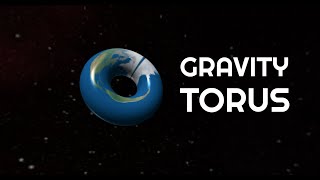
Gravity Torus - Simulating Orbits Around a Doughnut-Shaped Planet
Explore the unique gravitational effects of a doughnut-shaped planet through simulation, uncovering fascinating orbital dynamics and challenging conventional understanding of planetary physics.
Root Finder in Space - Calculating Aphelion - Episode 2
Learn to calculate the aphelion of orbiting bodies using Scilab. This tutorial covers code setup for determining the farthest point in various celestial orbits.
The Cosmos - Create a Green Planet, Setting Sun, and Space Ship in Photoshop - Part 3
Learn to create cosmic scenery in Photoshop: design a green planet, setting sun, and spaceship. Master digital painting techniques to bring your sci-fi visions to life in this immersive tutorial.

Exploring Our Solar System - with Stuart Eves
Explore the mysteries and wonders of our solar system with Stuart Eves, from Mercury's hydrogen geysers to Pluto's nitrogen glaciers, uncovering fascinating discoveries and unanswered questions.

The Simple Pendulum
Comprehensive tutorial on simple pendulum motion, covering equations for period, frequency, and length across different gravitational environments. Includes examples and practice problems.
General Astronomy - An Introduction to Planetary Geology
Explore planetary geology: layering, internal processes, surface shaping, and geological activity. Understand how size affects a planet's geology and the formation of magnetic fields.

Our Place in the Stars
Explore our cosmic origins, the search for extraterrestrial life, and humanity's role in space exploration with Dr. Amaya Moro-Martin in this thought-provoking astronomical journey.

Scale of the Solar System - Scale of the Universe - Cosmology & Astronomy
Explore the vast scale of our Solar System with Sal Khan, gaining perspective on Earth's place in the cosmos and the immense distances between celestial bodies.
Astronomy
Explore celestial bodies, Mars, and Kepler's Laws in this comprehensive journey through our Universe, covering neutron stars, black holes, and astronomical measurements.
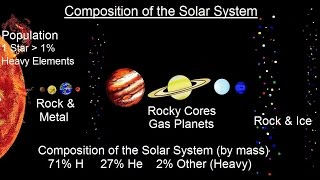
Astronomy - Origin of the Solar System
Explore the formation and evolution of our solar system, from its composition and age to planetary development and detection methods for exoplanets.
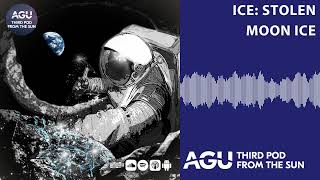
Stolen Moon Ice - Origins and Potential Uses in Future Lunar Missions
Explore lunar ice origins and potential uses for future space missions. Scientists discuss how the moon acquired its ice and its significance for astronauts.
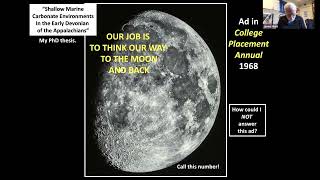
Planetary Exploration and Geological Processes - AGU Distinguished Lecture
Explore planetary geology with Dr. James Head III as he shares insights on space exploration and celestial bodies in this engaging lecture at IIT Kharagpur.
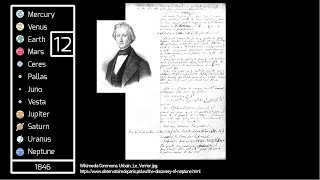
How Many Planets in Our Solar System? A Historical Journey Through Astronomical Discoveries
Explore the fascinating history of planet discovery and classification, from ancient times to modern debates, revealing the complexities and controversies in defining our solar system.
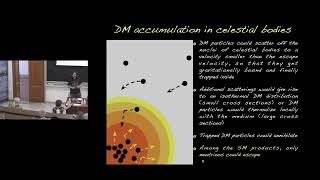
Neutrinos from Dark Matter Captured in Celestial Bodies
Explore the intriguing connection between neutrinos and dark matter in celestial bodies, uncovering new insights into fundamental physics and cosmic phenomena.
Science and Technology Q&A for Kids and Others - Part 143
Explore diverse science and technology topics with Stephen Wolfram in an unscripted Q&A session, covering eclipses, lunar dynamics, space colonization, and the capabilities of AI and large language models.
LIGO - Virgo & the Promise of Multi-Messenger Observations
Exploring multi-messenger astronomy: combining gravitational waves, photons, and neutrinos to unveil cosmic mysteries, probe celestial bodies, and challenge our understanding of the Universe's evolution.