Simulation-Based Inference for Gravitational Wave Astronomy - IPAM at UCLA
Explore simulation-based inference techniques for gravitational wave astronomy, covering frequentist vs. Bayesian approaches, summary statistics, and the role of neural networks and inductive bias.
Computational Challenges in Gravitational Wave Parameter Estimation - IPAM at UCLA
Explore computational challenges in gravitational wave parameter estimation, including novel techniques and future requirements for analyzing compact binary signals in astrophysics.
High Accuracy Wavefunctions Using Deep-Learning-Based Variational Monte Carlo
Explore deep learning-based variational Monte Carlo for high-accuracy wavefunctions in computational chemistry, featuring novel architecture and improved methods for ground state energy calculations.
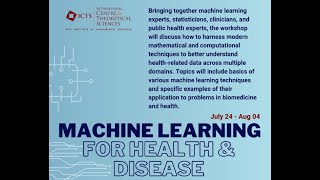
Artificial Intelligence in Medical Imaging for Precision Medicine by Vaanathi Sundaresan
Explore AI applications in medical imaging for precision medicine, covering deep learning techniques, image analysis, and their impact on diagnosis and treatment planning.
Statistical Methods and Machine Learning in High Energy Physics - Project Presentation Session 2
Explore cutting-edge statistical methods and machine learning applications in high energy physics through expert presentations, fostering collaboration and innovation in data-driven research.
Statistical Mechanics of Deep Learning - Haim Sompolinsky, Hebrew University
Explore statistical mechanics principles applied to deep learning, bridging theoretical physics and machine learning. Gain insights into neural network behavior and performance from a physics perspective.
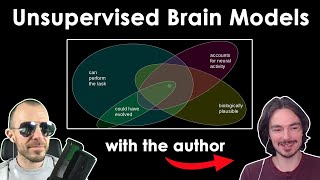
Unsupervised Brain Models - How Does Deep Learning Inform Neuroscience?
Explore connections between deep learning and neuroscience, focusing on unsupervised brain models and their potential to explain visual processing streams and representation learning in the brain.
Deep Generative Modeling for HEP, Cosmology and Fluid Dynamics
Explore deep generative modeling applications in high-energy physics, cosmology, and fluid dynamics with insights from NERSC expert Karthik Kashinath.
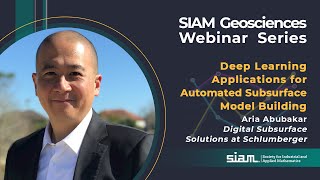
Deep Learning Applications for Automated Subsurface Model Building
Explore AI/ML applications in geoscience for automated subsurface model building, improving efficiency and accuracy in workflows using seismic, wellbore, and geophysical data.
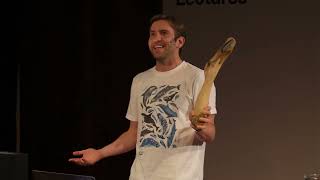
How to Speak Whale - Decoding Animal Communication
Explore advances in decoding animal communication, focusing on whales. Learn how machine learning tools are revolutionizing our understanding of underwater language and animal intelligence.

Transforming Medicine Through AI-Enabled Healthcare Pathways
Explore AI's potential to revolutionize medicine through advanced data analysis, personalized care, and interdisciplinary collaboration, addressing technical and practical challenges in healthcare.
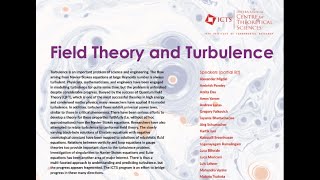
Unraveling Turbulence - Field Theory, Gravity and Deep Learning by Yaron Oz
Explore connections between turbulence, field theory, and gravity. Discover how deep learning techniques can unravel complex fluid dynamics and advance our understanding of universal phenomena in physics.
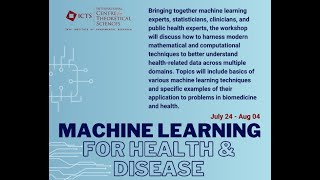
Lung Disease and AI Applications - From Cough Sounds to CT Scan by Anurag Agrawal
Explore AI applications in lung disease diagnosis, from analyzing cough sounds to interpreting CT scans. Learn how machine learning enhances detection and treatment of respiratory conditions.
Modelling and Controlling Turbulent Flows Through Deep Learning
Explore deep learning applications in fluid mechanics, including flow prediction and control using CNNs, autoencoders, and GANs. Learn about non-intrusive sensing and transfer learning in turbulent flows.
Cause of Obesity, Diabetes & CVD Epidemic by Ponnusamy Saravanan
Explores the role of Gestational Diabetes Mellitus in obesity, diabetes, and cardiovascular disease epidemics, discussing its causes, impacts, and potential interventions.
The Healthy Life Trajectories Initiative - Implementation, Challenges and Future
Exploring the Healthy Life Trajectories Initiative's implementation, challenges, and future prospects, focusing on improving health outcomes through data-driven approaches and collaborative research.
Machine Learning Models of Differential Gene Expression
Explore deep learning models for predicting regulatory functions from genomic DNA, uncovering mechanisms behind genetic variation's impact on cellular function and gene expression.
Debugging Genomic Profiling Experiments and Predictive Models with Interpretation Tools
Explore deep learning models in genomics, uncovering latent biases and technical artifacts. Learn to design efficient models that correct biases and reveal novel insights into gene regulation.
Detection of Mesoscale Oceanic Eddies Over Bay of Bengal Using Explainable Deep Learning
Explore deep learning techniques for detecting mesoscale oceanic eddies in the Bay of Bengal, with a focus on explainable AI methods to enhance understanding of eddy dynamics and their impact on regional climate.
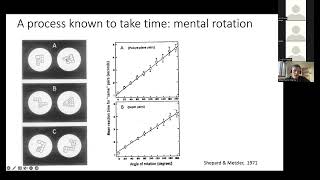
Modelling Mental Rotation in the Brain Using Deep Learning
Explore mental rotation in the brain and its potential implementation in deep learning, comparing human visual systems to neural networks.
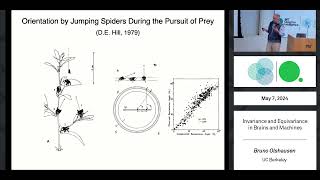
Invariance and Equivariance in Brains and Machines
Exploring neural mechanisms for visual perception, this talk proposes innovative approaches to building invariant and equivariant representations, bridging neuroscience and AI for improved machine vision and neurobiological understanding.