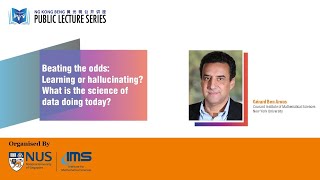
Beating the Odds - Learning or Hallucinating? The Science of Data Today
Explore the intersection of data science, learning, and hallucination with insights from a renowned mathematician on current trends and challenges in the field.

Kaggle Notebooks - Introduction to Cloud-Based Data Science Platforms
Explore Kaggle notebooks for seamless data access, free GPU usage, and efficient machine learning model development without complex local setups.
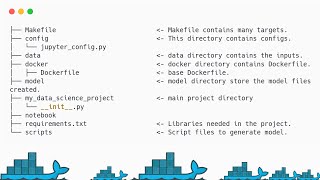
Structuring Data Science Projects with Docker
Structure data science projects using Docker for seamless model deployment. Learn advanced techniques, explore code, address vulnerabilities, and weigh pros and cons of Docker in data science workflows.
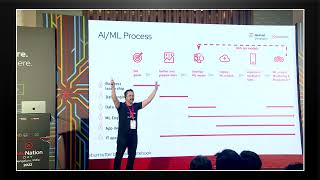
Real-Time Image Processing AI/ML with Jupyter Notebooks
Explore real-time image processing using AI/ML techniques with Jupiter notebooks, enhancing your skills in cutting-edge technology applications.
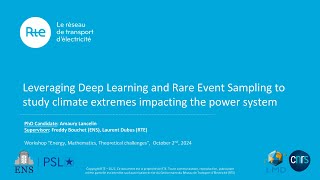
Leveraging Deep Learning and Rare Event Sampling to Study Climate Extremes Impacting the Power System
Explore deep learning and rare event sampling techniques for analyzing climate extremes' impact on power systems.
Deep Learning for Symbolic Mathematics
Explore neural networks for symbolic mathematics, covering expression generation, integration, ODEs, and dataset creation. Learn about sequence decoding and generalization techniques.
From Causal Inference to Autoencoders, Memorization & Gene Regulation - Caroline Uhler, MIT
Exploring causal inference, autoencoders, and gene regulation through genomics and 3D genome organization. Integrates data modalities, analyzes overparameterized autoencoders, and links memorization to real-valued data retrieval.

Convolution and the Fourier Series
Explore convolution and its relation to Fourier series, unraveling complex mathematical concepts through clear explanations and real-world analogies.
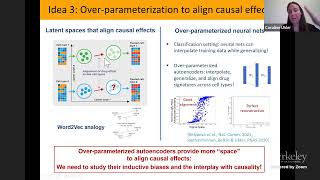
Causality and Autoencoders in Light of Drug Repurposing for COVID-19
Explore causal inference and autoencoders in drug repurposing for COVID-19, covering observational data, causality hierarchy, and predicting interventions with Caroline Uhler from MIT.
Benign Overfitting in Linear Prediction
Explore the phenomenon of benign overfitting in linear prediction, its implications for deep learning, and its impact on adversarial examples in machine learning.
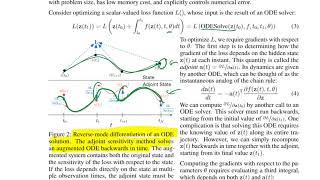
Neural Ordinary Differential Equations
Explore continuous-depth neural networks using differential equations, offering advantages in memory efficiency, adaptive evaluation, and numerical precision-speed tradeoffs for various machine learning tasks.
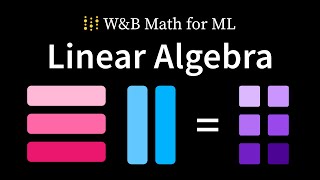
Math4ML Exercises - Getting Started & Linear Algebra
Introduction to Math4ML exercises, focusing on linear algebra fundamentals. Includes autograder demonstrations and hands-on problems to reinforce key concepts like array shapes, dimensions, and matrix operations.
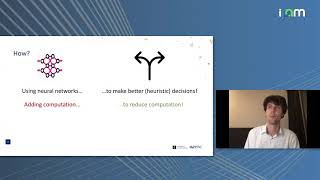
Deep Learning for Combinatorial Optimization - Count Your Flops & Make Your Flops Count
Explores deep learning for combinatorial optimization, focusing on reducing computation through learned models while balancing solution quality. Discusses practical examples, challenges, and future research directions.
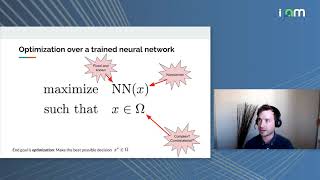
Neural Network Verification as Piecewise Linear Optimization
Neural network verification as piecewise linear optimization: exploring robust methods to prove model reliability against attacks, using LP and MIP formulations for efficient problem-solving in various network types.
Optimal Learning from Data
Explore optimal learning from data, including error recovery, discrete optimization, and handling noisy measurements. Insights on deep learning and stochastic settings provided.
Machine Learned Regularisation for Solving Inverse Problems
Machine learned regularization techniques for solving inverse problems, focusing on image reconstruction from tomographic and blurred measurements. Explores data-driven approaches and discusses open mathematical challenges.
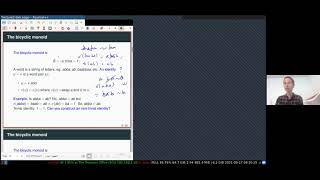
Tropical Solutions to Hard Problems in Auction Theory
Explore tropical mathematics' applications in auction theory, neural networks, and statistics through polytopes, algorithms, and semigroup matrices, unveiling powerful problem-solving techniques.
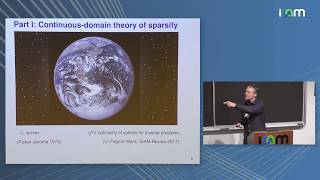
Splines and Imaging - From Compressed Sensing to Deep Neural Networks
Explore splines in imaging, from compressed sensing to deep neural networks. Unser demonstrates spline optimality in inverse problems and their connection to deep learning, offering insights into ReLU architecture and activation optimization.
Deep Learning and Computations of PDEs by Siddhartha Mishra
Explore deep learning applications in PDEs, uncertainty quantification, and optimization. Learn about operator learning, DeepOnet decomposition, and high-dimensional PDEs in this advanced lecture.
Enhancing Markov Chain Monte Carlo Sampling Methods with Deep Learning
Explore advanced techniques combining Markov Chain Monte Carlo sampling with deep learning, focusing on importance sampling, normalizing flows, and non-equilibrium methods for enhanced efficiency in high-dimensional problems.
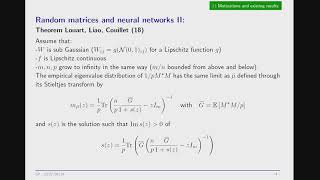
Eigenvalue Distribution for Non Linear Models of Random Matrices
Explore eigenvalue distribution in non-linear random matrix models, covering motivation, limits, batch normalization, and moment methods with speaker Sandrine PECHE.