
How to Train Object Detection Transformer on Custom Dataset
Learn to train Object Detection Transformers using DETR, from environment setup to custom dataset training and model evaluation. Covers PyTorch, COCO datasets, and PyTorch Lightning for efficient deep learning workflows.
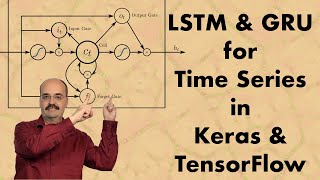
Programming LSTM with Keras and TensorFlow
Explore LSTM and GRU layers for recurrent neural networks in Keras, laying the groundwork for NLP and time series prediction with practical examples and implementations.
Practical Machine Learning with Tensorflow
We will cover the basics of Tensorflow and Machine Learning in the initial sessions and advanced topics in the latter part. After this course, the students will be able to build ML models using Tensorflow.
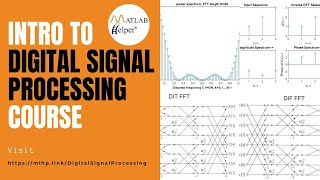
Digital Signal Processing - MATLAB Helper
Explore Digital Signal Processing with MATLAB: from impulse responses to Fourier transforms, filter designs, and spectral analysis. Gain practical skills for real-world DSP applications.
Introduction to Deep Learning - Full Stack Deep Learning - March 2019
Comprehensive introduction to AI and deep learning, covering key concepts, applications, and historical context. Explores data processing, computational requirements, and course structure.
AI, Machine Learning and Deep Learning
Explore AI, machine learning, and deep learning concepts, including supervised, unsupervised, and reinforcement learning paradigms. Learn when to use traditional ML or deep neural networks for audio applications.
Learning the Structure of EHR with Graph Convolutional Transformer - Edward Choi
Explore graph convolutional transformers for learning EHR structure, combining graph convolution and self-attention for supervised prediction tasks in healthcare analytics and representation learning.
Explaining Model Decisions and Fixing Them Through Human Feedback
Explore algorithms for explaining deep network decisions, building user trust, incorporating domain knowledge, learning grounded representations, and correcting unwanted biases in AI models.
Real-Time Seizure Detection Using EEG - Hyewon Jeong
Comprehensive comparison of state-of-art models for real-time seizure detection using EEG, evaluating performance metrics and exploring optimal feature extractors for practical clinical applications.
Curation and Analysis of Annotated Medical Images Across Institutions - Xiaoyuan Guo
Explore techniques for curating and analyzing annotated medical images across institutions, focusing on data sharing challenges, anomaly detection, and OOD-aware image retrieval for improved dataset quality and future analysis.
Beyond Testset Performance - Strategies for Clinical Deployment
Strategies for deploying AI in clinical settings, addressing challenges beyond test performance. Explores model reliability, distribution shifts, and human-AI collaboration for real-world medical applications.
Efficiently Modeling Long Sequences with Structured State Spaces - Albert Gu
Explore structured state space models for efficient long sequence modeling across modalities, featuring S4's innovative approach to handling extended dependencies in various data types.
Optimizing for Interpretability in Deep Neural Networks - Mike Wu
Explore techniques for making deep neural networks more interpretable through regularization, focusing on medical applications in critical care and HIV treatment. Insights on balancing model performance with human-understandable decision processes.
Deep Learning Methods for Electrocardiograms and Echocardiograms
Explore cutting-edge deep learning methods for ECG and echocardiogram analysis, outperforming traditional algorithms and offering insights into cardiovascular imaging interpretation.
GANs in Medical Image Synthesis, Translation, and Augmentation - Jason Jeong
Explore GANs in medical imaging for synthetic data generation, addressing scarcity and imbalance issues. Learn about applications in CT, MRI, and disease detection, with insights on challenges and future directions.
Adversarial Debiasing With Partial Learning - Medical Image Studies
Explore adversarial debiasing techniques to reduce racial disparities in medical AI models for chest X-rays and mammograms while maintaining overall performance and trustworthiness.
Learning to See the Physical World
Explore physical scene understanding through AI, combining computer graphics, physics, and language with deep learning to create versatile machines that see, reason, and interact with the world.
Disease Prediction Using Medical Imaging and Deep Learning - Summer 2022
Explore innovative techniques for predicting diseases using medical imaging and deep learning, focusing on opportunistic approaches with existing data for improved patient outcomes.
Stanford Seminar - Fastai: A Layered API for Deep Learning
Explore fastai, a deep learning library offering high-level components for quick results and low-level components for research flexibility, built on a layered architecture with Python and PyTorch.
Stanford Seminar - Recent Progress in Verifying Neural Networks, Zico Kolter
Explore recent advancements in neural network verification, focusing on robustness and safety validation. Learn about innovative approaches that significantly speed up the verification process for medium-sized networks.
Neural Networks in R and the MNIST Data - Lecture 10.R.1
Explore neural networks using R and MNIST data, learning practical implementation of deep learning techniques for image recognition and statistical analysis.