Neural Network Programming - Deep Learning with PyTorch
Learn to build and train neural networks using PyTorch, covering tensor operations, CNN architecture, data preparation, training loops, and performance optimization techniques for deep learning projects.

Deep Learning for Computer Vision
The automatic analysis and understanding of images and videos, a field called Computer Vision, occupies significant importance in applications including security, healthcare, entertainment, mobility, etc.

Python Is Weird
Explore Python's quirks and lesser-known features, from the walrus operator to string interning, in this engaging tutorial that challenges your understanding of the language.

MicroPython & WiFi
Connect MicroPython devices to WiFi and explore the OSI model layers. Learn about MAC/IP addresses, packets, and implement a Weatherbot using NodeMCU and MQTT.

NeRFs- Neural Radiance Fields - Paper Explained
Explore neural radiance fields for 3D scene representation and view synthesis, covering network architecture, key concepts, learning process, and advanced techniques.
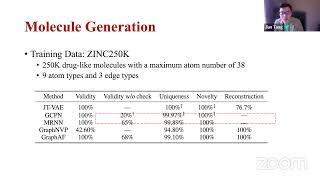
Geometric Deep Learning for Drug Discovery
Explore geometric deep learning techniques for drug discovery, covering graph neural networks, molecule generation, and retrosynthetic prediction. Gain insights into cutting-edge research and applications in pharmaceutical development.
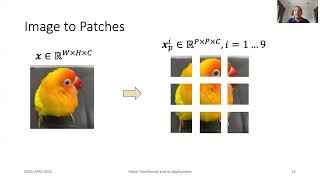
Vision Transformer and Its Applications
Explore vision transformers' architecture, self-attention in computer vision, and applications in recognition, segmentation, and multi-modal learning. Discover their potential for general-purpose model architectures.

Deep Generative Modeling
Explore deep generative modeling, including autoencoders, variational autoencoders, and GANs. Learn about latent variable models, reparameterization tricks, and recent advances in generative AI techniques.
Learning Machine Learning Efficiently
Discover an efficient approach to learning machine learning, exploring the landscape, optimal paths, and practical strategies for mastering this complex field.

Custom Audio PyTorch Dataset with Torchaudio
Learn to create a custom audio dataset using PyTorch and torchaudio, focusing on the UrbanSound8K dataset. Explore basic I/O functions in torchaudio and implement essential dataset class methods.

Deep Learning for Sequences in Quantitative Finance
Overview of deep learning sequence methods in quantitative finance, covering feature extraction, return forecasting, portfolio allocation, and trading execution. Explores applications and challenges in the investment process.

AI Art Explained - How AI Generates Images
Explore the inner workings of AI image generation models like Stable Diffusion, including their components, training process, and how they transform text prompts into stunning visuals.
Continual Learning and Catastrophic Forgetting
Explore continual learning and catastrophic forgetting in deep neural networks, covering evaluation methods and algorithms based on regularization, dynamic architectures, and Complementary Learning Systems.
Diffusion Models - PyTorch Implementation
Learn to implement and train diffusion models in PyTorch, covering unconditional and conditional versions, classifier-free guidance, and exponential moving average. Gain hands-on experience with state-of-the-art generative AI techniques.

Tensorflow Object Detection with Python - Full Course with 3 Projects
Comprehensive guide to Tensorflow Object Detection: from setup to advanced projects. Learn to build, train, and deploy models for gesture, defect, and sentiment detection using Python, JavaScript, and Raspberry Pi.
Build a Deep Face Detection Model With Python and Tensorflow - Full Course
Comprehensive guide to building a face detection model using TensorFlow and Python, covering data collection, augmentation, model creation, training, and real-time testing for practical implementation.
Artificial Intelligence in OBGYN Ultrasound by Suresh Seshadri
Explore AI applications in OBGYN ultrasound imaging, focusing on advanced techniques for improved diagnosis and patient care in obstetrics and gynecology.
Stable Diffusion
Explore latent diffusion models for AI image generation, including unconditional generation and super-resolution techniques.
First Time Setup for Stable Diffusion Text2Image With the Deforum Notebook - A Guide for Beginners
Comprehensive guide for beginners on setting up Stable Diffusion Text2Image with Deforum 0.7 Notebook, covering weights, prompts, and advanced techniques for AI image generation.
Graph Neural Networks- A Gentle Introduction
Gentle introduction to Graph Neural Networks, covering key concepts, properties, and variants. Learn about graph representation, information propagation, and common tasks in this emerging field of machine learning.

Stable Diffusion - How to Train LoRA for Style - LoRA Part 1
Learn to train LoRA for Stable Diffusion, covering dataset preparation, captioning, GUI usage, and testing. Explore both local and Google Colab methods for creating flexible style and character LoRAs.