SynFlow - Pruning Neural Networks Without Any Data by Iteratively Conserving Synaptic Flow
Explores SynFlow, a novel data-agnostic algorithm for pruning neural networks at initialization, avoiding layer collapse and achieving maximum compression capacity without training or data.
Linformer - Self-Attention with Linear Complexity
Detailed explanation of the Linformer model, which reduces self-attention complexity in transformers from O(n²) to O(n), improving efficiency while maintaining performance in NLP tasks.
SpineNet - Learning Scale-Permuted Backbone for Recognition and Localization
Explores SpineNet, a novel CNN architecture using scale-permuted features and cross-scale connections, outperforming traditional models in object detection and classification tasks.
Transformers Are RNNs- Fast Autoregressive Transformers With Linear Attention
Explore a novel approach to transformers using linear attention, reducing computational complexity and revealing connections to RNNs. Gain insights into faster, more efficient deep learning models for long sequences.
BERTology Meets Biology - Interpreting Attention in Protein Language Models
Explores how BERT models trained on protein sequences learn biological properties, revealing insights into protein structure, binding sites, and biophysical characteristics through attention mechanism analysis.
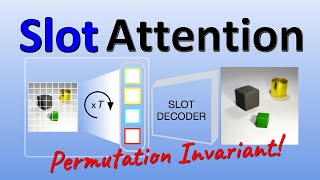
Object-Centric Learning with Slot Attention
Explanation of a novel deep learning module for object-centric visual scene understanding. Covers architecture, algorithm, experiments, and implications of Slot Attention for improved object recognition and reasoning.
Whisper Paper Explained - Robust Speech Recognition via Large-Scale Weak Supervision
Detailed explanation of OpenAI's Whisper model for speech recognition, covering dataset collection, model architecture, experiments, and scaling considerations.
Denoising and Variational Autoencoders
Explore autoencoders, powerful generative models for dimensionality reduction and data generation. Learn about denoising and variational autoencoders, their applications, and training techniques.
A Friendly Introduction to Deep Reinforcement Learning, Q-Networks and Policy Gradients
Friendly exploration of deep reinforcement learning concepts, including Markov decision processes, Q-networks, and policy gradients, using examples and visuals to explain complex ideas.
Logistic Regression and the Perceptron Algorithm - A Friendly Introduction
Friendly introduction to logistic regression and perceptron algorithm, covering key concepts like data classification, gradient descent, and neural networks with minimal math and visual explanations.

A Friendly Introduction to Deep Learning and Neural Networks
Explore neural networks and deep learning concepts, from gradient descent to activation functions, in this friendly introduction to AI fundamentals.
MIT 6.S191 - Automatic Speech Recognition
Explore automatic speech recognition with Rev.com experts, covering data selection, speech input processing, and advanced ASR techniques like attention-based models and language modeling.

Deep Generative Modeling
Explore deep generative modeling, including autoencoders, VAEs, and GANs. Learn about latent variables, representation learning, and applications in debiasing and image synthesis.

Convolutional Neural Networks
Explore convolutional neural networks for computer vision, covering feature extraction, convolution operations, and applications in autonomous navigation and medical imaging.
Recurrent Neural Networks and Transformers
Comprehensive exploration of recurrent neural networks, LSTMs, and attention mechanisms in deep learning, covering theory, implementation, and applications for sequence modeling tasks.
MIT Introduction to Deep Learning
Comprehensive introduction to deep learning fundamentals, covering perceptrons, neural networks, loss functions, gradient descent, backpropagation, and regularization techniques for building effective models.
Towards AI for 3D Content Creation
Explore AI-driven 3D content creation, from synthesizing worlds to neural simulation. Learn cutting-edge techniques for generating, composing, and rendering 3D objects and scenes using deep learning.

Taming Dataset Bias via Domain Adaptation
Explore techniques to address dataset bias in deep learning, including adversarial domain alignment, pixel space alignment, and consistency enforcement for improved model generalization.

Deep CPCFG for Information Extraction
Explore deep learning techniques for information extraction using Conditional Probabilistic Context-Free Grammars. Learn about document parsing, schema representation, and handling noisy data in this advanced lecture.

Evidential Deep Learning and Uncertainty
Explore evidential deep learning and uncertainty estimation in neural networks, covering probabilistic learning, types of uncertainty, Bayesian methods, and practical applications.

Deep Learning New Frontiers
Explore deep learning limitations and new frontiers, including expressivity, generalization, failure modes, uncertainty, adversarial attacks, and emerging areas like graph learning and AutoML.