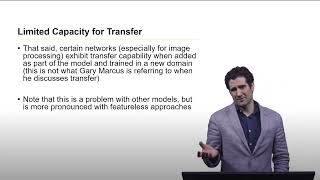
Technical Shortcomings of Deep Learning - Part 1
Explore technical challenges in deep learning, including data hunger, limited transfer capacity, open-ended inference, and explainability. Gain insights from Gary Marcus's critical appraisal.
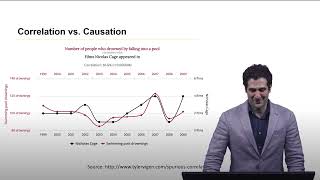
Technical Shortcomings of Deep Learning - Part 2
Explore technical challenges in deep learning, including integration with prior knowledge, correlation vs. causation, and data distribution issues. Gain insights into limitations and potential improvements.
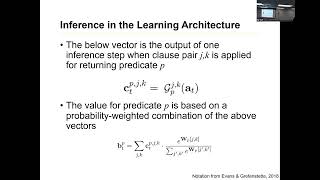
Differentiable Inductive Logic Programming - Part 6: Q&A
Explore Q&A session on differentiable inductive logic programming, discussing key concepts and applications in neuro-symbolic AI with Prof. Paulo Shakarian.
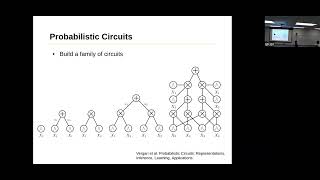
SLASH: Probabilistic Circuits - Part 1
Explore probabilistic circuits in the SLASH framework. Learn their importance and applications in neuro-symbolic AI and machine learning.
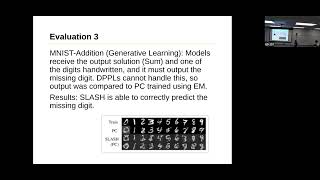
SLASH Framework: Experiments - Part 3
Explore experiments in the SLASH framework for neuro-symbolic AI. Gain insights into cutting-edge research combining symbolic methods and deep learning.
Spatio-Temporal Perception Logic for Verification of Perceptual Systems - Part 1
Explore spatio-temporal perception logic for verifying perceptual systems in autonomous vehicles and other safety-critical applications.
Spatio-Temporal Perception Logic for Perceptual Systems Verification - Part 2
Explore spatio-temporal perception logic for verifying perceptual systems in autonomous vehicles, building on Part 1's foundations.
Spatio-Temporal Perception Logic for Perceptual Systems Verification - Part 3
Explore spatio-temporal perception logic for verifying perceptual systems in autonomous vehicles, building on previous parts of the series.
Google vs. Hallucinations in AI Overviews
Explore Google's challenges with LLM-based "AI Overviews" and the ongoing issue of hallucinations in AI products. Gain insights into the latest developments in neuro-symbolic AI and its potential impact on AGI.
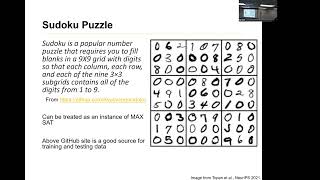
SAT Net: Learning MAXSAT Constraints - Part 1
Explore SAT Net's original work for learning MAXSAT constraints, presented by Paulo Shakarian in an ASU seminar on neurosymbolic reasoning.

Training LNNs via Primal Dual Methods - Part 2 of 3
Explore primal-dual methods for training Logical Neural Networks in neuro-symbolic reasoning, continuing the analysis of Lu et al.'s 2021 IBM research paper.
Reasoning Shortcuts in Neurosymbolic Systems
Explore reasoning shortcuts in neurosymbolic systems, their impact, and mitigation strategies for effective deployment. Gain insights from recent research papers.
VeScale - A PyTorch Native LLM Training Framework
Explore a novel PyTorch-native framework for LLM training, combining automatic parallelism and ease of use. Scale your models efficiently with single-device code and transparent nD parallelization.

Creating Custom Flux AI Photos Without LoRA Using PuLID Technique
Learn to generate personalized Flux AI photos quickly using PuLID technique, without fine-tuning or LoRA. Create custom AI images efficiently with this innovative method.
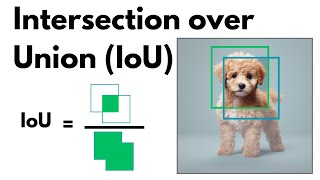
Intersection over Union (IoU) Explained with PyTorch
Learn to implement Intersection over Union (IoU) for object recognition using PyTorch. Covers theory, formulas, and practical code for bounding boxes and segmentation masks.
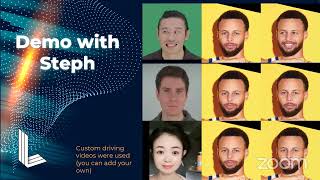
LivePortrait - Efficient Portrait Animation with Stitching and Retargeting Control
Innovative framework for video-driven portrait animation, balancing efficiency and control. Utilizes implicit keypoints, large-scale training, and advanced modules for superior performance and speed.

How LLMs Might Store Facts - Multilayer Perceptrons in Transformers
Explores how large language models potentially store factual information, focusing on multilayer perceptrons in transformers and the concept of superposition in neural networks.

How to Significantly Enhance YOLOv8 with SAHI
Learn to boost YOLOv8's object detection using SAHI library. From installation to implementation, discover how to perform sliced predictions, visualize results, and compare performance with standard YOLOv8 for improved computer vision projects.

Detecting Bone Fractures Using Deep Learning and YOLOv8 - Object Detection Tutorial
Implement object detection for bone fractures using YOLOv8 and Python. Learn to load models, process images, and visualize predictions with hands-on coding examples.
Generative AI Overview - Foundations, Models, and Applications
Explore foundational concepts of Generative AI, its evolution, and key models like DALL·E and GPT. Learn how these technologies reshape creativity and innovation across various industries.
Prompting for Code Generation - Leveraging LLMs for Efficient Programming
Learn to leverage AI for efficient code generation using OpenAI's LLMs. Explore practical examples, from simple Fibonacci sequences to complex neural networks, and discover how to integrate AI tools into your programming workflow.