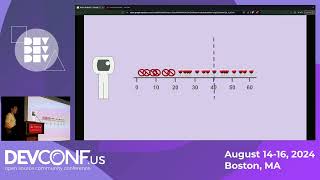
Super Accessible No Math Intro to Neural Networks for Beginners
Discover neural networks through intuitive examples, understanding their purpose, functionality, limitations, and pitfalls to better grasp the AI/ML landscape.
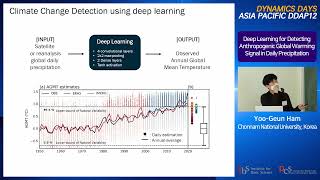
Deep Learning for Detecting Anthropogenic Global Warming Signal in Daily Precipitation
Explore deep learning's detection of climate change signals in daily precipitation, revealing human impact on global hydrological patterns through advanced neural network analysis.

Leveraging JUCE for Developing Spatial Audio Plugins
Explore JUCE for spatial audio plugin development, focusing on virtualizing acoustic environments. Learn benefits, tips, and best practices for creating immersive experiences.

Creating Your Own Singing Voice Synthesizer: Overcoming Data Collection Challenges
Explore techniques for creating personalized singing voice synthesizers, from manual labeling to automated data collection, overcoming challenges in dataset creation for various languages.
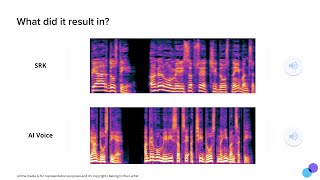
AI Generated Voices: Towards Emotive Speech Synthesis
Explore deep learning approaches for creating emotive AI-generated voices, focusing on Mel Spectrogram manipulation to enhance expressiveness without relying on large datasets.
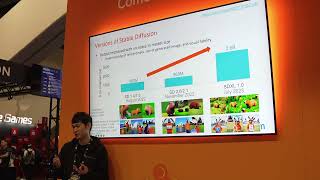
Stable Diffusion on Mobile - Model Optimization for Speed and Efficiency
Optimize Stable Diffusion for mobile: Learn techniques to enhance speed and efficiency, overcoming complexity challenges for improved performance on mobile devices.

Fine-tuning Llama 2 for Tone or Style Using Shakespeare Dataset
Fine-tune Llama 2 for Shakespearean style using custom datasets. Learn LoRA, parameter settings, and inference techniques to adapt language models for specific tones or styles.

Top Ten Tips for Fine-tuning Large Language Models
Discover ten essential tips for effective fine-tuning of language models, from starting small to advanced techniques like LoRA and preference tuning. Gain practical insights for optimal results.
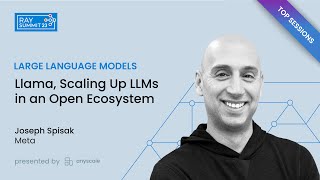
Llama - Scaling Up LLMs in an Open Ecosystem
Explore Llama's evolution, its impact on Generative AI, and learn how to leverage state-of-the-art performance using Ray-based platforms for building with open-source large language models.
A Spline Tour of Deep Learning: The Scattering Way
Explore deep learning's progress, challenges, and theoretical foundations. Gain insights into the geometric interpretation of deep networks and spline approximation, with a focus on Scattering Networks.
Exploring Shallow Architectures for Image Classification
Explore shallow architectures for image classification, focusing on Scattering Networks and their potential compared to deep CNNs. Examine geometric arguments in deriving competitive representations.
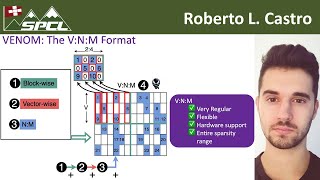
VENOM: A Vectorized N:M Format for Unleashing the Power of Sparse Tensor Cores
Explore VENOM, a vectorized N:M format for sparse tensor cores. Learn about high-performance sparse libraries and second-order pruning techniques for efficient deep learning model sparsification.

Continual Learning: Adapting Machine Learning to an Evolving World
Explore continual learning in machine learning, addressing dataset drift and real-world challenges. Discover recent advancements, including generative models for anticipating changes in dynamic environments.
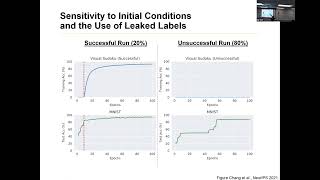
SAT Net: Issues with Symbol Grounding - Part 2 of 3
Explore critiques of SAT Net, focusing on the symbol grounding problem in neurosymbolic reasoning. Gain insights from Paulo Shakarian's lecture on this advanced AI topic.
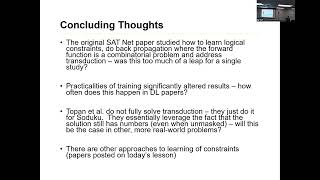
SAT Net: Resolving Symbol Grounding - Part 3
Explore symbol grounding in SAT Net through follow-on work, addressing key challenges in neurosymbolic reasoning and artificial general intelligence.
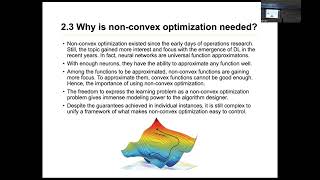
Training Logical Neural Networks via Primal-Dual Methods - Part 1
Explore primal-dual methods for training Logical Neural Networks in neuro-symbolic reasoning, based on Lu et al.'s 2021 IBM research paper.
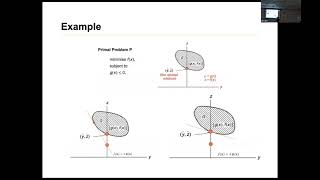
Training Logical Neural Networks via Primal-Dual Methods - Part 3
Explore primal-dual methods for training Logical Neural Networks in neuro-symbolic reasoning, concluding a series on Lu et al.'s 2021 IBM research paper.
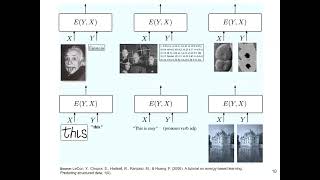
Introduction to NeuPSL - Part 1
Explore NeuPSL, a neurosymbolic framework combining probabilistic soft logic with deep learning for end-to-end training and logical constraint enforcement. Learn its fundamentals and applications in AI.
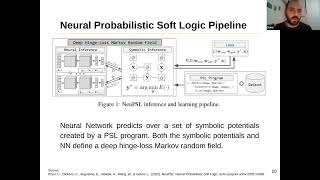
NeuPSL: Training and Inference - Part 2
Explore NeuPSL's training and inference processes, combining probabilistic soft logic with deep learning for end-to-end training and logical constraint enforcement in neurosymbolic AI.
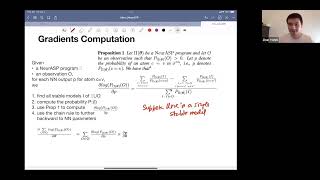
NeurASP: Model Training - Part 2
Explore NeurASP's end-to-end training process, connecting ASP programs to neural architectures for gradient flow. Learn model training techniques in this neuro-symbolic framework.
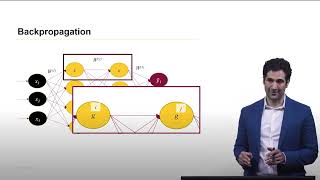
Backpropagation: Training Deep Neural Networks
Explore backpropagation, a crucial technique for training deep neural networks through gradient descent, with insights from ASU's Paulo Shakarian.