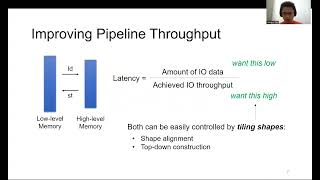
ROLLER - Fast and Efficient Tensor Compilation for Deep Learning
Introduces ROLLER, a fast tensor compilation approach for deep learning using rTile abstraction and recursive construction, generating efficient kernels in seconds for various accelerators.
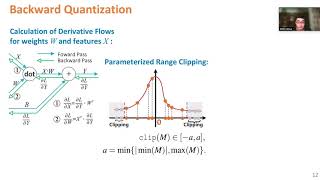
Octo - INT8 Training with Loss-aware Compensation and Backward Quantization for Tiny On-device Learning
Explores INT8 quantization for on-device learning, introducing Loss-aware Compensation and Parameterized Range Clipping to optimize forward and backward passes while preserving training quality.
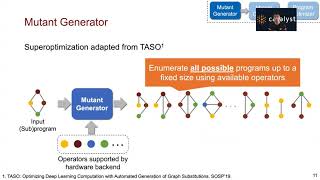
PET - Optimizing Tensor Programs with Partially Equivalent Transformations and Automated Corrections
Optimizing tensor programs with partially equivalent transformations, improving DNN efficiency by up to 2.5×. Introduces PET framework for automated corrections and theoretical foundations for equivalence examination.
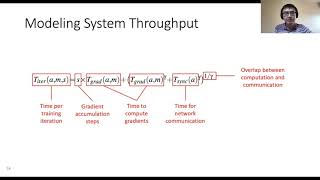
Pollux - Co-adaptive Cluster Scheduling for Goodput-Optimized Deep Learning
Innovative deep learning cluster scheduler optimizing resource allocation and job performance through adaptive co-optimization, resulting in reduced completion times and improved fairness among competing jobs.
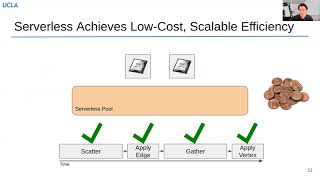
Dorylus - Affordable, Scalable, and Accurate GNN Training with Distributed CPU Servers and Serverless Threads
Distributed system for training Graph Neural Networks using serverless computing, offering affordable scalability for billion-edge graphs with improved performance-per-dollar compared to GPU servers.
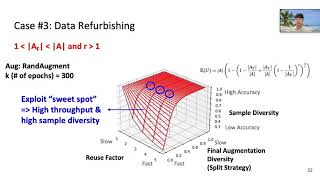
Refurbish Your Training Data - Reusing Partially Augmented Samples for Faster Deep Neural Network Training
Innovative data refurbishing technique accelerates deep neural network training while maintaining model generalization by reusing partially augmented samples and optimizing CPU-GPU overlap.
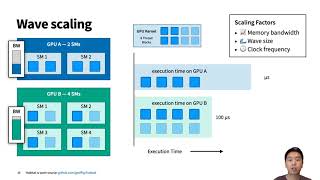
Habitat - A Runtime-Based Computational Performance Predictor for Deep Neural Network Training
Explore a runtime-based technique for predicting GPU performance in deep neural network training, aiding cost-efficient hardware selection for researchers and practitioners.
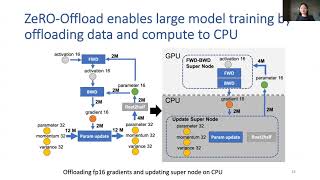
ZeRO-Offload - Democratizing Billion-Scale Model Training
ZeRO-Offload: Enabling billion-scale model training on a single GPU by offloading data and compute to CPU, minimizing data movement, and optimizing efficiency. Scales to multiple GPUs and works with model parallelism.

All of Our ML Ideas Are Bad - and We Should Feel Bad
Explores limitations of Machine Learning in production engineering, debunking common misconceptions and discussing potential feasible applications for SREs.
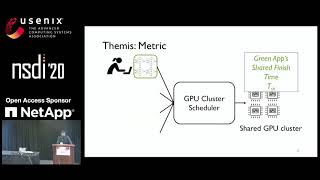
Themis - Fair and Efficient GPU Cluster Scheduling
Innovative GPU cluster scheduling framework for fair and efficient allocation of resources in distributed machine learning workloads, addressing unique challenges of long-running, gang-scheduled tasks and placement sensitivity.
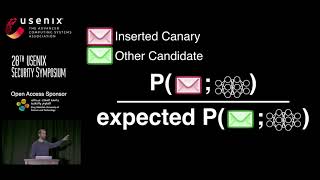
The Secret Sharer - Evaluating and Testing Unintended Memorization in Neural Networks
Explore techniques to evaluate and mitigate unintended memorization in neural networks, focusing on privacy risks and practical strategies for deep learning practitioners.
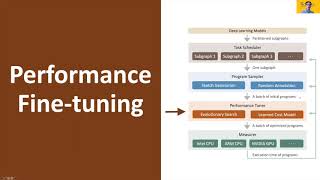
Ansor - Generating High-Performance Tensor Programs for Deep Learning
Ansor: A framework for generating high-performance tensor programs in deep learning, improving execution speed across various hardware platforms through innovative search strategies and optimization techniques.
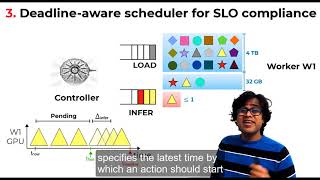
Serving DNNs like Clockwork - Performance Predictability from the Bottom Up
Explore a novel approach to machine learning inference systems that achieves predictable end-to-end performance, supporting thousands of models while meeting strict latency targets and request-level SLOs.

The Devil is in the GAN - Defending Deep Generative Models Against Adversarial Attacks
Exploring vulnerabilities in Deep Generative Models, this talk introduces a threat model for training-time attacks and demonstrates backdooring techniques, while proposing effective detection methods through static and dynamic inspections.
Unstructured Data Is the New Gold - ML + NLP Is the New Shiz
Explore machine learning and natural language processing for cybersecurity intelligence, leveraging unstructured data from social media and online sources to gain an edge in threat identification.

Tracking Fake News Based on Deep Learning
Innovative deep learning model for tracking fake news authors by analyzing content and stylistic features, enabling identification of attackers spreading malicious rumors for financial gain.

Understanding and Detecting Cyberphysical Threats on Water Systems
Explore cyberphysical threats to water systems, focusing on urban infrastructure, digital ICS, and detection methods using deep learning and specialized tools.
Attacking Deep Learning-Based NLP Systems
Explore vulnerabilities in deep learning NLP systems, focusing on word embeddings. Learn to manipulate training data and inject into real-world applications, with emphasis on security implications.
Client Side Deep Learning Optimization with PyTorch
Explore real-time computer vision on mobile devices using PyTorch. Learn model porting, optimization techniques, and performance benchmarking for client-side deep learning applications.

Tracking the Criminal of Fake News Based on a Unified Embedding
Explore a deep learning-based method for authorship analysis to combat fake news, protecting reputations and market stability through advanced tracking techniques.
CloudLeak - DNN Model Extractions from Commercial MLaaS Platforms
Explore DNN model extraction vulnerabilities in cloud-based machine learning services, examining security risks and potential countermeasures for MLaaS platforms.