Earth Science Research Methods - Protecting Our Planet
Explore cutting-edge technologies and analytical methods in Earth sciences to address global challenges like climate change, pollution, and ecosystem degradation for the benefit of humanity.

AI & ML in Cyber Security - Why Algorithms Are Dangerous
Explore limitations of machine learning in cybersecurity, dangers of blind algorithm application, and alternative approaches like probabilistic inference for more effective threat detection and analysis.
A Framework for Evaluating and Patching the Human Factor in Cybersecurity
Explore a framework for assessing and improving human-related cybersecurity vulnerabilities, focusing on evaluating and enhancing the human factor in security systems.

A Hacker's Guide to Reducing Side-Channel Attack Surfaces Using Deep Learning
Explore deep-learning techniques to identify and reduce side-channel attack vulnerabilities, leveraging AI explainability for efficient implementation assessment and improved security.
InfoSec Deep Learning in Action
Explore deep learning applications in cybersecurity, including use cases, data pipelines, algorithms, and real-world deployment challenges. Learn how AI can combat ransomware and other cyber threats.
Early Detection of Malicious Patterns in Event-Streaming Data
Explore advanced techniques for detecting malicious patterns in event streams using behavioral indicators and machine learning, focusing on early detection and automated pattern discovery.

Attacking the Data Before the Decision
Explore AI's impact on stock market manipulation, machine learning models, and data security in financial trading systems.
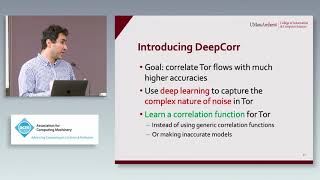
DeepCorr - Strong Flow Correlation Attacks on Tor Using Deep Learning
Learn about DeepCorr, a machine learning approach to enhance flow correlation attacks on Tor, exploring its architecture, effectiveness, and potential countermeasures.

Democratize Machine Learning - ML-Agents Explained
Explore Unity ML-Agents: an open-source toolkit bridging Unity and machine learning. Learn about reinforcement and imitation learning techniques for innovative game development and AI applications.

DeepFakes and The Human Zero Day
Explore DeepFakes, AI weaponization, and human vulnerabilities in cybersecurity. Learn about defense strategies against social engineering and the challenges of discerning artificial content in the digital age.

Wireless Sensors' Power Consumption and IoT Security
Explore IoT security challenges and innovative solutions using power behavioral profiling and deep learning to detect threats in distributed sensor environments.

Safety Issues in Advanced AI
Explore the potential impacts of superintelligent AI on society, examining safety concerns and recent developments in understanding these complex issues.
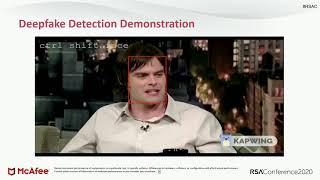
Deep Fakes Are Getting Terrifyingly Real - How Can We Spot Them?
Explore deepfake technology, its creation process, and detection strategies. Learn to identify AI-generated content and understand the importance of explainability in combating this emerging threat.
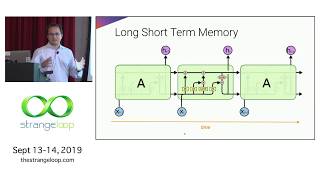
Assistive Augmentation - Lip Reading with AI
Explore AI-powered lip reading technology as an assistive solution for the deaf and hard of hearing, addressing challenges and showcasing implementation for improved accessibility in various settings.
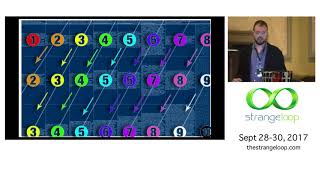
Narrated Reality
Explore neural networks for creative language applications, from expressive image captioning to AI-generated screenplays, with insights on new interfaces and forms for written expression.
PyTorch - Fast Differentiable Dynamic Graphs in Python
Explore PyTorch's dynamic deep learning framework, its high-performance design, and tensor compiler for faster AI research and development using GPUs and CPUs.
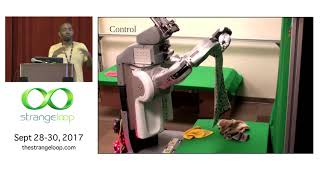
Running Programs in Reverse for Deeper A.I.
Explore inverse simulation for AI advancement, covering mental simulation, animation, and a novel approach using ReverseFlow to compile programs into their inverses, enhancing vision and planning capabilities.
What You Always Wanted to Know About Deep Learning, but Were Afraid to Ask
Demystifying deep learning concepts like back-propagation, gradient descent, and neural networks. Practical guide to training a model for object recognition using TensorFlow and Keras.
Natural Language Processing with Deep Learning and TensorFlow
Explore deep learning for NLP using TensorFlow. Learn to create embeddings, build neural networks, and apply them to classification tasks with hands-on labs and interactive learning.
Deep Learning for Realtime Malware Detection
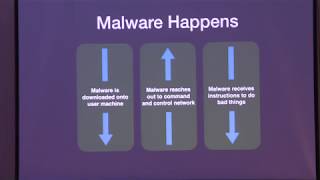
Explore an ensemble deep learning model for real-time malware detection, combining CNN, LSTM, and NLP techniques to analyze domain names and identify potential threats with high accuracy.
SparTA - Deep-Learning Model Sparsity via Tensor-with-Sparsity-Attribute
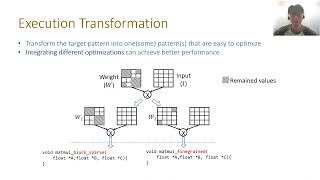
Explores deep learning model sparsity via Tensor-with-Sparsity-Attribute, enabling efficient sparse models across various patterns and optimization techniques, delivering significant speedups compared to state-of-the-art solutions.