Upping Your Data Viz Game - Effective Storytelling and Visualization Techniques
Enhance data visualization skills with storytelling techniques, effective color usage, and uncertainty representation. Learn from expert insights to create impactful and informative visual presentations.
Epidemic Spread Through Segregated Spaces - Racial Disparities in COVID-19
Explore racial disparities in COVID-19 impact, examining structural factors and spatial segregation. Learn how to improve epidemic models by incorporating multi-scale spatial interactions and socio-economic factors.
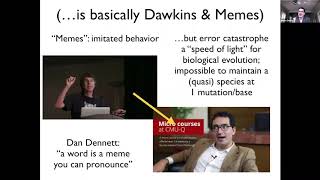
Explosive Proofs of Mathematical Truths
Explore how mathematical proofs achieve certainty through network structure, enabling explosive emergence of belief even under skepticism. Data science analysis reveals insights into proof validity and mathematical reasoning.
Projects in Time Series Analysis - Chaos Detection with Persistent Homology and Process Monitoring
Explore chaos detection in time series using persistent homology and process monitoring techniques, with applications in complex systems analysis and data-driven decision making.

Loss of Self-Organization in Earth's Climate
Análisis de cambios en la autorregulación del clima terrestre mediante herramientas de sistemas complejos, comparando datos de temperatura global con el modelo Daisyworld.

Improving COVID-19 Surveillance and Response
Explore challenges in monitoring and preventing COVID-19 spread, from ethical concerns to academic research limitations, with Harvard epidemiologist Caroline Buckee.
Modeling Disease Transmission and Interventions - Sam Scarpino Interview
Explore epidemiological modeling, interventions, and complex interactions of biological and behavioral contagions in the context of the Covid-19 pandemic with expert Sam Scarpino.
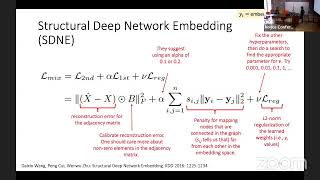
Trustworthy Network Science - Measuring Instability and Reliability in Data Algorithms
Explore network science methodologies, focusing on measuring instability, data algorithms, embedding methods, and reliability metrics for robust analysis and insights.
Community Detection and Data Topology in Network Science
Exploring network science and mathematical approaches to uncover hidden structures in complex data. Discusses community detection, data topology, and applications in social networks and opinion dynamics.
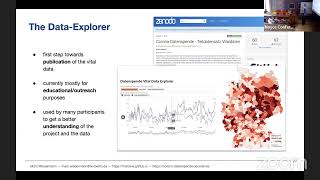
Crowdsourced Wearable Data and Citizen Science for Public Health Research
Explore the potential of crowdsourced wearable data and citizen science in advancing public health research, uncovering new insights and methodologies for population-level health monitoring.

Complex System Research in Psychology
Explore cutting-edge approaches to understanding human behavior and cognition through the lens of complex systems theory and interdisciplinary research methods.
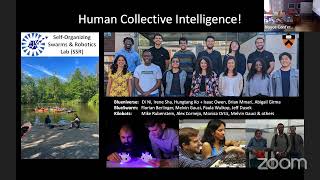
Towards Collective Artificial Intelligence
Explore the concept of collective AI, its potential impact, and future developments in this thought-provoking talk on emerging technologies and their societal implications.
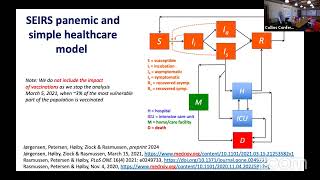
SARS-CoV-2 Infection Tracing Efficiency in Denmark Before Vaccine Impacts
Explore Denmark's pre-vaccine SARS-CoV-2 infection tracing strategies, analyzing their effectiveness and impact on pandemic control measures.

Effective Resistance Against Pandemics - Mobility Network Sparsification
Explore strategies for pandemic resistance through mobility network analysis, focusing on identifying crucial links for effective intervention and control measures.
Bigger Data About Smaller People - Studying Language Learning at Scale
Explore innovative approaches to studying language acquisition in children using large-scale data analysis and computational methods to uncover patterns in early linguistic development.
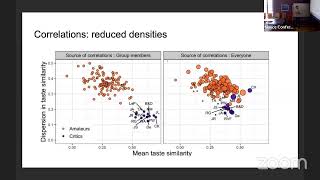
A Recommender Network Perspective on the Informational Value of Critics and Crowds
Explore the informational value of critics and crowds through a recommender network lens, offering insights into decision-making and information processing in complex systems.
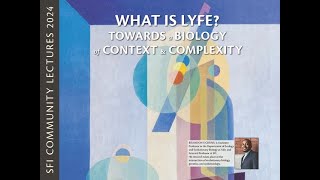
What is Lyfe? Towards a Biology of Context and Complexity
Exploring a multidimensional view of biology beyond genomics, emphasizing history, context, environment, and narrative to reframe our understanding of life and its complexities.

Making Sense of Chaos - A Better Economics for a Better World
Explore how complexity economics can revolutionize our understanding of global economic challenges and lead to better predictions and solutions for a more sustainable future.
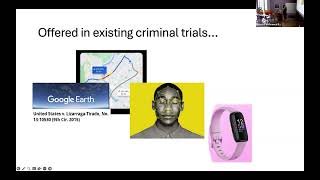
Beyond Prediction: Algorithmic Proof of Guilt or Innocence in Criminal Trials
Explore the use of algorithms in criminal trials for evidence, examining accuracy, fairness, and transparency concerns. Discuss challenges and potential solutions for courts and researchers.

Tabular Data
Learn machine learning techniques for tabular data, including model evaluation, feature engineering, tree-based models, hyperparameter tuning, and neural networks using AWS SageMaker.

Functional Genomics
Explore genomics, epigenetics, and DNA sequencing methods. Learn about genome editing, transcriptomics, and comparative genomics. Gain hands-on experience through tutorials and laboratory sessions.