The Individual Within the Crowd: How Individual Forecasters Contribute to Ideal Group Forecasts
Explores optimal group forecasting by analyzing individual biases, errors, and diversity. Presents a statistical model for estimating forecaster features and discusses when to use optimal weighting versus simple averaging.

Biostatistics USMLE
Comprehensive biostatistics review for USMLE Step 1, covering key concepts, practice questions, and exam strategies to enhance understanding and test performance.
Law and Policy
Explore ethical and legal challenges in AI, including anthropomorphism, explainability, racial categorization, and algorithmic fairness. Gain insights from experts on crucial issues shaping the future of technology and society.
Content Distribution
Exploring algorithmic biases in content distribution, including microtargeting, truth perception, polarization control, and recommender systems' effects on online news environments.
Image Representations Learned With Unsupervised Pre-Training Contain Human-like Biases
Explore how unsupervised pre-training in image representations can lead to human-like biases, examining methods, results, and implications for AI fairness and ethics.
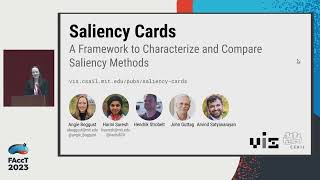
Fairness and Diversity II
Explore cutting-edge research on fairness and diversity in computing, examining innovative approaches to promote inclusivity and ethical considerations in technology development.
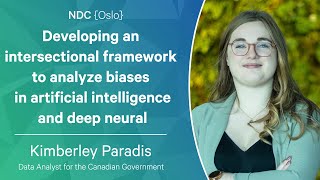
Developing an Intersectional Framework to Analyze Biases in Artificial Intelligence and Deep Neural
Explore an intersectional framework for analyzing biases in AI and deep neural networks, focusing on ethical tech development and mitigating discriminatory outcomes in machine learning.

Why AI Needs a “Nutrition Label” | Kasia Chmielinski | TED
Kasia Chmielinski uses a sandwich metaphor to explain AI systems and advocates for "nutrition labels" on AI to ensure fairer, more transparent algorithms. She discusses how data reform can improve AI development and accountability.

Can AI be trusted to slash research timelines? | Max Topaz | TEDxNightingale College
True medical breakthroughs can take an average of 17 years, which can be dramatically reduced to seconds with AI, but it still needs to be watched carefully. With the proper safeguards like AI transparency, independent testing and verification systems, AI can be a valuable hack to make rapid advance

How Biased Data Shapes Healthcare AI | Tomisin Adebari | TEDxMorgan State University
Artificial intelligence is transforming healthcare, but what happens when the data behind these systems carries the same biases found in society? In this compelling talk, Tomisin Adebari explores how biased data can shape the decisions made by healthcare artificial intelligence systems. While AI ha

Tres estrategias para enfrentar los sesgos de la IA | Victoria Maya | TEDxMorelia
No dejes que el pasado defina tu futuro. Cuando el futuro se escribe con datos del pasado, ser una misma se convierte en un acto político. A través de ejemplos cotidianos, descubriremos cómo los modelos de inteligencia artificial reflejan las reglas ocultas de la sociedad y qué acciones simples pode
The most dangerous lie AI keeps repeating | Karen Colbert | TEDxBellarmineU
This talk challenges the dominant narrative that artificial intelligence is neutral, objective, and inevitable. Drawing on lived experience in education, engineering, and data science, Karen Colbert reveals how AI systems often reproduce historical inequities because they are built on incomplete dat

Ateşten Algoritmaya / İnsanlığın Yapay Zeka ile Denge Arayışı | OKAN ALGÜN | TEDxYeniYolSchools
Asıl mesele yapay zekanın varlığı değil, onunla kurduğumuz ilişki biçimidir. Yapay zeka ne iyi ne de kötüdür; onu yönlendiren, sınırlayan ve anlamlandıran insan iradesidir. Bu nedenle geleceği belirleyecek olan şey “yapay zeka bize ne yapacak?” sorusu değil, “biz insan olarak nerede duracağız?” soru
Giving Language a Voice Through AI | Sana Shams | TEDxSICAS DHA Youth
Mrs. Sana Shams explores how artificial intelligence can support language diversity and digital inclusion. Drawing from her own experiences, she discusses building speech-based chatbots for citizen services and regional collaborations that made computing accessible in 11 local languages. Her talk hi

The Missing Ingredient in AI No One Is Talking About | Disleve Kanku | TEDxBoston
Everyone is talking about Artificial Intelligence, its breakthroughs, its dangers, its potential. But beneath the headlines, there’s one crucial element almost no one is addressing… and without it, AI will fail us. In this talk, Disleve Kanku reveals the “missing ingredient” that can transform AI fr

From Curiosity to Culture: Creating With AI Instead of Fearing It | Willonius Hatcher | TEDxBoston
Artificial intelligence is often framed as a threat—but what if it’s an invitation? In this talk, comedian, creator, and cultural technologist Willonius Hatcher shares how curiosity, experimentation, and bold action led him to create BBL Drizzy—a viral AI-generated song that reshaped conversations

Levels of Uncertainty – A Map of AI Ethics | Razvan Sandru | TEDxNoVA
An exploration of the ethical challenges of AI and how uncertainty plays a central role in decision-making Adrian Razvan Sandru completed his PhD in Phenomenology at University of Tuebingen, Germany, in 2020, with a thesis on the nature of subjectivity in liminal situations. He is currently a postdo

How AI and policy will shape our future | Tatiana Rice | TEDxUniversity of Northern Iowa
"Artificial intelligence is no longer just a one-off tool — it’s becoming part of the operating system of our society. From schools to hospitals to local governments, AI is quietly shaping the framework of our world, as well as the choices, opportunities, and rights of everyday people. In this talk

Graj z AI: jak pozostać niezbędnym w erze AI? | Mateusz Kurleto | TEDxKoszalin
Czy AI zrobi z nas superbohaterów? Nie. Ale jeśli nauczymy się z nim współpracować – delegować, łączyć cele i koordynować przepływ informacji – możemy działać szybciej, mądrzej i odważniej. W tej prelekcji pokażę, jak przygotować się na przyszłość, w której technologia i człowiek grają w jednej druż
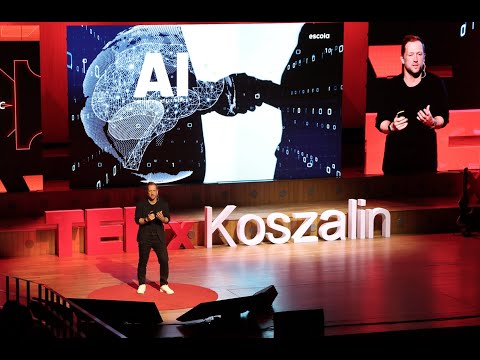
AI 4 Good | Krzysztof Wojewodzic | TEDxKoszalin
Wiele zastosowań AI dziś to deepfejki, automatyczne lejki sprzedażowe, irytujące chatboty i jeszcze więcej treści w mediach społecznościowych. A co, jeśli w pierwszej kolejności pomyślimy o tym, jak AI może znacząco usprawnić służbę zdrowia, edukację czy poprawić równowagę między życiem a pracą? A